







Singapore Airlines Q3 profit tumbles due to loss of one‑off merger gain, higher fuel costs
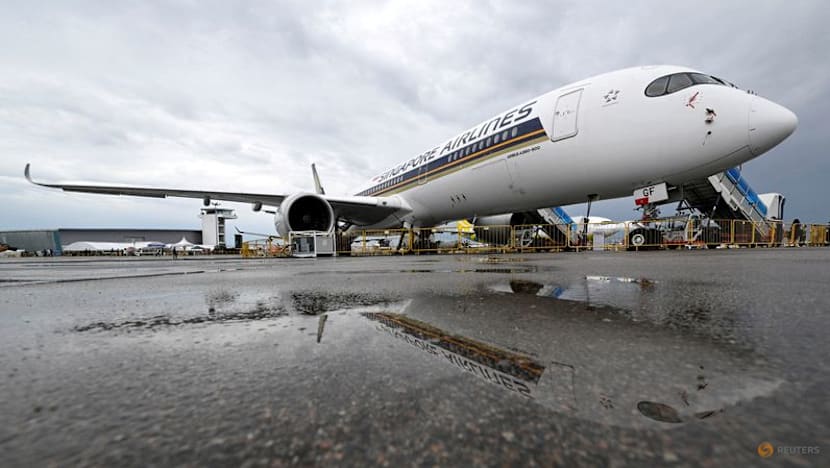
A Singapore Airlines plane is seen among the planes in the static display at the Singapore Airshow in Singapore, Feb 16, 2022. (Photo: Reuters/Caroline Chia)
Singapore Airlines posted a nearly 69 per cent slide in third-quarter net profit on Tuesday (Feb 24), due to the absence of last year's one-off gain from the Air India-Vistara merger and rising fuel costs.
The airline's share of losses from associated companies climbed by S$163 million (US$128 million) to S$178 million, reflecting a full-quarter share of Air India's losses this year, compared with only one month in the year-ago period.
Vistara Airlines, in which Singapore Airlines had a 49 per cent stake, completed a merger with Air India in 2024 to establish a dominant full-service carrier for India's growing domestic and international markets.
Additionally, record global travel demand kept older aircraft in service, pushing up fuel, maintenance, engine-leasing and inventory costs.
The airline's expenditure rose to S$4.71 billion compared with S$4.59 billion, driven by higher non‑fuel costs and an increase in net fuel cost due to firmer prices and uplift volumes in the period.
SIA's earnings swings come even as quarterly spending has stayed consistently above S$4 billion for five consecutive quarters, including the current reporting period.
Singapore's flag carrier posted a net profit of S$505 million (US$398.6 million) for the three-month period ended December 31, compared with S$1.63 billion a year ago.
"Sustained strength in passenger travel should help offset cargo softness and the share price should react positively given the convincing operating performance beat, though we remain watchful on Air India," said Tabitha Foo, equity research analyst at DBS Group Research.
Passenger load factor, a measure of how many seats are filled on planes, for the group as a whole came in at 87.5 per cent for the quarter, compared with 87.2 per cent a year earlier.
"We were expecting competition to intensify as airline capacity in Asia returned to pre-pandemic levels, but it appears some carriers are able to keep yields higher for longer," said Lorraine Tan, director at Morningstar.
A similar trend was seen at Japan's ANA, she added, suggesting region-wide travel demand remains firm.
Total revenue for the quarter rose 5.5 per cent to S$5.51 billion from the same period last year.





