Sri Lanka jolts markets with outsized 100-bp rate hike to counter Gulf crisis
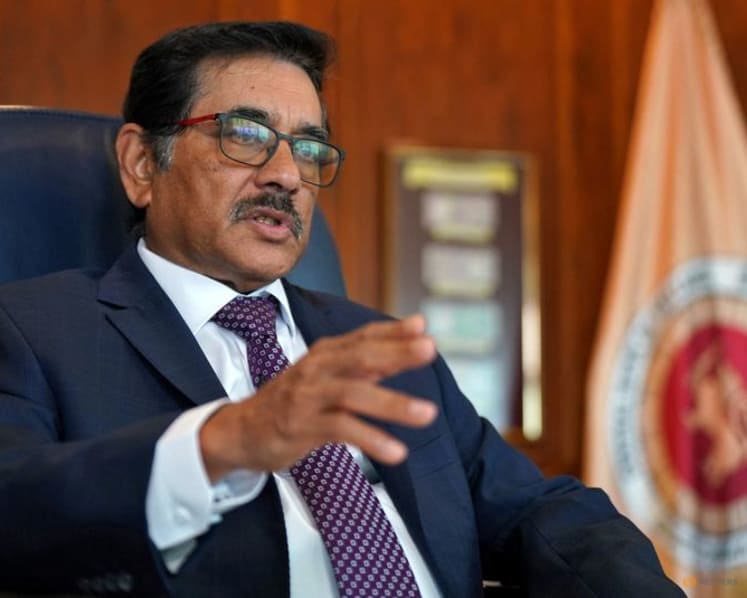
P. Nandalal Weerasinghe, Governor of the Central Bank of Sri Lanka, speaks during an interview with Reuters inside his office in Colombo, Sri Lanka, September 12, 2025. REUTERS/Thilina Kaluthotage
COLOMBO, May 26 : Sri Lanka's central bank stunned markets by raising its policy rate by an outsized 100 basis points on Tuesday, the biggest hike in four years, as policymakers scrambled to stem inflation and support a currency buckling under soaring energy prices.
Economic growth in the South Asian nation, only just recovering from a devastating 2022 financial crisis that left businesses and households deeply scarred, is expected to take a hit from the turmoil in the Middle East.
The Central Bank of Sri Lanka (CBSL) raised the overnight policy rate to 8.75 per cent from 7.75 per cent, blaming higher inflation and a depreciating rupee due to the U.S.-Israeli war with Iran.
Seven out of a dozen economists and analysts polled by Reuters had forecast only a 25 basis-point or slightly higher change to the rate, citing the deepening impact on foreign reserves from the conflict.





Sri Lanka, fully reliant on imported fuel, has been battered by the Iran war-driven energy shock that has forced a 40 per cent fuel price hike, rationing, and even public holidays on Wednesdays.
"Similar to several regional peer currencies, the Sri Lanka rupee experienced notable depreciation pressures in recent weeks, although conditions have since eased to some extent," the central bank said in a statement, referring to the currency's 8.7 per cent tumble since early March.
Annual inflation has jumped from 2.2 per cent in March to 5.4 per cent last month, although that is well below the 70 per cent peak during the crisis.
Headline inflation is likely to remain above the target of 5 per cent in the period ahead, before easing and stabilising around it, the CBSL said in its statement.
BIGGEST HIKE SINCE MARCH 2023, GROWTH SET TO SLOW
The central bank last changed rates in May 2025 when it reduced them by 25 basis points to boost growth. Tuesday's 100-basis-point hike was the biggest increase since a similar hike during the depths of the financial crisis in March 2023.
"This 100bps rate hike suggests the CBSL is shifting gears from supporting growth to defending price stability," said Udeeshan Jonas, strategy head at Colombo-based equity research firm CAL. He has cut his 2026 growth forecast to 3.0 per cent from 4.2 per cent following the move.
The central bank and finance ministry had projected growth of between 4 per cent and 5 per cent in January.
"The central bank clearly expects the supply-side pressures from the Iran conflict - specifically oil price volatility and subsequent pressure on the rupee - to have a prolonged, sticky impact on domestic inflation rather than being a transitory blip," Jonas added.
Emerging economies are bearing the brunt of the Iran war as soaring energy prices, supply disruptions, and capital outflows threaten to trigger stagflation. India, which depends heavily on overseas crude imports, is grappling with a sharp decline in the rupee, forcing the central bank to step in to defend the currency.
Sri Lanka's reserves decreased 3.8 per cent to $6.7 billion in April after it spent $1.5 billion on fuel imports in the first four months of the year, with the fuel bill surging 77 per cent in March alone.
Backed by a $2.9 billion programme from the International Monetary Fund, the island is clawing its way out of the 2022 upheaval caused by a severe shortfall of dollars.
The IMF Executive Board will meet on Wednesday to decide whether Sri Lanka will receive $700 million under its programme, which would help to top up its reserves.