US stocks dip, oil pulls back as Wall Street weighs conflicting messages on Iran
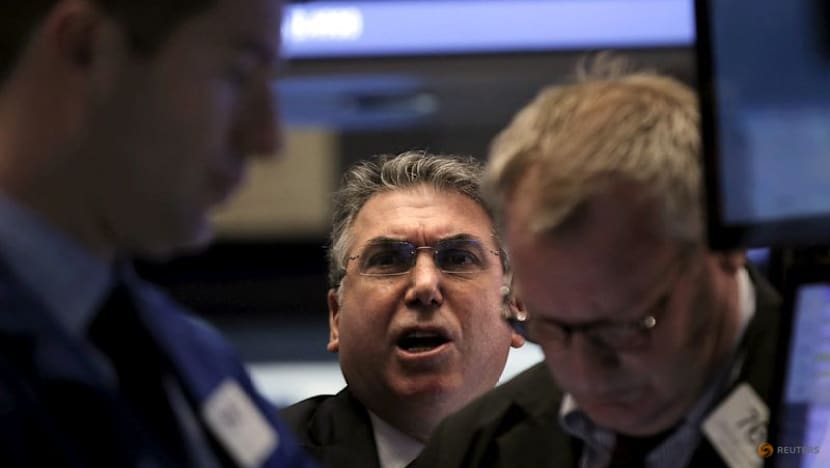
FILE PHOTO: Traders work on the floor of the New York Stock Exchange (NYSE) February 29, 2016. REUTERS/Brendan McDermid/File Photo
BOSTON/LONDON, March 10 : Wall Street stocks ticked lower while oil prices pulled back on Tuesday after U.S. President Donald Trump declared the Middle East war could be "over soon" even as the U.S. and Israel pounded Iran with intense airstrikes.
U.S. stocks lost steam, giving up early gains and skidding into negative territory. The Dow Jones Industrial Average fell 0.07 per cent, the S&P 500 dipped 0.2 per cent and the Nasdaq Composite was little changed.
Oil prices plunged by more than 11 per cent. Brent futures LCOc1 fell $11.16, or 11 per cent, to settle at $87.80 a barrel. U.S. West Texas Intermediate (WTI) CLc1 crude settled at $83.45 a barrel, down $11.32, or 11.9 per cent. Both benchmarks logged the biggest single-day percentage loss since March 2022, after rocketing to four-year highs a day earlier.
Trump's remarks late on Monday injected optimism into the markets but contrasted with events in Iran, where hardliners rallied behind new Supreme Leader Mojtaba Khamenei and the Revolutionary Guards said a blockade of oil exports would continue until U.S. and Israeli attacks end.





Sameer Samana, head of Global Equities and Real Assets at the Wells Fargo Investment Institute, wrote in an email that WTI crude prices would eventually revert to between $65 and $75 a barrel, revealing a solid economic and corporate-earnings backdrop.
"We would continue to try and look through those near-term headlines, as we see the conflict as lasting weeks/months and not changing the forward outlook meaningfully," Samana said.
A GLOBAL REBOUND?
Steadier investor sentiment triggered a share rebound in Europe and Asia on Tuesday, while government bond yields dipped and interest rate expectations shifted again.
Europe's STOXX 600 index pared some earlier gains but finished up 1.65 per cent on Tuesday after declining for three consecutive trading days. MSCI's broadest index of Asia-Pacific shares outside Japan rose around 3 per cent.
Money markets cut the chances of a European Central Bank rate hike this year, after this was more than fully priced in late on Monday, while the benchmark German 10-year bond was little changed at 2.86 per cent.
"Market pricing suggests weeks of disruptions, not days or months," analysts at BlackRock Investment Institute wrote. "There's a risk of a stagflationary shock but it's not a given, as market pricing indicates."
The yield on the U.S. 10-year Treasury note rose 1.8 basis points to 4.152 per cent, having eased earlier in the day. Traders pushed out bets on the timing of the Federal Reserve's next rate cut, with the first reduction now not seen until July, according to the CME Group's FedWatch tool.
"We are still at troubling levels," ING analysts said, referring to bond yields. "Expect nominal yields to fall for a bit on a reversal trade. But don't expect a dramatic structural rally in bonds," they wrote in a client note.
The U.S. dollar index clung to modest gains against major currencies on Tuesday as investors' appetite for riskier assets remained subdued.
Gold was up around 1.15 per cent at $5,195 an ounce, while bitcoin added 1.58 per cent to trade at $70,094.