







Thai central bank unexpectedly cuts policy rate amid tariff uncertainty
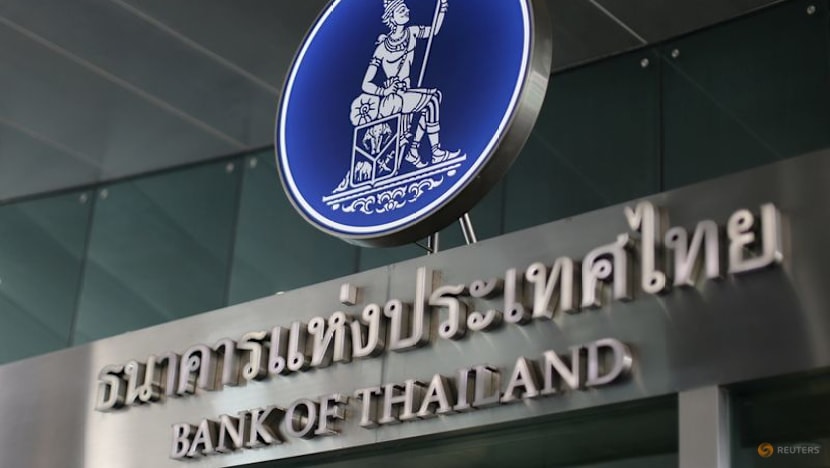
Thailand's central bank is seen at the Bank of Thailand in Bangkok, Thailand April 26, 2016. REUTERS/Jorge Silva/File Photo
BANGKOK, Feb 25 : Thailand's central bank unexpectedly cut its policy interest rate at a review on Wednesday, as it seeks to further support an economy pressured by U.S. tariff uncertainty and a strong baht.
The Bank of Thailand's monetary policy committee voted 4-2 to cut the one-day repurchase rate by 25 basis points to 1.00 per cent at its first review of the year.
Only six of 27 economists in a Reuters poll had forecast a quarter-point cut at this week's meeting. The others had all predicted no policy change.
The baht pared gains after the announcement, but remains up about 1.3 per cent against the U.S. dollar so far this year. Thailand's main stock market extended gains to be up 1.8 per cent on the day.
"Economic growth is projected to remain below potential in 2026 and 2027 and uneven across sectors, reflecting structural impediments and intensified competition," the central bank said in a statement announcing the rate cut.
Wednesday's reduction was the sixth since October 2024, with the policy rate down by a total of 150 basis points as authorities try to spark a revival in Southeast Asia's second-largest economy. The rate was also lowered at the previous review in December.
On Tuesday, BOT Governor Vitai Ratanakorn said fiscal and monetary policy should be deployed to lift growth toward potential at 2.7 per cent this year, compared with current expectations for a 1.9 per cent expansion and a December forecast for 1.5 per cent growth. Last year, the economy grew 2.4 per cent.
The Thai economy, which has lagged regional peers since the pandemic, has struggled with multiple challenges, including U.S. tariffs, high household debt and the baht's strength.
The currency's gains this year add to a 9 per cent rise against the dollar last year, threatening the competitiveness of the export and tourism sectors, which are both key economic drivers.
The baht's "appreciation has tightened financial conditions for exporters, particularly for products facing intense price competition and low profit margins", the central bank said.
"Looking ahead, it is necessary to monitor uncertainties surrounding U.S. tariff measures, the 2027 budget delay, and the adjustment of SMEs, which continue to face challenges from heightened competition, limited access to credit, and the appreciation of the Thai baht," the central bank said.
U.S. President Donald Trump said he will set global tariffs at 15 per cent after the Supreme Court struck down his tariff regime, below the 19 per cent rate that was being levied on Thailand, but uncertainty remains.
Prime Minister Anutin Charnvirakul's Bhumjaithai party will lead a new coalition government, expected by April, after its strong performance in a general election earlier this month, reducing concerns about further instability.
While a strong coalition government could offer relief to the economy, lifting growth remains a challenge. Finance Minister Ekniti Nitithanprapas said the incoming government would continue its economic policies.
The BOT's next interest rate meeting is on April 29.





