







Safe-haven franc bounces as Iran war rages, dollar down after payrolls drop
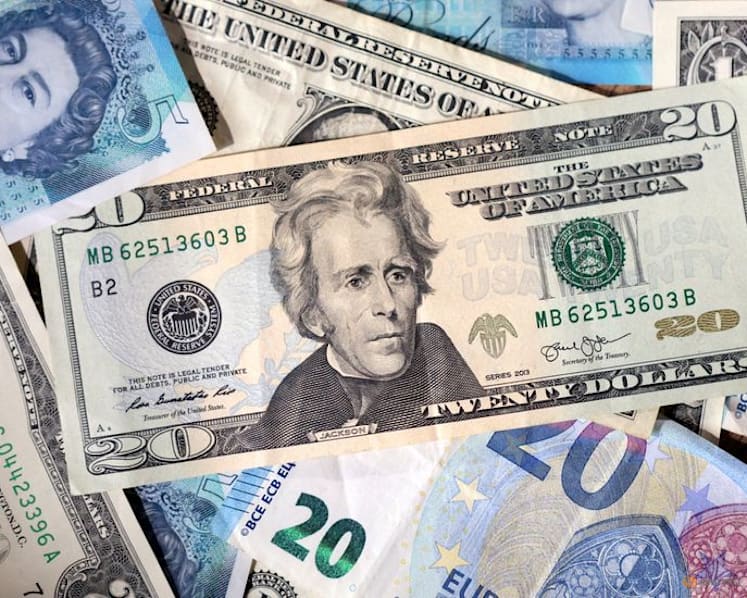
FILE PHOTO: U.S. dollar, Euro and Pound banknotes are seen in this illustration taken May 4, 2025. REUTERS/Dado Ruvic/Illustration/File Photo
NEW YORK, March 6 : The safe-haven Swiss franc rallied across the board on Friday as the escalation of the Middle East conflict spurred a flight to safety, while the U.S. dollar slipped in choppy trading after data showed an unexpected drop in new jobs created last month.
The dollar fell 0.5 per cent against the Swiss franc to 0.7764, while the euro also slid 0.5 per cent, to 0.9019 franc.
The franc tends to rally in times of heightened geopolitical tension.
U.S. President Donald Trump on Friday demanded Iran's "unconditional surrender," viewed as a dramatic escalation of his rhetoric a week into the war he launched alongside Israel.





He also reiterated his desire for a "great and acceptable leader" for Iran. On Thursday, Trump said he wanted to be involved in choosing Iran's next head of state after U.S. and Israeli air strikes killed Supreme Leader Ali Khamenei in the early moments of the war.
On the U.S. economic front, the dollar's decline - after a much weaker-than-expected nonfarm payrolls number - reflected a slight shift in policy expectations, with the Federal Reserve now seen likely to cut interest rates sooner than previously anticipated.
"Fundamentally not much has changed because oil is still trading at the highs and we don't really have good news on Iran," said Erik Bregar, director, FX & precious metals risk management, at Silver Gold Bull in Toronto.
U.S. crude futures surged on Friday, up 12 per cent at $90.75 per barrel.
Bregar noted that the rally in other currencies against the dollar is likely technical in nature.
"U.S. stocks tried to break new weekly lows, the euro and the Canadian dollar did as well, but that failed so that's why we're seeing this bounce in FX against the dollar," he said. "For the bears to continue to get what they want, we need to see lows get taken out."
Sterling was also up against the greenback, rising 0.3 per cent to $1.3402.
POOR PAYROLLS REPORT
Earlier in the session, data showed the U.S. economy lost 92,000 jobs last month after a downwardly revised 126,000 increase in January, while the unemployment rate increased to 4.4 per cent. The drop in jobs was due in part to a healthcare strike.
Economists polled by Reuters had forecast payrolls advancing by 59,000 jobs after increasing by a previously reported 130,000 in January.
"Conventional wisdom is for the Federal Reserve to look through temporary supply-side shocks," wrote Tiffany Wilding, economist at PIMCO, in emailed comments.
"However, at least some on the committee will likely be worried about second-round effects - higher inflation expectations - which may on the margin make cuts a bit more difficult."
In afternoon trading, the dollar edged higher against the yen, up 0.2 per cent at 157.81 yen, giving up some gains after the payrolls miss. On the week, the greenback still climbed 1.1 per cent, its third weekly rise.
The dollar index was down 0.2 per cent on the day at 98.88. It rose 1.3 per cent for the week, however, its biggest weekly advance since mid-November 2024.
The euro rose 0.1 per cent to $1.1616, retracing losses from earlier in the session. On the week, Europe's common currency fell 1.7 per cent, its largest weekly decline since April 2024.
David Rees, head of global economics at Schroders in London, said: "While the employment report was soft, we doubt it will be long before continued robust growth in the U.S. economy will translate into more sustained demand for labor."
Post-payrolls, U.S. rate futures priced in a 76 per cent chance that the Fed resumes cutting rates in September, earlier than the October expectation before the jobs data.
The market also sees about 44 basis points of easing this year, or fewer than two cuts of 25 bps each. Before the jobs report, rate futures had factored in about 39 basis points of rate declines.





