Oil prices drop 2% as Iran considers US proposal to end war
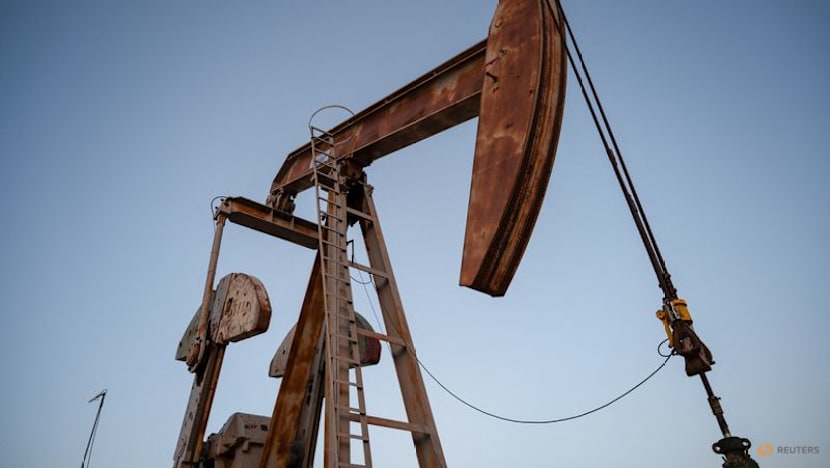
A pump jack operates outside of Midland, Texas, U.S. June 11, 2025. REUTERS/Eli Hartman
NEW YORK, March 25 : Oil prices slid about 2 per cent on Wednesday after paring deeper losses earlier in the trading session, as Iran reviewed a U.S. proposal to end the war that has disrupted global energy flows from the Persian Gulf.
Brent futures fell $2.27, or 2.2 per cent, to settle at $102.22 a barrel, while U.S. West Texas Intermediate crude futures fell $2.03, or 2.2 per cent, to settle at $90.32. Earlier in the session, Brent futures were down by as much as 7 per cent.
Iran is still reviewing a U.S. proposal to end the war in the Gulf, despite an initial response that was negative, a senior Iranian official told Reuters on Wednesday, indicating that Tehran had so far stopped short of rejecting it outright.
U.S. President Donald Trump will hit Iran harder if Tehran fails to accept that the country has been "defeated militarily," White House press secretary Karoline Leavitt said.





Publicly, Iranian officials poured withering scorn on the prospect of any negotiations with the Trump administration. But an apparent delay in delivering a formal response to Pakistan, which delivered a 15-point proposal on behalf of Washington, appeared to signal that at least some figures in Tehran may be considering it.
"The (oil) complex will continue to zig and zag on Iran war headlines as the White House attempts to play up ongoing talks while Iran’s refusal to acknowledge any progress in discussions will preclude much downside follow-through," analysts at energy advisory firm Ritterbusch and Associates said in a note.
Extreme price swings in recent weeks boosted both crude benchmarks' historic volatility, based on an actual 30-day close-to-close measurement, to their highest levels since April 2022.
OIL SHIPMENTS VIA STRAIT OF HORMUZ LARGELY HALTED
The war has all but halted shipments of oil and liquefied natural gas through the Strait of Hormuz, which typically carries about one-fifth of the world's LNG and crude supply. The International Energy Agency has called it the biggest-ever oil supply disruption.
The result is a daily loss of around 20 million barrels of crude, meaning there has been a loss of some 500 million barrels, or five full days of global supply, since the war began on February 28. The White House press secretary said the U.S. is tracking "very closely" how to get oil tankers through the Strait.
India, meanwhile, has bought its first cargo of Iranian liquefied petroleum gas in years after the U.S. temporarily removed sanctions on Tehran's oil and refined fuels, sources said.
Japanese Prime Minister Sanae Takaichi asked IEA chief Fatih Birol for an additional coordinated release of oil stockpiles, as Tokyo seeks to shield consumers from higher energy prices.
Despite the expectations of some analysts, the latest data from the U.S. Energy Information Administration showed that the U.S. did not start pulling crude out of its Strategic Petroleum Reserve during the week ended March 20.
UKRAINE ATTACKS BALTIC PORTS IN RUSSIA
Russia's Baltic ports of Primorsk and Ust-Luga, major export terminals, suspended crude oil and oil products loadings after massive Ukrainian drone attacks sparked blazes, with smoke visible from Finland.
At least 40 per cent of Russia's oil export capacity has been halted following Ukrainian drone attacks, a disputed attack on a major pipeline and the seizure of tankers, according to Reuters calculations based on market data.
The U.S. has made its offer of security guarantees needed for a peace deal in Ukraine conditional on Kyiv ceding all of the country's eastern region of Donbas to Russia, President Volodymyr Zelenskiy told Reuters in an interview.
In an effort to avoid future energy price volatility, the European Union is considering ending automatic cancellation of excess carbon permits in its emissions trading system.
In the U.S., the Trump administration said it will temporarily suspend federal anti-smog regulations on seasonal gasoline blends to combat higher pump prices since the start of the war on Iran.
In Venezuela, meanwhile, oil production, including condensate and gas liquids, has reached 1.1 million barrels per day in March.
US OIL INVENTORIES
The U.S. EIA said energy firms added 6.9 million barrels of crude into stockpiles during the week ended March 20.
That was higher than the build of 500,000 barrels analysts forecast in a Reuters poll and a build of 2.4 million barrels that market sources said the American Petroleum Institute trade group reported on Tuesday. [EIA/S]