US sets preliminary duties on solar imports from India, Indonesia and Laos
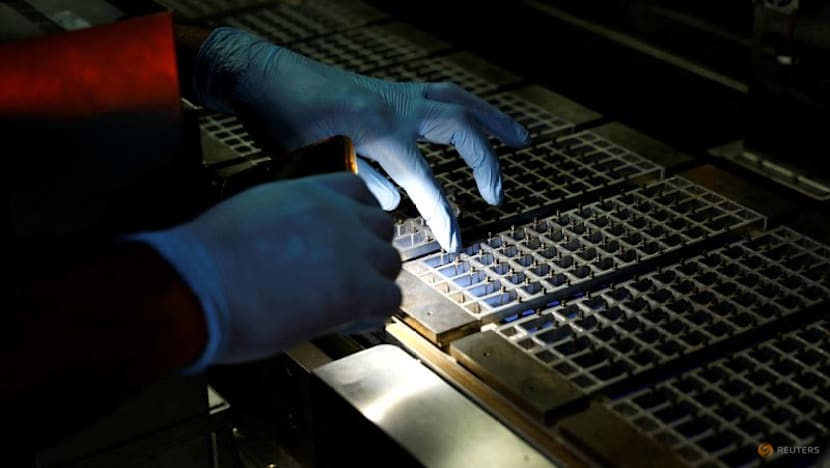
A technician checks the machine with a flashlight at a solar panel manufacturing hub in Greater Noida, on the outskirts of New Delhi India, October 23, 2024. REUTERS/Priyanshu Singh
Feb 24 : The U.S. Commerce Department on Tuesday announced anti-subsidy countervailing duties on solar cells and panels imported by companies in India, Indonesia and Laos.
According to a fact sheet posted on the Commerce Department's website, the agency calculated general subsidy rates of 125.87 per cent for imports from India, 104.38 per cent for imports from Indonesia, and 80.67 per cent for imports from Laos.
The three nations last year accounted for $4.5 billion in solar imports, about two thirds of the 2025 total, according to government trade data.
The announcement is the first of two expected by the agency in the coming weeks in a trade case brought by a group representing a portion of the small U.S. solar manufacturing sector.
The group, the Alliance for American Solar Manufacturing and Trade, includes South Korea's Hanwha Qcells, Arizona-based First Solar and San Antonio-based Mission Solar, which are seeking to protect billions of dollars in investments in U.S. factories.
Tim Brightbill, lead attorney for the Alliance, hailed the move as "an important step toward restoring fair competition."
"American manufacturers are investing billions of dollars to rebuild domestic capacity and create good-paying jobs. Those investments cannot succeed if unfairly traded imports are allowed to distort the market," he said in a statement.
In addition to the general rates, Commerce calculated individual rates for Mundra Solar in India, PT Blue Sky Solar and PT REC Solar Energy in Indonesia and Solarspace Technology Sole Co and Vietnam Sunergy Joint Stock Company in Laos.