CNA Explains: Why have US Treasury yields surged, and why does it matter to Asia?
Higher US yields generally translate into higher borrowing costs for households and businesses, which could lead to more expensive mortgages and loans, says one analyst.

The US Department of the Treasury Building in Washington, DC, US, on Jul 11, 2026. (File photo: Reuters/Daniel Heuer)

This audio is generated by an AI tool.


SINGAPORE: The yield on the 30-year US Treasury bond rose to its highest level in almost 20 years last week, prompting US governmental intervention while also likely having a ripple effect on other regions.
CNA takes a look at US Treasuries and how higher bond yields affect Asia.
WHAT IS HAPPENING IN THE US BOND MARKET?
US Treasuries are debt securities issued by the US government to raise funds. Investors who buy them are effectively lending money to the government, which promises to repay them when the securities mature.
Treasury notes mature in two to 10 years, while Treasury bonds mature in 20 or 30 years. Both pay a fixed rate of interest every six months until maturity.





But the yield on a Treasury is not the same as its fixed interest payment. The yield represents the annualised return an investor can expect from buying the security - which can be traded on the open market - at its current price and holding it until maturity.
Bond prices and yields move in opposite directions. If the market price of a Treasury falls, its yield rises because its fixed interest payments represent a greater return relative to the lower price. Conversely, when its price rises, its yield falls.
Yields on longer-term US Treasuries have risen sharply in recent weeks. The yield on the 30-year Treasury bond rose above 5.33 per cent on Aug 18 - its highest level since 2007.
A day later, US Treasury Secretary Scott Bessent announced that the government would double the size of planned buybacks of longer-term Treasuries. Under a buyback, the Treasury purchases some of its outstanding debt from investors, with the government saying the expanded purchases are intended to support market liquidity.
Such purchases increase demand for the bonds, which can push their prices higher and their yields lower. Yields fell sharply after Bessent's announcement, but the relief proved short-lived, with longer-term yields subsequently rebounding.
WHY ARE TREASURY YIELDS RISING?
Long-term Treasury yields have been pushed higher by a combination of immediate inflation concerns and longer-running worries about the amount of debt the US government needs investors to absorb.
The latest rise was accelerated by the war with Iran, which pushed oil prices higher and fuelled concerns about inflation. Higher inflation erodes the value of the fixed payments bondholders receive and can keep interest rates elevated, prompting investors to expect higher yields on longer-term debt.
The rise in yields also comes on top of "recurrent worries about the US' fiscal position", said Mr Eugene Leow, senior rates strategist at DBS Group Research.
Washington's large fiscal deficits mean the US Treasury must issue substantial amounts of debt to fund its spending and refinance maturing debt.
That growing supply has to find willing buyers. If there is insufficient demand at existing prices, bond prices fall and yields rise until investors are willing to buy them.
At the same time, a surge in corporate borrowing to fund AI-related investments has increased competition for investor capital, according to Mr Leow.
The pressure is not confined to the US. Government bond yields have risen sharply in other major economies, with Mr Leow pointing to higher Japanese and German government bond yields.
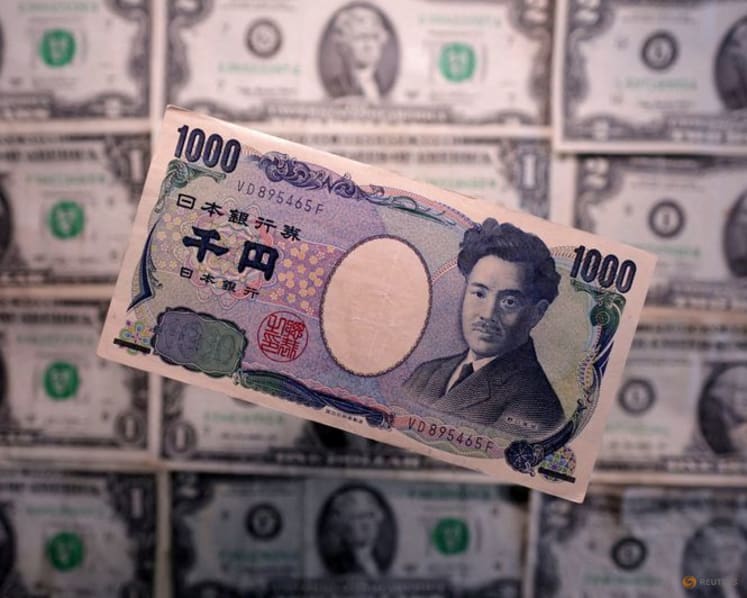
Another factor putting upward pressure on global bond yields is concern over the US-Japan intervention to prop up the weak yen, said Mr Barnabas Gan, group chief economist and head of market research at RHB Bank.
Noting that Japan is the world's largest foreign holder of US Treasuries, Mr Gan said the intervention has raised concerns that Japan may need to sell US government bonds to support the yen.
However, he expects global bond yields to be approaching a cyclical peak, pointing to several factors that could help stabilise them, such as moderating inflation risks. Oil prices have also remained below crisis levels and markets have largely priced out near-term Federal Reserve rate hikes, he added.
HOW WILL HIGHER US YIELDS AFFECT ASIA?
Higher US yields typically exert upward pressure on Asian bond yields and borrowing costs, said Mr Chen Jiesheng, interest rate strategist at UOB.
This could translate into more expensive mortgages and other loans for households and businesses, while potentially dampening investment activity as financing costs rise, he added.
"Over in Asia, households are already facing challenges from higher import prices, particularly when higher yields are accompanied by a weaker currency," said Ms Magdalene Teo, head of fixed income research for Asia at private bank Julius Baer.
Central banks will be closely watching the rise in yields, particularly if inflation persists and leads to second-order effects, which could then prompt them to respond with rate hikes, she added.
Such higher base rates would in turn push up mortgage rates, she pointed out. For investors, elevated interest rates could weigh on rate-sensitive income assets such as real estate investment trusts (REITs) and bonds.
The situation becomes more difficult for central banks when higher yields are driven by elevated oil prices and inflation concerns, especially if economic growth is slowing, said Ms Teo.
Globally, bond markets are likely to have higher yields for an extended time period amid sizable fiscal deficits in many large economies and an AI-related investment boom, said DBS’ Mr Leow.
If yields stay higher for longer, Asia could face tighter financial conditions and higher borrowing costs, said UOB's Mr Chen.
However, he added, the region is relatively well placed to withstand such pressures.
"Asia as a whole has strong savings rates, and most economies have adequate and robust foreign exchange reserves, so our region is able to better withstand disruption from higher yields."
HOW DIFFERENT ASIAN COUNTRIES WILL BE AFFECTED
Mr Leow said that higher yields in developed markets such as the US mean Asian assets will face more competition for investor capital.
"The differentiation will depend on what each economy offers. These could include things like political stability, exposure to AI, commodities, fiscal prudence. In that regard, Asia is quite diversified," he said.
Structural forces like large fiscal deficits will not be easy to reverse, meaning yields are likely to stay elevated for some time, he added.
This will intensify competition for capital, and Asian economies will have to find ways to maintain their attractiveness to investors, he said.
The impact of higher oil prices will also vary across the region. Previously, net energy importers suffered while net energy exporters benefited from higher oil prices, said Julius Baer's Ms Teo. This time around, however, strong AI-related exports from countries like China, Japan and Korea are providing some cushion to growth, while China's greater energy independence could help insulate it from elevated oil prices, she added.
In Indonesia, government bonds have continued to attract foreign inflows despite a narrowing yield differential with the US as the rupiah continues to stabilise, said Ms Teo.
However, she expects rising US yields, coupled with price pressures and fiscal concerns, could lead to more rate hikes ahead by the Indonesian central bank.
More broadly, the combination of higher global yields, energy costs and the AI investment boom could widen the divergence across Asia, with economies benefiting from the AI and semiconductor boom faring better than energy-importing nations grappling with geopolitical tensions, higher energy costs, fiscal strain and foreign exchange pressures.