Yen jumps as Japan threatens more intervention at end of busy central bank week
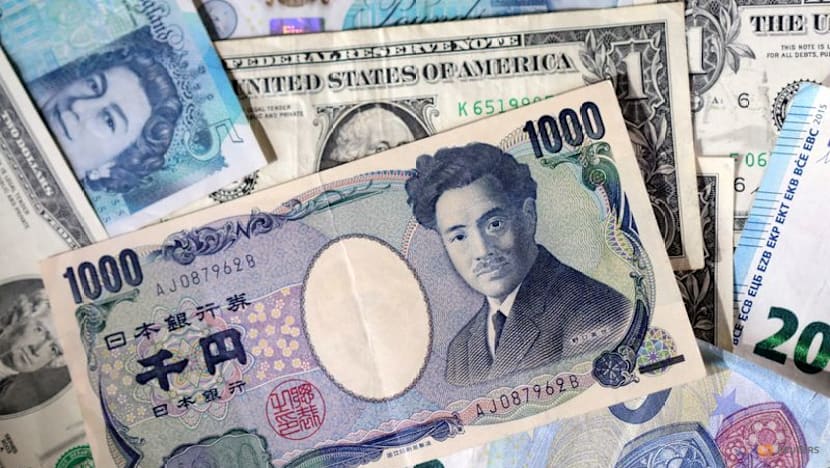
U.S. dollar, Euro, Yen and Pound banknotes are seen in this illustration taken May 4, 2025. REUTERS/Dado Ruvic/Illustration
LONDON/TOKYO, May 1 : The yen suddenly jumped against the dollar again on Friday, a day after Reuters and others reported Tokyo authorities intervened to prop up the Japanese currency, while other majors drifted in holiday-thinned trading.
Japan's top currency diplomat Atsushi Mimura on Friday said speculative positions remain in markets, putting traders on notice of possible further strikes to bolster the yen during the holiday period.
Investors had those remarks firmly top of mind, when, early in London trading on Friday, the yen suddenly strengthened from around 157.1 per dollar to 155.49. It then retraced some of those moves and was last at 156.42 per dollar.
That was the yen's second day of sharp moves. Two sources familiar with the matter told Reuters that officials had intervened to buy the yen on Thursday after it hit 160.7 per dollar, its weakest since July 2024.





The currency has been under pressure from wide U.S.-Japan interest rate gaps, and its weakness has been exacerbated by higher oil prices due to the Iran war, which have boosted the U.S. dollar. Japanese authorities are unhappy with their currency's weakness which threatens to exacerbate inflation in Japan.
Jordan Rochester, head of EMEA fixed income, currency and commodity strategy at Mizuho, said in a note that markets suspected Friday's move was further intervention and that Mimura's remarks were "clever messaging (as) otherwise markets would simply fade (Thursday's) move."
He flagged that Japanese authorities in 2022 and 2024 had carried out further currency interventions after an initial move.
"Longer term unfortunately for Japan the currency will remain under pressure the longer this war/blockade goes on and oil remains strong. FX intervention will only get them so far," Rochester said.
Data on Friday showed Japan's core inflation slowed in April as government subsidies blunted the effect of energy prices, but analysts expect price gains to accelerate from here, keeping pressure on the central bank to hike rates.
Moves elsewhere in currency markets were fairly muted with much of Europe out for the May 1 holiday. Though as Japan is also on holiday, that does not automatically mean quiet.
The euro was a fraction higher at $1.1741, as was the pound at $1.1360.
Both had strengthened on Thursday, somewhat in sympathy with the move in the yen.
Also on Thursday, the ECB and the Bank of England kept interest rates unchanged, as expected, following holds earlier in the week by the Federal Reserve and Bank of Japan.
Even so, the ECB and BOJ signaled readiness to hike rates as soon as June to contend with imported energy inflation.
The Australian dollar slipped 0.1 per cent versus the greenback to $0.7192, after closing above the $0.72 level on Thursday for the first time since June 2022, while the Swiss franc was steady at 0.7810 per dollar.