







Dollar edges higher against peers; Japanese yen strengthens
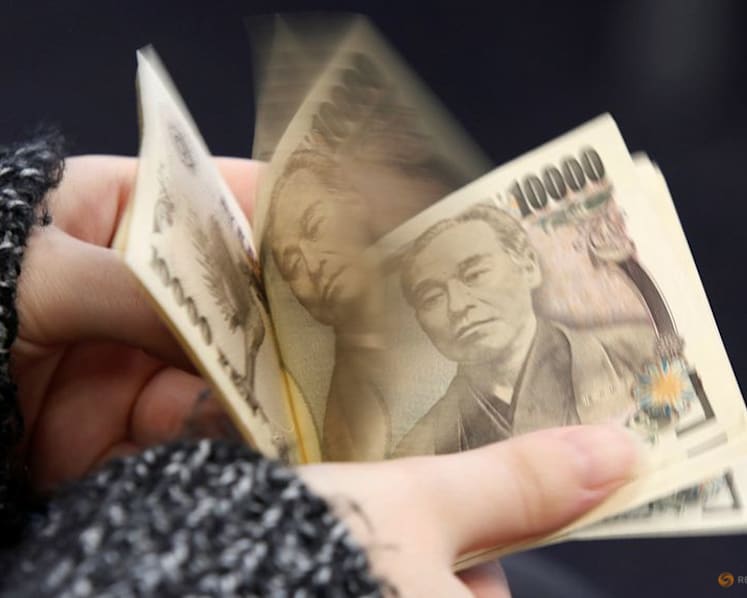
A woman counts Japanese 10,000 yen notes in Tokyo picture illustration. REUTERS/Shohei Miyano/Illustration/File Photo
NEW YORK, Feb 17 : The U.S. dollar edged higher against major currencies on Tuesday as geopolitical tensions from the ongoing U.S.-Iran nuclear talks unleashed more market uncertainty and a risk-off mood among investors.
Investors were also positioning ahead of the expected release of minutes from the Fed’s last meeting and key economic data later in the week.
Iran and the U.S. reached an understanding on the main "guiding principles" in a second round of indirect talks over their nuclear dispute on Tuesday, although a deal is not imminent, Iranian Foreign Minister Abbas Araqchi said.
The U.S. has sent a battle force to the Middle East to press Tehran to make concessions in the decades-long dispute. President Donald Trump has said "regime change" in Tehran may be the best thing that can happen.





The dollar tends to do better in times of uncertainty, with investors buying U.S. Treasuries and selling equities, said Eugene Epstein, head of trading and structured products at Moneycorp in New Jersey.
"Treasury yields are coming off quite a bit and you also have the dollar strengthening, which is kind of funny because it's back to the old mentality of risk-off. There's a potential conflict with Iran so you have the traditional buy U.S. dollar, buy U.S. Treasuries and sell equities, and that's seemingly what's going on today," he said.
The dollar was last up 0.08 per cent at 0.701 franc against the Swiss franc. The euro was slightly up 0.03 per cent against the dollar at $1.18533 against the dollar. The dollar index rose 0.05 per cent to 97.15, on track for the second straight session of gains.
"We have all the conditions technically for the dollar weakening - with the market currently pricing in the most amount of Fed cuts since the end of last year and bond yields coming off etc - and yet the dollar is strengthening. My guess is it's due primarily to this Iranian conflict," Epstein said.
U.S. stocks, including the benchmark S&P 500, ended slightly higher after choppy trading. The yield on benchmark U.S. 10-year notes fell 0.2 basis point to 4.054 per cent.
YEN REVERSES EARLY LOSSES
The Japanese yen edged higher after losing ground in early trade, continuing momentum triggered by the election victory of Prime Minister Sanae Takaichi.
Money flowing into Japan's ebullient stock market is expected to support the yen. However, Japan's Nikkei fell on Tuesday as investors booked profits, while the post-election euphoria was ebbing.
Options pricing data indicates that investors increased long JPY positions and increased short DXY positions, said Morgan Stanley analysts led by Molly Nickolin in an investor note.
The yen rose 0.17 per cent against the greenback to 153.27 per dollar.
The pound dropped after data showed Britain's unemployment rate rose to a five-year high in December while wage growth cooled, potentially adding to the case for further Bank of England rate cuts. The sterling weakened 0.52 per cent to $1.356.
"While a range of other factors are at play in our Sterling underperformance view, that relative softening trend in the UK data and the resultant scope for sharper BoE cuts remain the core features," said Goldman Sachs analysts led by Stuart Jenkins in an investor note.
The Australian dollar rose 0.58 per cent versus the greenback to $0.87375. The dollar strengthened 0.04 per cent to 6.885 versus the offshore Chinese yuan.





