Yen reverses Monday's losses, euro/dollar edges down before Fed minutes, US GDP
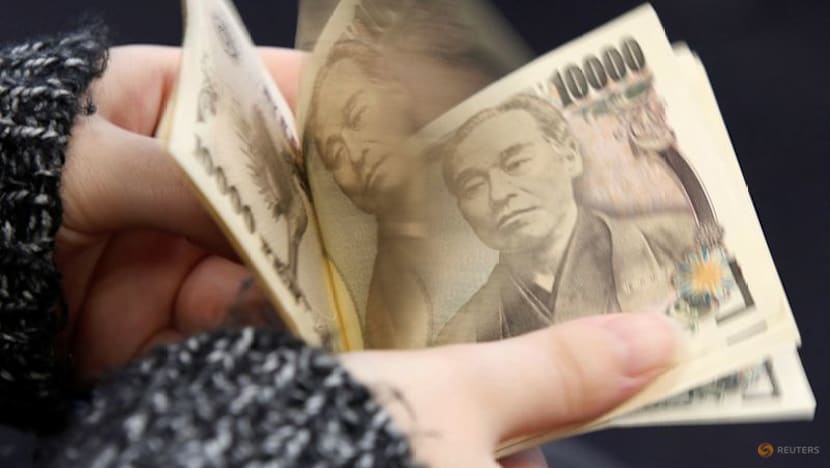
A woman counts Japanese 10,000 yen notes in Tokyo picture illustration. REUTERS/Shohei Miyano/Illustration/File Photo
Feb 17 : The yen climbed on Tuesday, reversing Monday’s losses against the euro and dollar, on expectations that Prime Minister Sanae Takaichi’s expansionary fiscal policy will continue to give support.
The greenback has risen slightly against the euro in the last two sessions as markets awaited signals, expected later this week, about the potential timing of rate cuts by the Federal Reserve.
Ahead of Japan's general elections on February 8, yen long‑end yields climbed and the currency slipped, reflecting bets that Takaichi would unleash more fiscal stimulus after an election victory, stoking inflation.
Since the vote, the Japanese bond yield curve has flattened, traded inflation has held steady and the yen has strengthened, as markets factored in a higher likelihood of portfolio flows returning to Japanese assets and a shift out of Japan’s low real‑rate era.
However, some analysts said the swift market reaction looked premature, noting that a repatriation of funds is unlikely in the near term and that the Bank of Japan is more likely to raise rates only gradually.
The yen strengthened 0.50 per cent to 152.80 per dollar, after falling 0.55 per cent the day before. It rose 0.52 per cent to 180.97 against the euro after dropping 0.37 per cent.
Money flowing into Japan's ebullient stock market is expected to support the yen. However, Japan's Nikkei fell on Tuesday as investors booked profits, while the post-election euphoria was ebbing.
Barclays said its model signals the high-140s as fair value for the dollar/yen, which corresponds to levels just before Takaichi won the Liberal Democratic Party leadership race last October, paving the way for her to become prime minister.
Assuming that the "Takaichi premium" does not fully unwind, 150 would likely act as a near-term target.
The yen dropped on Monday after data showed that Japan's economy saw only meagre growth in the fourth quarter.
DOLLAR ON HOLD BEFORE DATA, FED MINUTES
Trading was thin with many markets in Asia closed for the Lunar New Year holiday and following the Presidents Day holiday in the U.S. Key economic events lie later in the week, with minutes from the Fed's last meeting and advance figures on U.S. gross domestic product.
"We're quite positive on the U.S. economy," said Kristina Clifton, senior currency strategist at Commonwealth Bank of Australia in Sydney.
"The market is currently pricing a high chance of a June interest rate cut, which is also our view. However, we differ from the market in that we expect a follow-up cut in July."
The dollar index, which measures the greenback against a basket of currencies, inched up to 97.12 after a 0.2 per cent gain in the previous session. The euro slid 0.05 per cent to $1.1843.
Data on Friday showed U.S. consumer prices increased less than expected in January, giving the Fed additional leeway for policy easing this year. Money market traders are pricing about 59 basis points of easing for the rest of this year.
The pound dropped on Tuesday after data showed Britain's unemployment rate rose to a five-year high in December while wage growth cooled, potentially adding to the case for further Bank of England rate cuts. It was last down 0.35 per cent at $1.3582.
The Australian dollar weakened 0.05 per cent versus the greenback to $0.7069.
Minutes of the RBA's last policy meeting showed the board was uncertain about whether further hikes would be needed, but highlighted that inflation had already been above target for three years.