Commentary: Football fans will still pay to attend the most expensive World Cup in history
Despite the uproar over ticket prices for the North American World Cup, fans will still open their wallets to make their own football dream come true, says sports writer Michael Church.

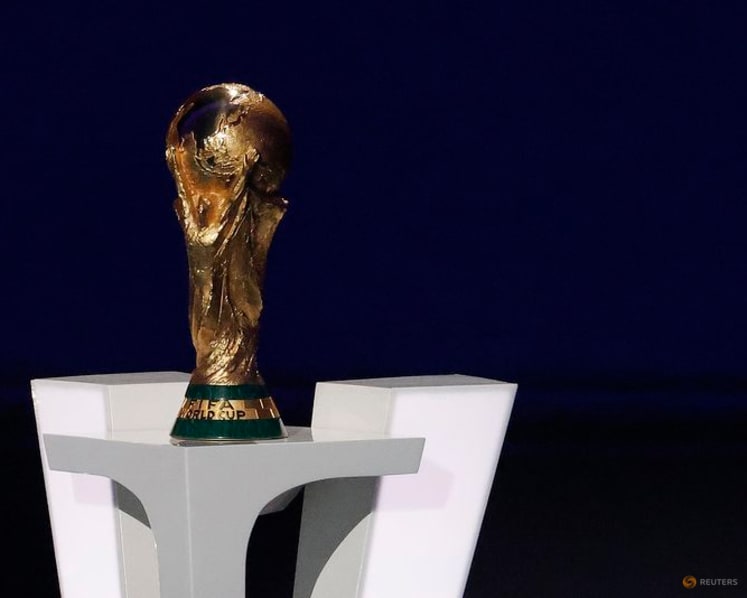
Soccer Football - FIFA World Cup 2026 - FIFA World Cup 2026 Draw - John F. Kennedy Center for the Performing Arts, Washington, D.C., U.S. - December 5, 2025 General view of the FIFA World Cup trophy during the draw Pool via REUTERS/Mandel Ngan

This audio is generated by an AI tool.


HONG KONG: The cost of tickets for next summer’s FIFA World Cup in the United States, Canada and Mexico has triggered highly emotive public discourse.
Football fans hoping to follow their team from the opening group match through to the final in New Jersey on Jul 19, 2026 can expect to pay around US$7,000 in ticket prices alone. Then there’s the travel, accommodation and day-to-day expenses that must also be factored in.
Once everything is included, attending the World Cup in 2026 will be a costly endeavour, and not even FIFA’s partial climbdown that has seen the release of a small number of more modestly priced tickets has managed to turn down the volume.
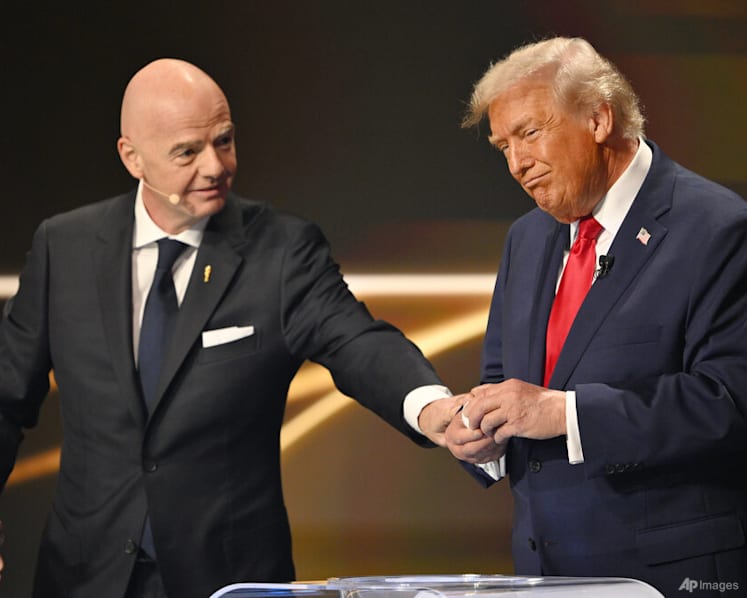
FIFA president Gianni Infantino and the organisation he leads have been widely – and predictably – vilified, with media and fans alike expressing their displeasure that the 2026 finals will be the most expensive in the tournament’s 96-year history.





NORTH AMERICAN SPORTS FANS USED TO HIGH PRICES
Amid all the teeth gnashing, the reasons behind the issue have been largely lost to those unaccustomed to the pricing of major sporting events in the United States.
In England, Germany and elsewhere in Europe, ticket prices for the Premier League, Bundesliga or the UEFA Champions League can be expensive, but they are still affordable for the majority of supporters.
North American sports fans, however, have a much greater tolerance for the kind of prices being charged. Ticket prices in the National Football League (NFL), for example, far outstrip those charged in the Premier League or even at this World Cup, with the average price to watch Super Bowl 2025 champions Philadelphia Eagles this season being US$475 per game.
The Super Bowl is on another level entirely: In 2025, prime tickets could cost well in excess of US$15,000. In that context, the 2026 World Cup almost looks affordable.
In a commercially mature marketplace like the United States, stadium owners charge a premium for the use of their venues and there are no bargains for anyone. It is no wonder that the North American World Cup has commended such eye-watering prices.

FINANCIAL IMPORTANCE OF WORLD CUP
What should not be ignored, either, is the financial importance the World Cup holds for FIFA itself.
The tournament is FIFA’s cash cow, with the sale of broadcasting rights being the organisation’s most significant revenue source. Infantino, as president, has one role above all others: to ensure the event generates as much income as possible to safeguard FIFA’s existence.
While FIFA is a non-profit organisation, many of its 211 member associations depend on the governing body doling out regular cash handouts to stay afloat. That is how the sport survives in countries beyond the game’s heartlands.
On top of that, FIFA runs numerous loss-making events beyond the World Cup.
Some, like the Beach Soccer World Cup, might be niche. But others, such as the FIFA Women’s World Cup and the increasing number of youth tournaments for boys and girls, are important to the sport’s continued growth or carry a huge positive societal impact.
Those all cost significant sums of money to run, and while Infantino has made cosying up to oil-rich nations like Saudi Arabia and Qatar a signature of his almost 10-year stint in charge, the Swiss lawyer has to ensure that the revenues continue to flow.
DEMAND UNAFFECTED
Until now, supporters have largely escaped the worst of these financial pressures. And even though this issue has generated considerable coverage, numerous fans are still prepared to open their wallets to make their own World Cup dream come true.
“The FIFA World Cup is the largest and most popular sporting event in the world,” says Michael Edgley, director of the Green & Gold Army, who have been arranging World Cup tours from Australia since the 2001 Women’s World Cup.
“Are people unhappy about the ticket prices? Yes, but at the moment, demand and the desire to go far outweighs negativity around ticket prices,” he told me, based on his observations of his Australia clients.
Edgley’s company is expecting to take up to 1,000 fans to the group stages in June 2026. Around 500 packages, with prices starting at around A$10,500 (about US$6,950) for a 14-day trip, have already been sold six months ahead of the start of the tournament.
And as Edgley points out, the once-in-a-lifetime factor will ensure the success of the event, whether fans from overseas decide to travel in significant numbers or not.
“America is a multicultural beacon of the world and its expat communities are very deep and very strong,” he says.
“The Iranians, the Koreans, the Japanese, the Scottish and the English will all be there in the thousands to see their teams. It’s going to be a phenomenal event.”
Michael Church is a sports journalist with over 25 years of experience covering Asian football.