







Commentary: Do we really need 92,000 people at a climate conference?
The United Nations’ COP31 climate summit needs reform at the very least, which could include drastically paring it down, says Bloomberg Opinion's Mark Gongloff.
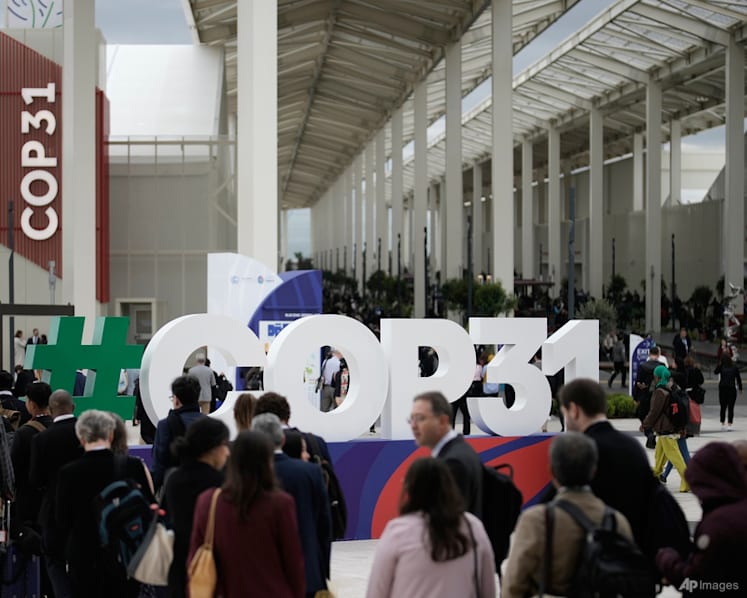
People wait in line at the COP31 U.N. Climate Summit, Thursday, Nov. 12, 2026, in Antalya, Türkiye. (AP Photo/Khalil Hamra)
NEW YORK: A grand total of 55 delegates attended the US Constitutional Convention in 1787. An even smaller number of rebels met with England’s King John to bang out the Magna Carta in 1215. The point is that sometimes a relative handful of people can resolve big, knotty conflicts with novel, world-changing solutions.
In contrast, more than 92,000 people are expected to attend the United Nations’ COP31 climate summit, which is taking place now in Antalya, Türkiye, according to a Carbon Brief analysis of UN registration lists. That would make this COP the biggest on record, topping 2023’s COP28 in Dubai.
The Dubai meeting was a mixed bag, producing some significant commitments along with a lot of fossil-fuel lobbying. The current one is looking less productive so far.
It’s encouraging to see so many people at least pretending to pay attention to the climate when Democratic politicians won’t even whisper the word. But you also have to wonder whether too many cooks spoil the climate broth.





NUMBERS DON'T MEAN ANYTHING?
I wrote a column asking that question about COP28 in 2023, when a record 70,000 people were expected to attend. That was already a lot, nearly 50 per cent higher than the previous record, set a year earlier. But it turned out to be a lowball figure; nearly 86,000 people showed up to those talks, according to the final UN tally.
The vastness of those hordes didn’t stop COP28 from producing the world’s first, grudging admission of the need to dump fossil fuels; a promise to triple clean-energy capacity and double efficiency by 2030; and a loss-and-damage fund for developing countries, among other notable steps. Fifty oil and gas companies even agreed to zero out their methane emissions by 2030.
But the fossil-fuel statement lacked a timeline or specific promises, and no further progress on sharpening it has been made in subsequent COPs. By COP29 a year later, Donald Trump had just won a return trip to the White House, beginning America’s messy divorce from climate sanity. Much of the rest of the world lost its hunger for action at the same time, as my colleague David Fickling wrote then.
COP30 in Brazil, attended by a paltry 45,000 people, was another dud. By then, the world had already fallen far behind the pace of change needed to meet its COP28 goals, as my colleague Lara Williams wrote.
At the current COP, negotiators are still struggling to agree on language about hastening the energy transition. Developed countries keep balking at promising more money to help developing ones mitigate and adapt to a hotter planet after existing financing pledges have already plunged 70 per cent this year, according to another Carbon Brief report.
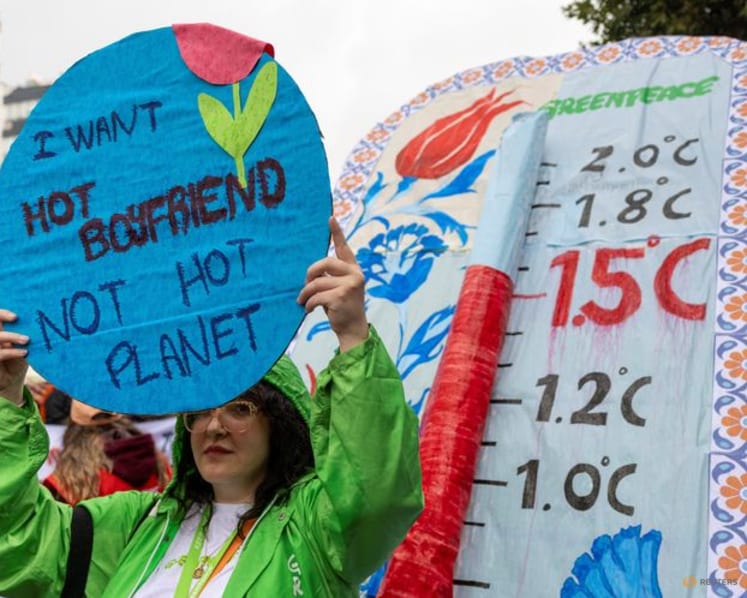
Even one big concrete suggestion from co-hosts Türkiye and Australia, to commit to boosting electricity’s share of global energy use to 35 per cent by 2035, is problematic, as Williams wrote last week, because it doesn’t require the ultimate sources of that electricity to be renewable.
Meanwhile, you have all the other drawbacks of a big, honking climate meeting.
Petrostates like Saudi Arabia and fossil-fuel-dependent countries keep resisting aggressive commitments, part of a concerted effort to slow climate action.
So far, 154 private jets have landed in Antalya during the summit, spewing an estimated 1,199 tons of carbon dioxide, according to flight-tracker PolluterJet. That roughly matches the annual carbon emissions of 30 typical US households.
More than 100 companies and organisations that produce, promote or excessively emit fossil fuels have delegates in Türkiye, according to the activist group Kick Big Polluters Out.
Nearly 500 attendees hail from the AI and data-centre industries, the Guardian reported, citing Lighthouse Reports, a nonprofit research group. A draft of a milquetoast agreement to maybe make artificial intelligence less wantonly polluting quickly died on the vine, the Guardian noted.
It’s all enough to make you suspect, as many have for many years, that maybe these COP meetings aren’t doing much good, no matter how many people show up.
More than 30,000 people attended 2015’s COP21 in Paris, four times the average attendance of early COPs. And it was arguably the most productive COP of all, resulting in an agreement to limit global heating to 1.5°C above preindustrial averages at best and 2°C at worst.
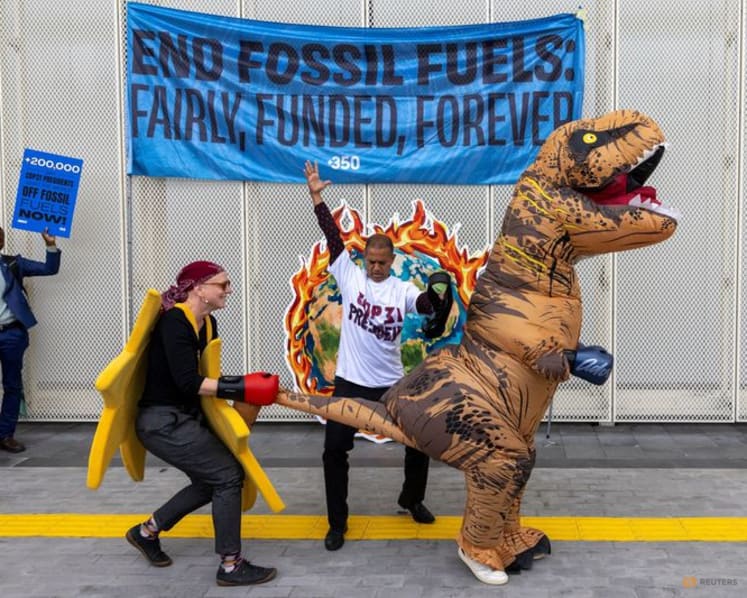
REFORM NEEDED
In the 11 years since, despite ever-bigger COPs and massive progress on renewables, the world is on track to fail on both temperature goals, with every tenth of a degree compounding the harm to human health and welfare.
The UN’s flagship climate summit needs reform at the very least, which could include drastically paring it down.
Until that happens, we can at least take some satisfaction that a climate confab in 2026 can attract enough people to overflow the Rose Bowl.
In 2023, when the world was young, Fickling saw an upside in Dubai’s massive crowds, comparing COPs to a trade show drumming up cash for the energy transition. That spending has flourished even in today’s green-hushing era, with Trump lending an unwitting hand.
To the extent an overstuffed COP reminds the world of green-investment potential, it may still have some use.




