







Commentary: What complaints about dancers in MRT linkways reveal about us
Singapore’s urban planning has historically been driven by pragmatic considerations and this may have led to a perception of space as primarily a utilitarian resource, says Hoe Su Fern from the Nanyang Academy of Fine Arts.
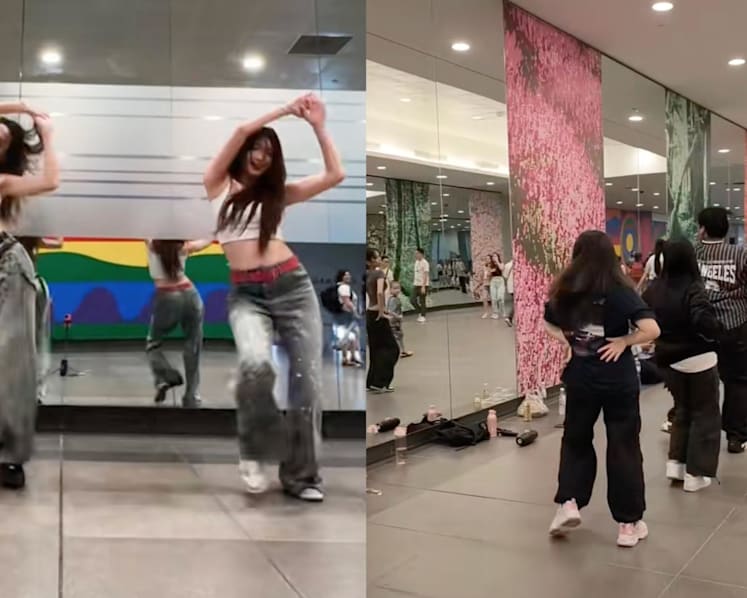
Left: Dancers at the underground linkway at Bayfront MRT in front of the newly frosted mirrors. Right: Previously, the unfrosted mirrors drew dance groups seeking out free spaces to rehearse. (Photos: TikTok)

This audio is generated by an AI tool.


SINGAPORE: A recent series of incidents has resurfaced the complex issue of how public spaces are used in Singapore.
This month, mirrors along an underground linkway at Bayfront MRT station were frosted after feedback that dancers using the area as a makeshift practice space were obstructing pedestrian flow.
Dancers who have turned Marina Bay Sands' outdoor fountain area into an unofficial performance venue also found themselves having to find new spaces after the integrated resort introduced approval requirements for all choreographed performances and filming last year, citing the shared nature of the space.
Beyond dance and youths, a group of elderly who regularly sing their beloved tunes at the entrance of Chinatown MRT station has also drawn complaints from nearby shop owners and patrons, according to media reports.





These incidents are not isolated events. Instead, they reflect the intricate interplay between land use, urban planning and community needs in a maturing society: How do we balance individual needs and expressions with collective harmony in shared public environments?
PRAGMATIC LAND USE
Singapore’s urban planning has historically been driven by pragmatic considerations – efficient land optimisation, order and economic utility.
This expedient strategy of high-density development and designated land zoning has helped create a compact city. It has also inadvertently resulted in a perception of space as primarily a utilitarian resource – places to live, work and move efficiently.
Yet, as Singapore’s population diversifies and urban density increases, expectations of how our public spaces can be used will progressively vary.
DANCE OR DISAPPEAR?
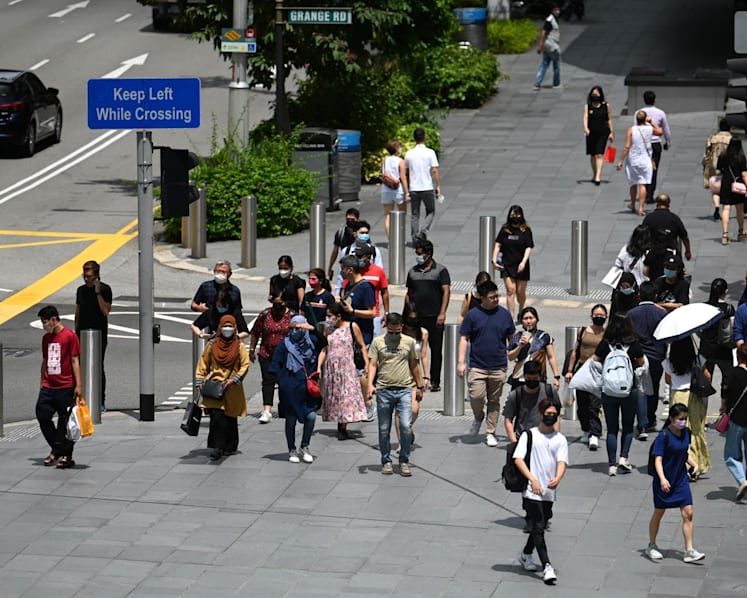
In the latest incident, as MRT linkways serve as vital connectors that facilitate daily commute and keep our city moving, concerns about safety and disruption are valid. We must also recognise the logistical constraints that operators have to contend with, including liability and crowd management.
But as someone who works in an arts education institution located in the city centre, I view these ground-up space activations through a different lens.
My daily commute requires me to navigate my way through dancers practising their routines at the basement concourse of the Singapore Management University. The dancers themselves must also carefully manoeuvre the bustling environment to carve out their own space amid the flow of students, commuters and other dancers. This intuitive negotiation is a form of choreography itself, transforming limited space into sites of artistic expression and social connection.
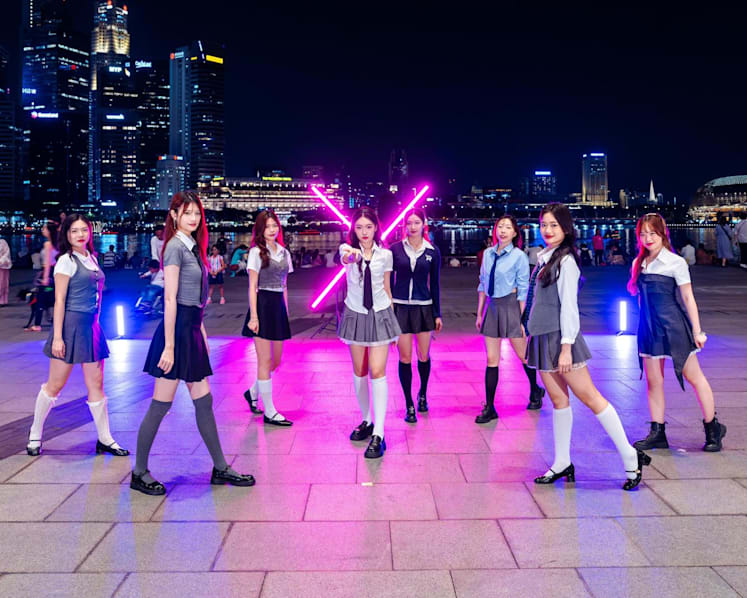
There are other similar pathways around Singapore where it is common to find groups of dancers getting into their groove, including a new option at Marina South Pier MRT station. Some have questioned if it was appropriate for dancers to practise in public spaces, rather than renting studios.
But this overlooks a raw reality: Affordable spaces for the arts have been shrinking, as evident from a recent evening visit to a crowded *SCAPE, the community youth space in the heart of Orchard Road.
The familiar sights I see daily also remind me that creativity and passion thrive even in the most constrained environments, enriching our urban fabric in unexpected ways.
Importantly, these ground-up creative activations serve as incubators for local creative talent, while making creative expression accessible to all, regardless of background or means, and without the need for massive budgets or top-down mandates.
Providing spaces for spontaneous activities is also important from a simple perspective: Isn’t it beneficial for our youths – or seniors – to have safe spaces to discover hobbies, foster physical health, social bonds and a sense of community, rather than doomscrolling?
STRIKING A BALANCE
How then do we balance order and spontaneity, structure and creativity, play and community peace?
Herein lies the importance of shared civic responsibility, where everyone co-existing in a community has a duty to create positive environments that are inclusive, lively and respectful.
In recent years, the Nanyang Academy of Fine Arts (NAFA), University of the Arts (UAS), has been collaborating with various stakeholders to actively manage and placemake its neighbourhood through the promotion of arts and creativity. A stroll down the NAFA campus on Bencoolen Street perennially offers unexpected delights, from pop-up art markets to outdoor exhibition booths and inspiring window displays showcasing the creative works of students.
NAFA is conscious that these walkways must remain as accessible, unobstructed routes. Hence, our students and partners also cooperate to ensure that their creations do not hinder movement, create cluster or compromise safety.
These collective endeavours show that sustaining lively public spaces through civic responsibility involves a mutual understanding that public spaces are meant to be shared multi-user environments – accessible, welcoming and safe for all.
Ultimately, the continuous evolution of Singapore into an inclusive and inspiring city requires us to recognise that we all have a role to play in ensuring that the spirit of innovation and artistic expression can thrive in unity with practical needs. Maybe in doing so, we can slowly shed the perception that space is primarily a utilitarian resource and allow our city to become a canvas for expression, created by and for the people.
Hoe Su Fern is Principal Research Fellow at NAFA-UAS, where she directs the inaugural Cultural Policy and Evidence Lab for Singapore and Southeast Asia.




