Commentary: Japanese PM Takaichi’s great election gamble
Japan’s first female prime minister is pulling out all the stops in presenting herself as a force for real change, says the Financial Times' Leo Lewis.
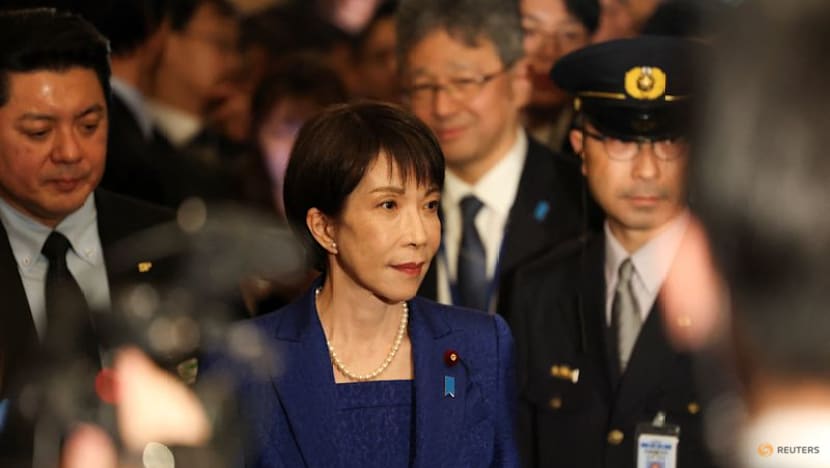
Japan's Prime Minister and ruling Liberal Democratic Party (LDP) leader, Sanae Takaichi, arrives at the parliament hall ahead of the dissolution of the lower house of parliament in Tokyo, Japan, Jan 23, 2026. REUTERS/Issei Kato
TOKYO: Moments into the first stump speech of her election campaign, Sanae Takaichi asked voters to imagine her dyeing her hair - a procedure that Japan’s 104th prime minister said she performed herself.
Mid-application, in her scenario, disaster strikes. It’s the Big One: the cataclysmic earthquake that Tokyo has long dreaded. Basic services, including water, are severed.
“The hair dye would be applied, but I wouldn’t be able to wash it off,” said Takaichi, who has staked three decades in politics, a breakthrough for women and arguably Japan’s hardest-won premiership on the shortest general election campaign in the country’s post-war history. The reference to quake-interrupted hair dyeing led smoothly into an impassioned pledge for significantly greater earthquake readiness.
The election is a mighty gamble on Takaichi’s personal popularity, her ability to present herself as a force for real change and capacity to win the nation over very quickly. The ballot is likely to be close. She has a lot of Japan to convince that a vote for the uninspiring local Liberal Democratic Party (LDP) candidate in their constituency is reliably a vote for her dynamic premiership.
Unusually for Japan, the promise of change is as electorally critical for the incumbent as for the challengers. Every dog whistle counts, and the nation’s hair-dyers may yet swing this. Takaichi has broken Japanese prime ministerial ground by even discussing the subject in public.
Surveys suggest that about 70 per cent of the 33 million Japanese women aged between 40 and 79 dye their hair to cover greying. Half, like Takaichi, do it themselves rather than spend money on a salon. In a white-knuckle election race, Japan’s over-40 female hair dyers represent a very useful 22 per cent of the total electorate.
CHALLENGES IN A RUSHED ELECTION
The Feb 8 election, aimed at providing Takaichi and the LDP with a clear parliamentary mandate, has a rushed, chaotic feel to it.
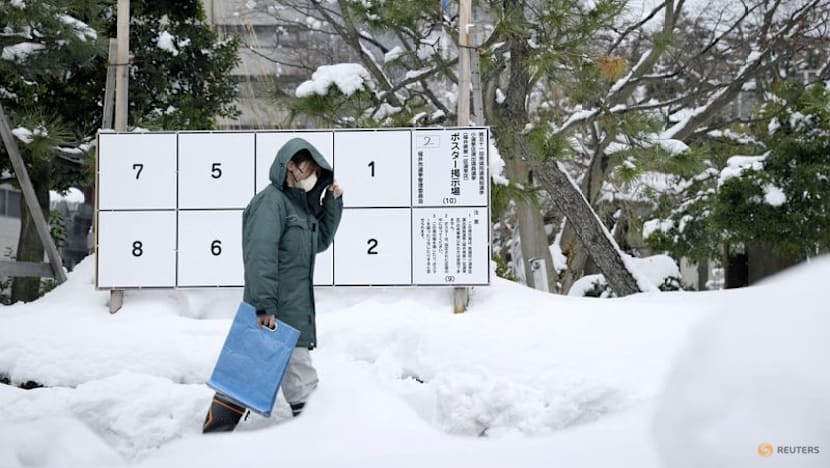
There is a reason Japan has only ever held a couple of elections in February. It’s a time of year when snow often blankets large parts of the archipelago. University entrance exams are on. The impending end of the fiscal year creates an up-all-hours distraction for millions of workers.
On top of that, Takaichi has chosen to seek this mandate in a phase of true turmoil, only a fraction of which is within her powers to relieve. Japanese households and businesses are wrestling with the country’s exit from decades of abnormally low inflation, wage growth and interest rates.


The so-called “Takaichi trade” continues to push Japanese equities higher on the promise of free-spending stimulus, but the yen has swung alarmingly during the prime minister’s three months in power, and the threat of intervention from US and Japanese authorities now looms. The Japanese government bond market looks both historically fragile and ever more capable of producing contagious financial rupture.
Japan meanwhile remains locked in a dispute with its biggest trading partner, China.
On Saturday, Takaichi will break from campaigning for three precious hours to sit down with British Prime Minister Sir Keir Starmer - a meeting that will serve to highlight the shared plight of exasperated US allies with everything to lose from a global order collapse.
SETTING HERSELF APART
With such a daunting list of challenges, and so few clear-cut answers, Takaichi’s campaign is about how different she is both from the opposition and from her many LDP predecessors.
In her speeches, she has set out the risks to Japan - from its lack of food self-sufficiency to cyber-attack vulnerability - in refreshingly blunt terms. She is brutal on the LDP’s historic failure to invest in Japan’s future and enthuses over the nation’s strengths - from nuclear fusion to animation - like she is pitching to a late-stage venture capitalist.
The signalling looks extremely shrewd. Takaichi, who rose from a middle class background, has broad appeal. But she has been polling consistently well with women, young and old, who know what she has been through to get here. She presents as an agent of change, but with a reassuring adherence to core Japanese values. She must make herself and LDP candidates look simultaneously safe to vote for and dangerous to the party’s crusty old perspectives.
Takaichi has never been a campaigning feminist. But she has now invited the huge base of older voters into a strain of camaraderie that none of her male predecessors could ever have offered.
To younger Japanese, the very fact that she has attempted that gambit could crystallise her credentials as someone who dares to do things differently. This does not guarantee victory; it does guarantee spectacle.