China says unmanned moon mission delayed over 'launch conditions'
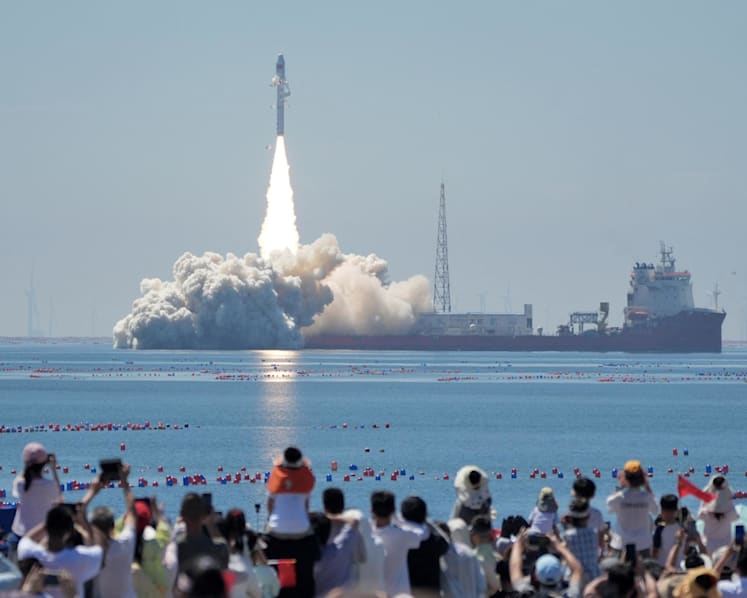
A Jielong-3 carrier rocket carrying two satellites, the Dongfang Huiyan Hyperspectral 01 and 02, lifts off from a launch ship off the coast of Haiyang in eastern China's Shandong province on Aug 5, 2026. (Photo: AFP/CN-STR)
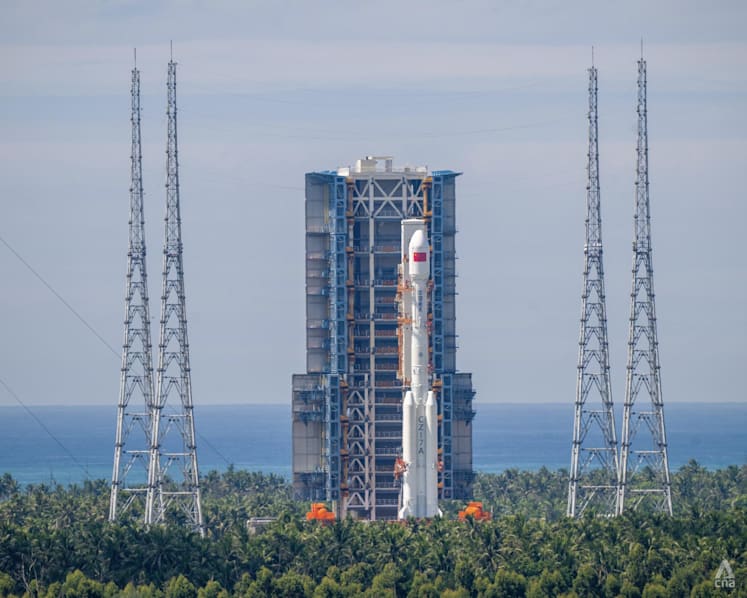
BEIJING: China's manned space agency said on Sunday (Aug 23) it is delaying a research moon mission that is part of Beijing's efforts to land a crew there by 2030, less than two weeks after a rare launch failure.
The agency said after a "comprehensive assessment" the mission, which involved sending the Chang'e-7 lunar probe on a Long March 5 carrier rocket, "does not meet launch conditions and cannot take place during the planned window this year".
The decision to delay was "based on the principle of prudence, reliability and absolute mission success," it added, without providing further details on what conditions were not met or when the launch would be rescheduled.
The mission - meant to search for water on the moon's south pole - was scheduled to depart either over the weekend or Monday, according to media reports.





Last week, the agency said the probe and carrier rocket had been moved to the takeoff area at Wenchang Space Launch Center in southern Hainan province.
As of Wednesday, the takeoff site and equipment were in good condition, with inspections to take place and a launch "scheduled for the coming period".
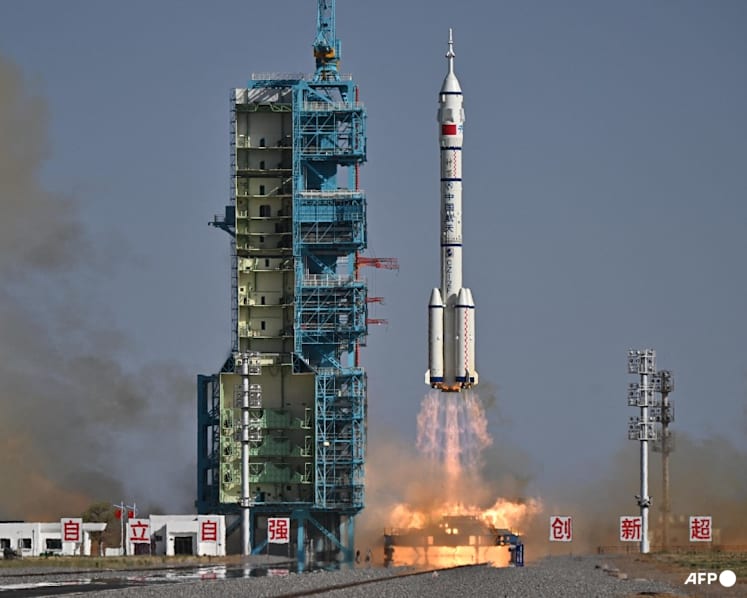
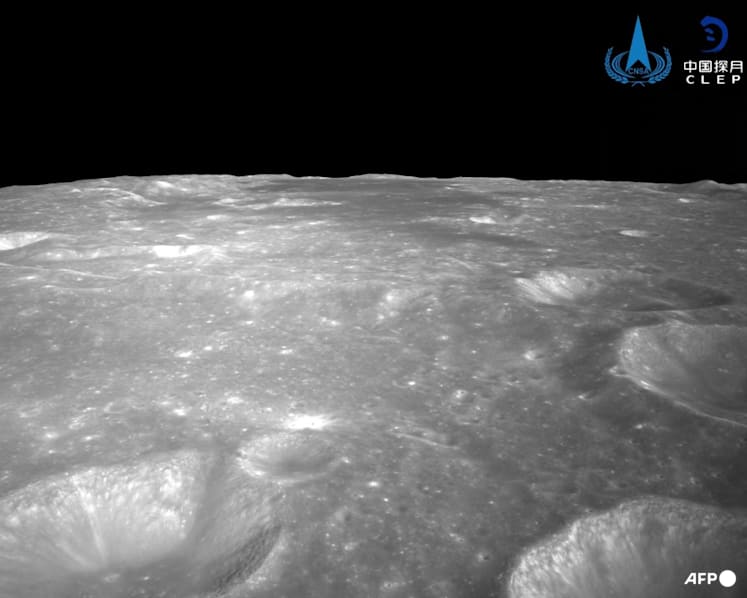
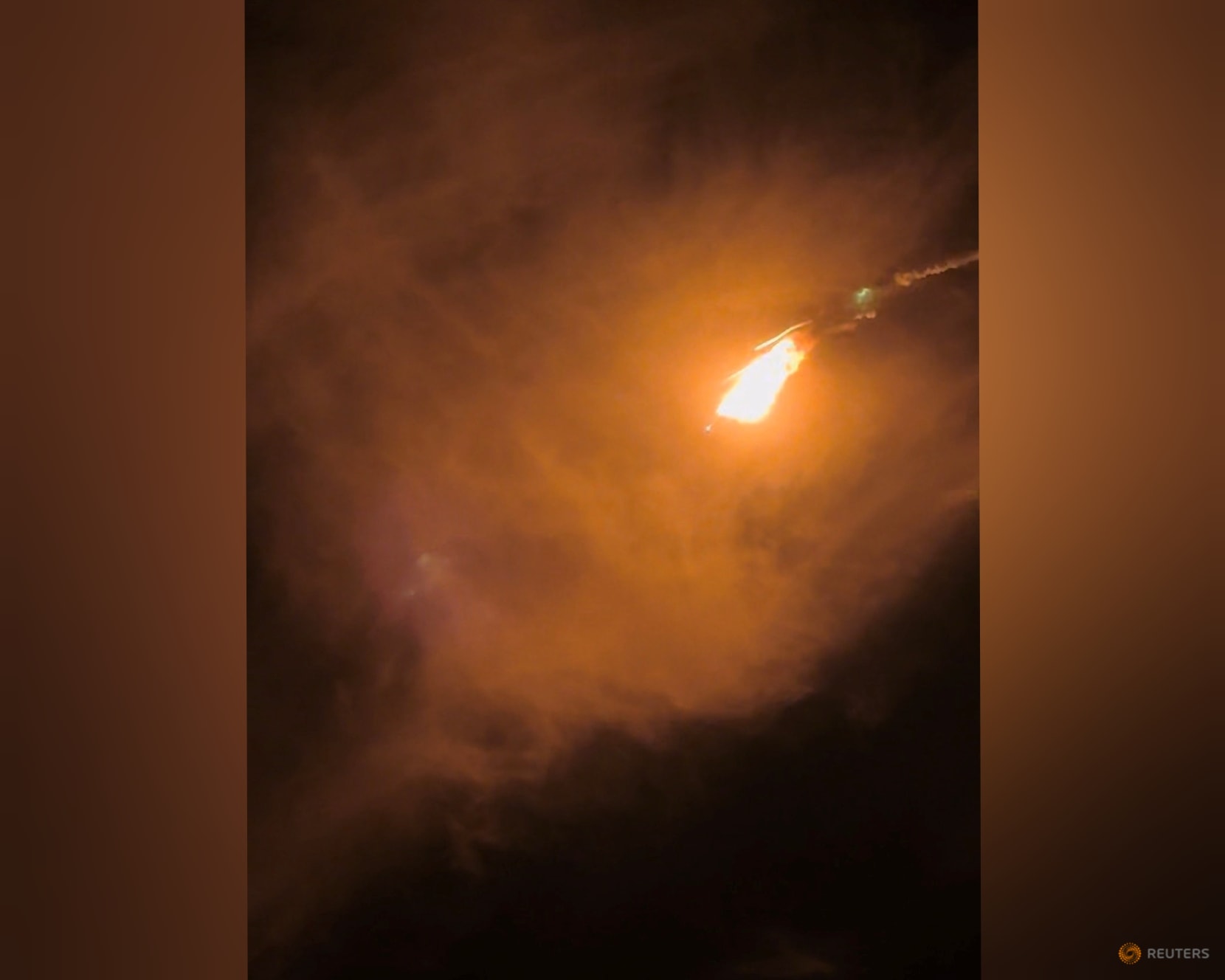
The Chang'e-7 delay comes just under two weeks after media reports showed a rocket launched from the Hainan site had exploded, as crowds watched a fiery ball in the sky.
The failed mission involved a Long March 7A carrier rocket, which had lifted off from the Wenchang Space Launch Site, state news agency Xinhua said at the time.
An "anomaly" occurred when the rocket carrying the Zhongxing-4B communications satellite was in flight, Xinhua added.
The cause of the failure was under investigation, it said.
Beijing has ploughed billions of dollars into its space programme in recent years to achieve what President Xi Jinping calls the country's "space dream".
China successfully landed a reusable rocket for the first time in July, according to its space agency, marking a major step in its space ambitions and in reducing launch costs.
The country is aiming to land astronauts on the Moon before 2030, a race in which the United States is also competing with its Artemis programme.
Clive Neal, professor of civil and environmental engineering and Earth sciences at the University of Notre Dame, said Chang’e-7’s delay was less a setback than a sign of caution given the complexity of the mission.
“Getting to the moon’s south pole is very complex because of the lighting conditions, (which) can change,” he told CNA’s Asia First programme.
“You need to maximise those opportunities through those launch windows. If you miss the window, you have to wait for the same window the next year.”
Chang’e-7’s solar-powered hopper is designed to fly into shadowed craters for exploration before returning to sunlit areas to recharge. Timing is therefore particularly important as sunlight is limited at the lunar south pole.
Neal added that the mission could provide crucial “ground truth” about water ice on the moon.
“We've got a lot of orbital data that suggests there could be a lot of water ice there, but we need to get to the surface to see how extensive those water ice deposits are,” he said.
The findings could have implications for future human activity on the moon. If extensive deposits are confirmed, Neal said future lunar bases could be located near resources capable of supporting astronauts.
“If they do find extensive deposits of water ice, then (we) can process water to give hydrogen and oxygen rocket fuel, so we can refuel rockets going to the moon,” he said.
“And (we can) put lunar bases close to those resources that can sustain humans on the surface of the moon.”