Former Chinese premier Zhu Rongji dies aged 97
Former Chinese Premier Zhu Rongji coaxed and cajoled China's way into the World Trade Organization in 2002 through gruelling negotiations.
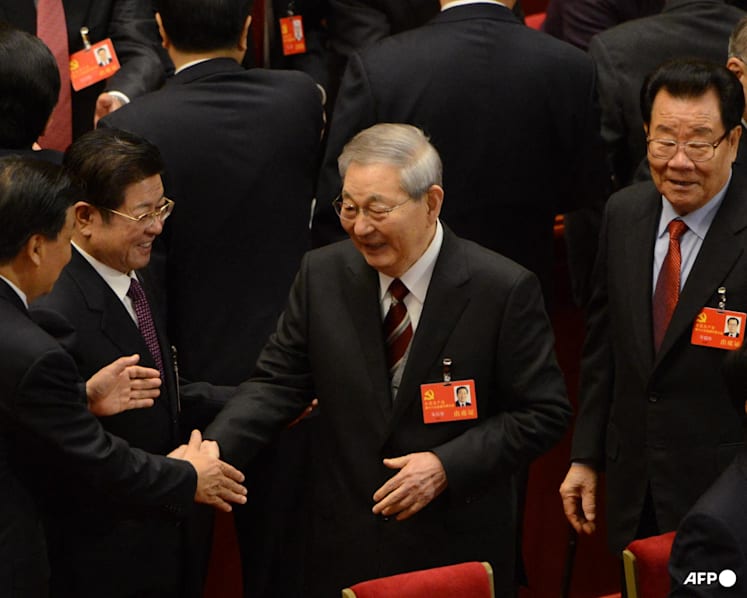
Former Premier Zhu Rongji (centre) shakes hands with a delegate at the opening of the 18th Communist Party Congress at the Great Hall of the People in Beijing on Nov 8, 2012. (Photo: AFP/Wang Zhao)
BEIJING: Former Chinese Premier Zhu Rongji, whose market reforms helped drive China's extraordinary economic rise, has died from illness at the age of 97, state media reported on Wednesday (Aug 12).
He died at 11.06am on Wednesday, Xinhua news agency reported.
Zhu served as vice-premier from 1991 to 1998 and then as premier until early 2003.
He was "an outstanding member of the Communist Party of China, a long-tested and loyal communist fighter", Xinhua quoted his obituary as saying.





"The life of comrade Zhu Rongji was a life of revolution, a life of struggle, a life of glory," it said.
"It was a life dedicated wholeheartedly to serving the people, one given to the communist cause. His passing is a major loss for the party and the country."
ROLE IN CHINA'S ECONOMIC REFORM
Zhu graduated from Beijing's elite Tsinghua University, joining the Communist Party in 1949, the same year Mao Zedong declared the People's Republic of China.
Sent to the countryside during the chaos of the Cultural Revolution, he gradually worked his way up through the ranks after being politically rehabilitated, and was appointed Shanghai mayor in 1987, overseeing its first steps into becoming the global financial hub it is today.
Moving to Beijing in 1991 to work for the central government, he helped push the reforms that transformed China from a beleaguered hold-out against the collapse of Soviet-style Communism in the early 1990s to an emerging superpower with economic growth rates envied by other governments.
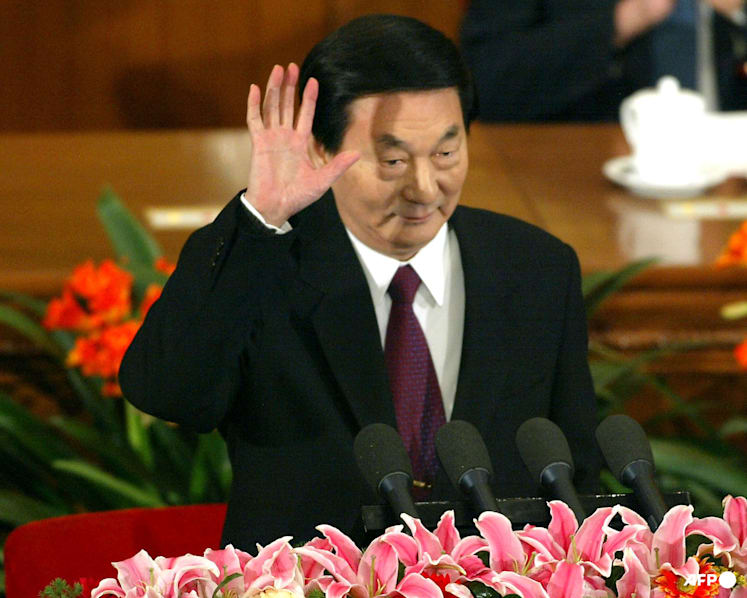
Zhu dragged back the Chinese economy from overheating in the early 1990s, and then as premier pushed through reforms that shut or privatised many state-owned firms and laid off workers, wrenched tax power from local officials to the central government, and launched housing ownership reforms that gave birth to a feverish real-estate boom.
Above all, he coaxed and cajoled China's way into the World Trade Organization in 2002 through gruelling negotiations.
At the time, many Chinese officials feared he had made so many concessions to gain entry that China's economy would be hobbled.
By no means did all Chinese observers think Zhu's tenure was an unalloyed success. Some said missteps in grains policy, tax distribution and state factory shutdowns left messes that his successors had to clean up in quieter ways.
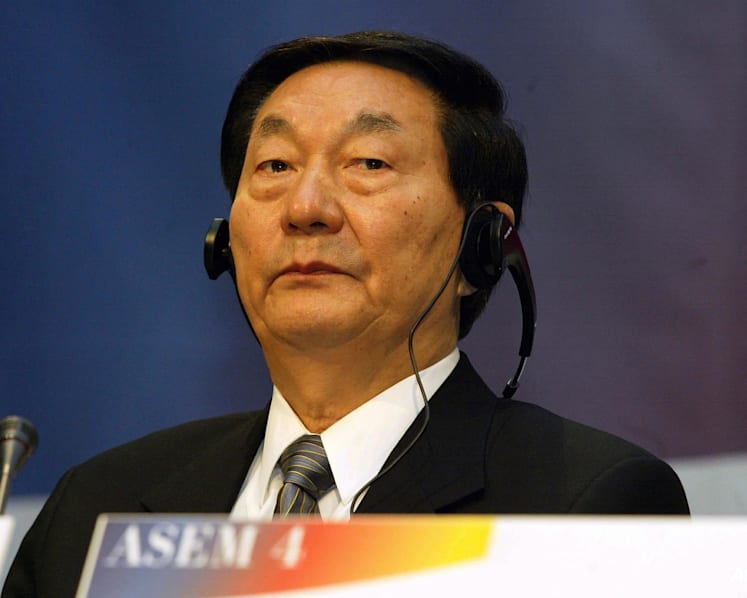
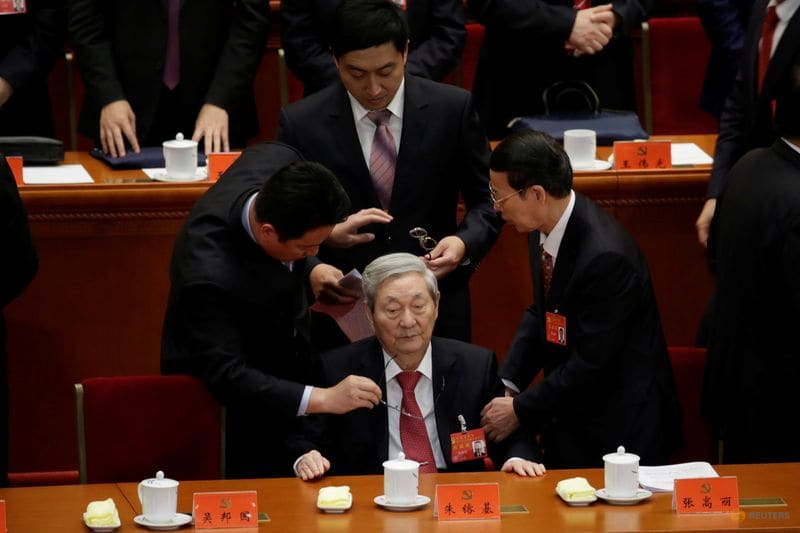
NEVER MINCED HIS WORDS
The former premier was known to never mince his words.
When a four-volume selection of his speeches came out in 2011, they shocked readers with his description of "tofu dregs" flood dykes built by "parasites", and erring bankers labelled as "half-wits".
His blunt comments from his years in power became best-sellers, finding eager readers in a nation whose then leaders were seen as wary and cautious, prone to often bland public pronouncements.
The reaction to Zhu's speech selection also reflected deeper anxieties coursing through China as it approached a transition that ushered in Xi Jinping as leader.
Indeed, many of the problems that dogged China's economy as Xi prepared to take power dominated "The Authentic Speeches of Zhu Rongji": local government debt and reckless bank loans, inflation and feverish urban growth, and corruption devouring public trust and coffers.
"Our country faces many potential crises that could erupt at any time," Zhu said early in 1998.
"Ordinary people are discontent about us in many ways. Especially, there is corruption among officials, the gulf between rich and poor, and the way some local officials act like tyrants."
Zhou Ruijin, a former senior editor of the People's Daily, the Communist Party's official newspaper, suggested in a 2011 interview that the leaders likely to succeed then-President Hu Jintao and then-Premier Wen Jiabao had much to learn from Zhu.
"The Zhu Rongji era was one of promoting big reforms, and it nurtured a group of brave risk-takers who were at the forefront of pioneering a market economy," Zhou, a cheerleader for rapid market reforms in the 1990s, said in an interview with South Breeze Window, a historically pro-reform magazine published in south China.
"Today ... there is still potential for big steps in reform."