







Japan PM Takaichi's popularity slips on tax-cut pledge
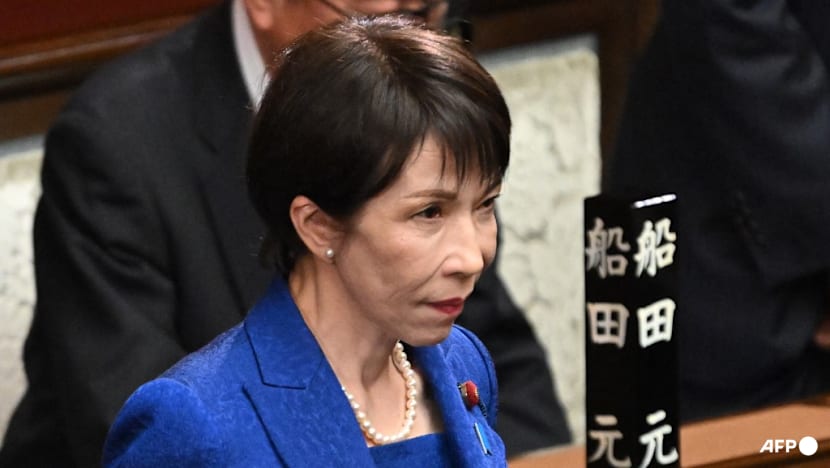
Japan's Prime Minister Sanae Takaichi attends the House of Representatives plenary session at the Diet in Tokyo on Jan 23, 2026. (Photo: AFP/Kazuhiro NOGI)
TOKYO: Japanese Prime Minister Sanae Takaichi's sky-high poll numbers have slipped as voters question how she intends to pay for her recent tax-cut pledge, according to media surveys released on Monday (Jan 26).
The approval rating for the nationalist leader's government fell to 67 per cent from 75 per cent in December, falling "below 70 per cent for the first time since she took office last October", according to a weekend survey by the Nikkei newspaper.
The dip came as Takaichi faced criticism for abruptly calling a snap election for Feb 8, just over a year after the last lower-house election in October 2024 for a four-year term.
On Monday, she will join opposition leaders for a televised panel discussion to debate their policies.
Takaichi, Japan's first woman prime minister, says the election is necessary to see if people support her and her new coalition government.
After her appointment three months ago, Takaichi had to scramble to form a coalition between her ruling Liberal Democratic Party and the Japan Innovation Party (JIP) to gain a slim majority in the powerful lower house.
A possible election win would also allow her to claim a stronger mandate even though the LDP itself is battling low approval ratings and a string of scandals.

Among her campaign pledges is to waive the consumption tax on food for two years, joining opposition promises to cut various taxes, but she has not offered details of how to pay for it.
"But 56 per cent of respondents to the new Nikkei poll said they did not think a zero tax rate on food would be effective against rising prices," the business daily said.
A similar weekend poll by the liberal Mainichi Shimbun also showed Takaichi's approval rating dropped to 57 per cent from 67 per cent seen in December.
The Mainichi said many people were frustrated over the abrupt election, as it slowed down legislative debates on a new government budget before the Japanese fiscal year ends in March.
The latest poll by the top-selling Yomiuri Shimbun also said the government's popularity fell four points to 69 per cent, with many people hoping to see more economic programmes to deal with soaring prices.






