Advertisement
Advertisement

East Asia

Why this Japanese city painted its fire hydrants yellow

Once ravaged by repeated fires, Hakodate has transformed itself into a model for fire prevention by redesigning everything from hydrants to entire streets.
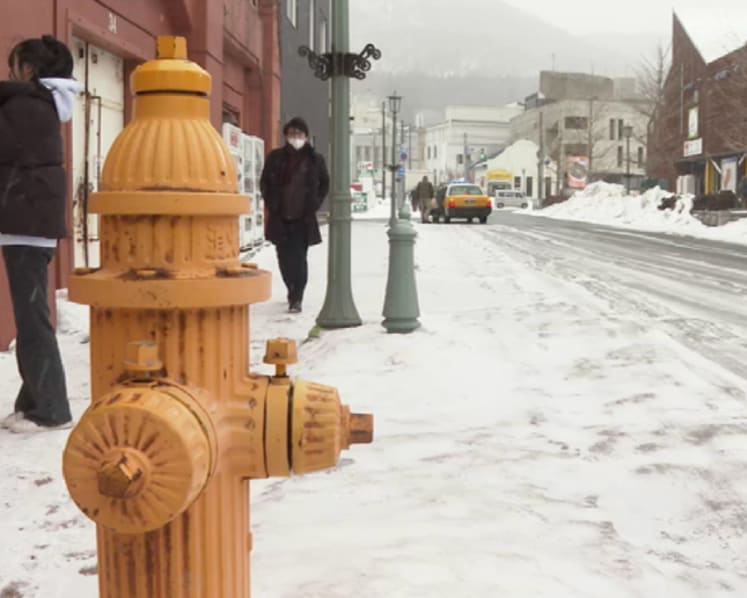
Why this Japanese city painted its fire hydrants yellow

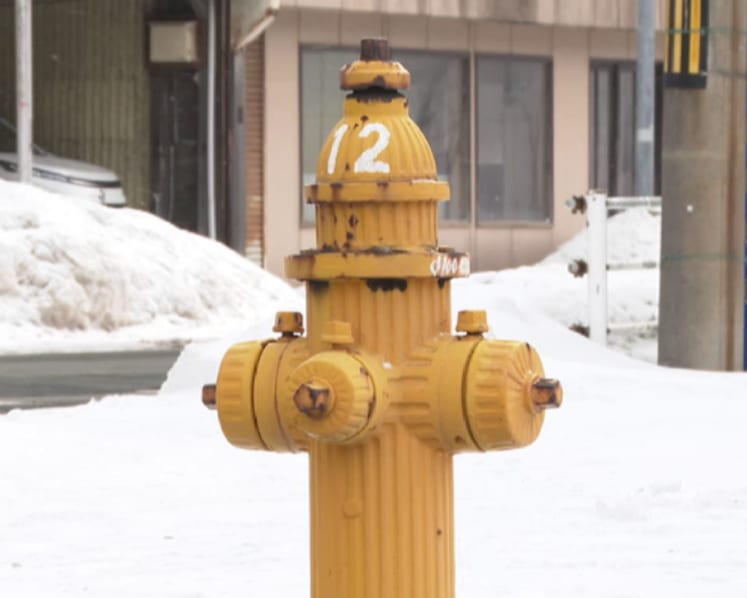
Hakodate’s fire hydrants are yellow, unlike their red counterparts in the rest of Japan.

New: You can now listen to articles.

This audio is generated by an AI tool.

18 Mar 2026 09:43AM (Updated: 18 Mar 2026 06:36PM)
HAKODATE, Japan: Fire outbreaks have intensified across the world over the past year, leaving destruction in their wake. 
 
The United Nations estimates that wildfires burned through 390 million hectares worldwide in 2025 – a total area almost the size of the European Union.  
 
Japan, too, has faced its share of fire disasters. Prolonged extreme dry weather has fuelled blazes in both cities and forests. In January, a wildfire in Yamanashi Prefecture scorched nearly 400ha of land and took over a month to bring under control. 
 
Amid these growing risks, one Japanese city has spent more than a century learning how to adapt. 

A CITY SHAPED BY FIRE

 
Hakodate, a scenic port city on Japan’s northern island of Hokkaido, has a long history of devastating blazes.  
 
Today, its streets carry subtle reminders of that past, including an unusual detail: yellow fire hydrants. 
 
Elsewhere in Japan, hydrants are painted red. Hakodate’s choice of bright yellow is rooted in hard-earned experience. 
 
From the late 19th century through to the early 20th century, the city repeatedly suffered from major fires. The deadliest came in 1934, when a massive inferno destroyed two-thirds of central Hakodate and killed more than 2,000 people. 
 
In the aftermath, city planners travelled to the United States to study how to modernise firefighting infrastructure and prevent future disasters.
 
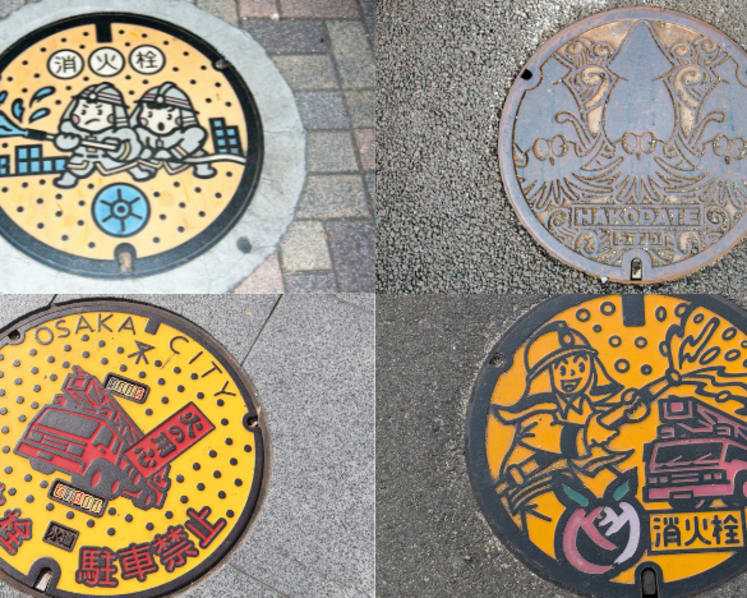
Back then, Hakodate's fire hydrants were installed underground and marked by manhole covers, making them difficult to locate or access, especially when buried under snow.  
Many of Japan’s fire hydrants are built into the ground, marked by brightly coloured metal covers featuring designs that range from playful to serious. Clockwise from top left, the manhole covers pictured are from Tokyo, Hakodate in Hokkaido, Fukuyama in Hiroshima, and Osaka. (Images: iStock)
In 1937, the city overhauled the system, installing hydrants above ground – a small but critical change that improved response times. 
 
They were also painted an eye-catching yellow, in line with American industry recommendations for hydrants connected to public water supplies. The colour made them highly visible in snowy weather and in the dark. 
 
The city’s hydrants were further designed with three outlets – instead of the typical single outlet – allowing a greater volume of water to be discharged during emergencies.  
 
“Hakodate became one of the first (cities in Japan) to set hydrants above ground. That way, we advanced the planning of a city that can withstand fires,” said Dai Konishi, head of the Hakodate Fire Department. 
Hakodate's yellow fire hydrants come with three sprouts, which allows for a larger volume of water to be dispersed.

REBUILDING WITH RESILIENCE 

 
Hakodate itself had long been outward-looking. In 1854, it became one of the first Japanese ports to reopen to international trade after more than two centuries of national isolation. 
 
As a gateway to Hokkaido, the city developed a distinctive architectural fusion: Western-style upper floors and traditional Japanese ground levels. 
 
Many of those buildings, however, were destroyed by massive fires. The city was particularly prone to fires because of strong winds, densely packed wooden homes, and insufficient water supply due to a lack of rivers. 
 
But the disasters also drove change. 
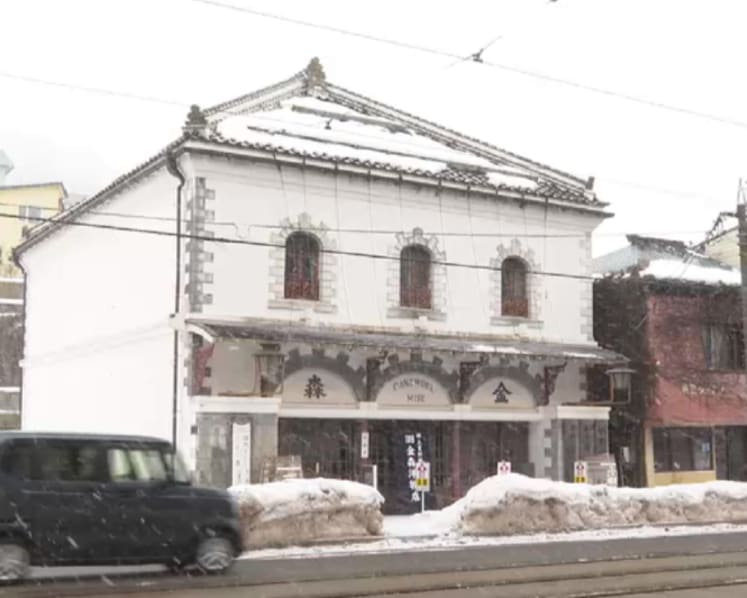
The Hakodate City Local History Museum, formerly the Kanemori Western Goods Store, preserves the records of the city’s past fires.
One enduring example is the city’s local history museum, housed in a shophouse built in 1880 that survived the Great Fire of 1934. Its founder had previously lost seven shops to fires. Determined not to repeat the tragedy, he rebuilt using fire-resistant methods, including covering bricks with plaster to reduce the risk of ignition.
 
Today, the building stands as a testament to Hakodate’s resilience and how lessons from past disasters helped shape a more fire-resistant city. 
 

DESIGNING A FIRE RESILIENT CITY 

Urban planning became central to Hakodate’s defence strategy. 

At the foot of Mount Hakodate – an inactive volcano and the city's highest point – streets such as Hachimanzaka and Nijukenzaka were widened as part of a redesign aimed at slowing the spread of fires. 
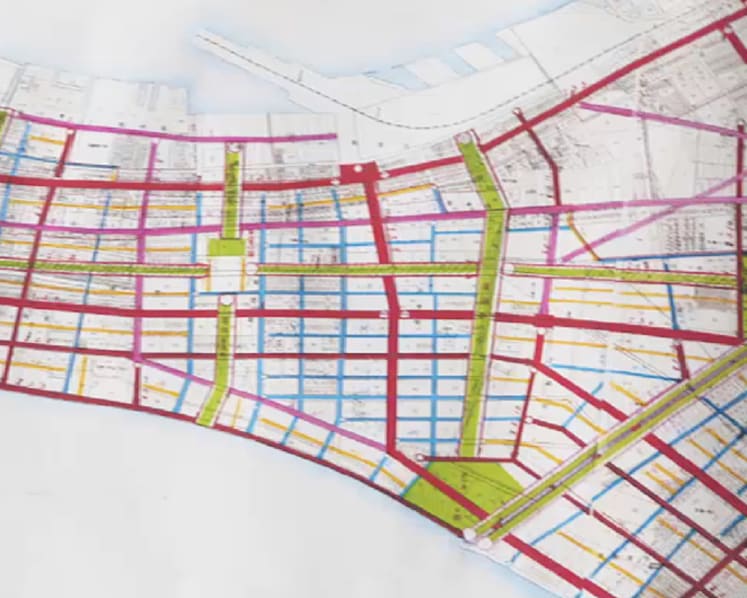
This map shows Hakodate's green belts, where roads are widened and trees are planted to prevent fires from spreading.

These streets form part of a broader “green belt”, a network of wide roads and open spaces that act as firebreaks. In some areas, roads have been expanded to as wide as 55m, reducing the risk of flames spreading from one area to another. 

“As a result, this area did not burn down (in the Great Fire of Hakodate). The landscape from the time of the port's opening still exists,” said the city’s mayor Jun Oizumi. 
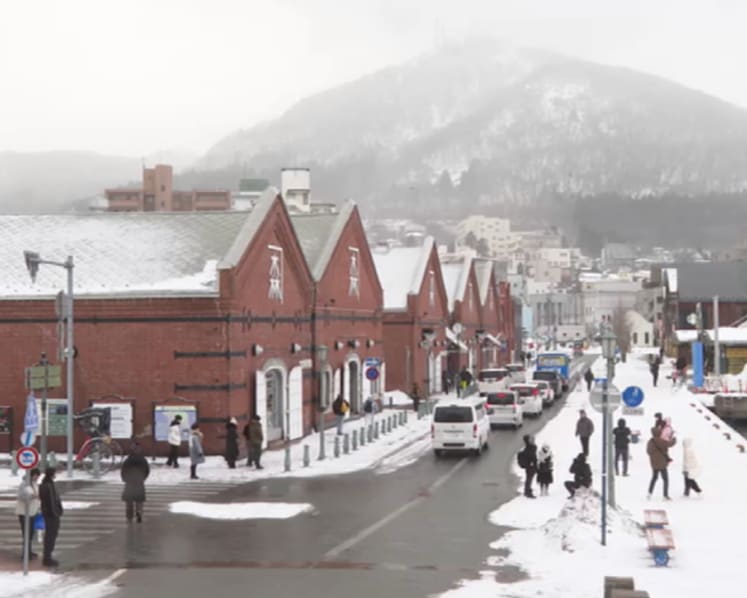
The iconic Kanemori Red Brick Warehouse was once destroyed by a large fire. Today, it's a shopping and dining complex popular with tourists.
Even with these safeguards, authorities say the threat is evolving and they are staying vigilant. Firefighters in Hakodate continue to train regularly to stay ready for emergencies.
 
“Due to rapid climate change, there are mountain fires and fires in big cities. So, we continue to prepare for the worst possible scenario,” said Oizumi.
 
Fire department chief Konishi believes Japan now has one of the world’s most effective fire prevention systems, but added there is always room for improvement. 
 
One idea under consideration is the use of drones to detect hotspots early, before fires spiral out of control.   
 
For a city that once burned repeatedly, Hakodate’s long struggle with fire has reshaped both its streets and its mindset, offering lessons for other cities facing rising fire risks in a warming world. 
Source: CNA/dn(lt)
Advertisement

Also worth reading

Advertisement