Why a snap election is a gamble for Japan's prime minister
Japan Prime Minister Sanae Takaichi - who has only been in the top job for about three months - has set the election date for Feb 8 to capitalise on soaring public support to shore up her coalition government.
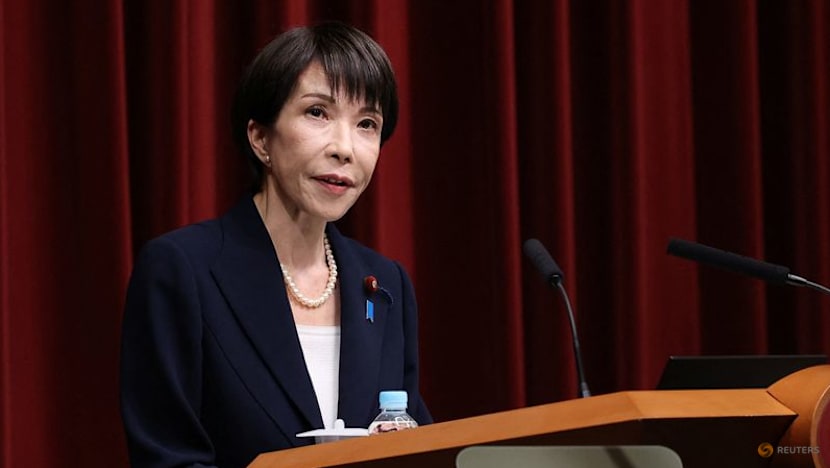
Japanese Prime Minister Sanae Takaichi speaks during a press conference at the prime minister's official residence on Jan 19, 2026, Tokyo, Japan. (Photo: Reuters/Rodrigo Reyes Marin/Pool)

This audio is generated by an AI tool.
Japan is preparing for a snap lower-house election that could reshape the country’s political balance at a moment of economic strain and regional uncertainty.
Prime Minister Sanae Takaichi - who has only been in the top job for about three months - has set the election date for Feb 8 to capitalise on soaring public support to shore up her coalition government. Takaichi has already made a mark by bringing forward an increase in defence spending, unveiling the biggest extra budget since pandemic restrictions were eased, and ruffling feathers in China over her comments on Taiwan.
Her forthright approach and a perceived shift to a more nationalist stance have given her the highest opinion poll ratings in more than a decade.
At the same time, she’s putting her leadership - and the long-dominant Liberal Democratic Party’s grip on power - to a public test amid voter anger over living costs and a steady exodus of younger voters to other parties.
The election outcome will determine not just who governs in Tokyo, but how confidently Japan can pursue its economic, security and diplomatic ambitions at home and abroad.
WHAT'S THE ELECTION ABOUT?
The election is to vote in the 465 members of the House of Representatives - the lower house in Japan’s legislature, known as the Diet. It is the more powerful of the two parliamentary chambers, with an overriding power to pass budgets and choose the prime minister.
Of the 465 seats, 289 are single-member constituencies, where the candidate with the most votes in a particular district wins. The remaining 176 seats are filled by proportional representation, where voters cast a ballot for a particular party and seats are allocated based on the share of the vote across larger regional areas. This allows parties to strategise and form tactical alliances to win seats.

WHAT ARE VOTER CONCERNS?
The cost of living is top of the list for most voters, according to opinion polls. Japan’s inflation rate has been at or above the official goal of 2 per cent for more than three and a half years, while wage gains have failed to keep pace for most of that time. The result has been a sustained squeeze on household budgets, leaving many voters questioning why the government and central bank have been so reluctant to act more forcefully to rein in prices.
Takaichi’s ruling coalition has promised to suspend Japan’s 8 per cent sales tax on food items for two years to help households cope with inflation. Takaichi has not said how the policy would be funded, though it is estimated to cost around 5 trillion yen (US$31.6 billion) per year.
Meanwhile, the Centrist Reform Alliance wants to eliminate the food sales tax permanently, financing the move through the creation of a new sovereign wealth fund. Other smaller parties are also calling for a lower sales tax.
A weak yen has compounded the pressure by driving up the cost of food, energy and other imports. It has also fueled a surge in inbound tourism, encouraging millions of foreigners to visit Japan and leaving some voters feeling impoverished and sidelined in their own country. Sanseito has tapped into those anxieties, particularly around immigration and national identity.
The LDP has sought to address those concerns by selecting Takaichi, who campaigned on overhauling rules around foreigners, as its leader.
Her focus on strengthening Japan’s defence capabilities and restoring the country’s standing as a major global power has so far drawn relatively high approval ratings, particularly among conservative voters. Takaichi has also pitched herself as a tougher and more decisive leader.
What are the main parties?
The Liberal Democratic Party:
Since it was founded in 1955, the Liberal Democratic Party (LDP) has led governing coalitions in one form or another for all but two brief periods. That record has cemented its reputation as Japan’s natural party of government and the steward of past eras of rapid economic growth. Many younger voters, however, view the LDP as a slow-moving party dominated by older politicians. Many blame it for Japan’s towering public debt and stagnant wages, as well as a pension system they expect to inherit in diminished form.
The Japan Innovation Party:
The Japan Innovation Party (JIP), also known as Ishin, is an Osaka-based party that has recently become a formal ally of the LDP. The partnership gives the ruling coalition a more explicitly right-leaning identity on defence. The JIP’s support is heavily concentrated in Osaka, and critics say the party is overly focused on local issues. The JIP’s 34 seats combined with the LDP’s 199 seats - including some aligned independents - give the coalition a narrow majority in the current composition of the lower house.
Constitutional Democratic Party:
The largest opposition force is the Constitutional Democratic Party (CDP), a centre-left party run by former Prime Minister Yoshihiko Noda. The CDP has opposed nuclear power and the LDP’s proposed changes to Japan’s pacifist constitution. It has also supported a temporary reduction of the sales tax on food to help households cope with inflation.
The party draws much of its support from urban voters and organised labour but also enjoys a stronghold in Japan’s northeast, in the region close to the site of the Fukushima nuclear disaster. The CDP currently holds 148 seats.
The CDP and Komeito, a former long-term ally of the LDP, have formed a new party for the election, called the Centrist Reform Alliance. That could make the CDP far more competitive than Takaichi had been expecting.
Komeito:
Komeito is a centrist, welfare-oriented party known for supporting low-income households, having a relatively pro-China stance, and being opposed to constitutional change. For more than two decades up to 2025, Komeito helped deliver votes for LDP candidates in single-member constituencies in return for LDP support in the proportional representation contests. How its new role will reshape voting patterns is a key election watchpoint. Komeito currently holds 24 seats.
Democratic Party for the People:
The Democratic Party for the People, founded in 2018, has rapidly gained traction in recent elections by focusing on issues that resonate with salaried workers, including inflation and take-home pay. Its leader, Yuichiro Tamaki, a charismatic former finance ministry official, briefly emerged in 2025 as a potential prime ministerial candidate who was thought to be capable of uniting opposition parties.
Sanseito and other smaller parties:
Among several smaller groups, the far-right Sanseito party has attracted growing attention after it won the second-largest share of votes in the 2025 upper house election. While it currently holds just three seats in the lower house, it could make further gains by winning over voters - as it did last year - who are concerned about immigration and cultural change in a traditionally homogeneous society. It also favours the phasing out of the sales tax, a move that would further strain the nation’s coffers. However, its prospects may be limited if voters return to the LDP under Takaichi.
WHAT'S AT STAKE FOR TAKAICHI
Takaichi is putting her leadership on the line. She has said that if the ruling coalition fails to secure a majority, she’s likely to be replaced. Still, because the coalition already holds a majority with the support of a few independent lawmakers, she would need to expand that margin clearly to be able to claim a public mandate.
A win would amount to a clear vote of confidence in Takaichi to press ahead with her agenda. She has pledged to pursue more assertive defence policies and economic measures centred around government-led spending and investment to spur growth, boost tax revenue and improve public finances.
An expanded majority would make it easier to proceed and would back a leadership style that favours directly appealing to the public over the need to carefully coordinate policy with the ruling party apparatus.
Failure to expand the majority, by contrast, would leave Takaichi politically exposed for a self-inflicted setback. That would likely see the LDP’s behind-the-scenes power brokers hauling her back under tighter party control and setting her up for a short stint as leader rather than a lasting tenure like that of her mentor, former Prime Minister Shinzo Abe.
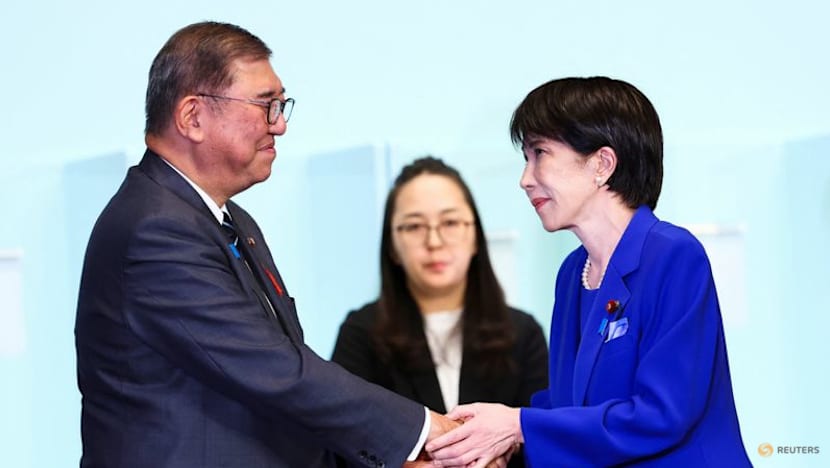
Her predecessor, Shigeru Ishiba, was forced to step down just a year into the job after calling a snap lower-house election in 2024 that cost the ruling coalition its majority, followed by another election defeat in 2025.
WHY DOES THIS ELECTION MATTER BEYOND JAPAN
As one of the world’s largest economies, Japan plays an outsized role in global financial markets, and a shift in its political outlook has the potential to move bond yields, currencies and risk appetite well beyond its borders.
Election-related uncertainty has already weakened the yen and pushed up Japanese government bond yields, reflecting investor unease about the country’s fiscal outlook and policy direction.
The vote also carries geopolitical and diplomatic ramifications.
A Takaichi victory would keep Japan on course to expand defence spending and strengthen its role as a key US security ally amid growing tensions in Asia as China ramps up its military presence. A loss - and the leadership jockeying that would likely follow - could slow or complicate those moves.