US defence strategy omission raises alarm in Taiwan over Trump’s intentions
Document splits opinion, with some experts fearing that the island could become a bargaining chip between Washington and Beijing.
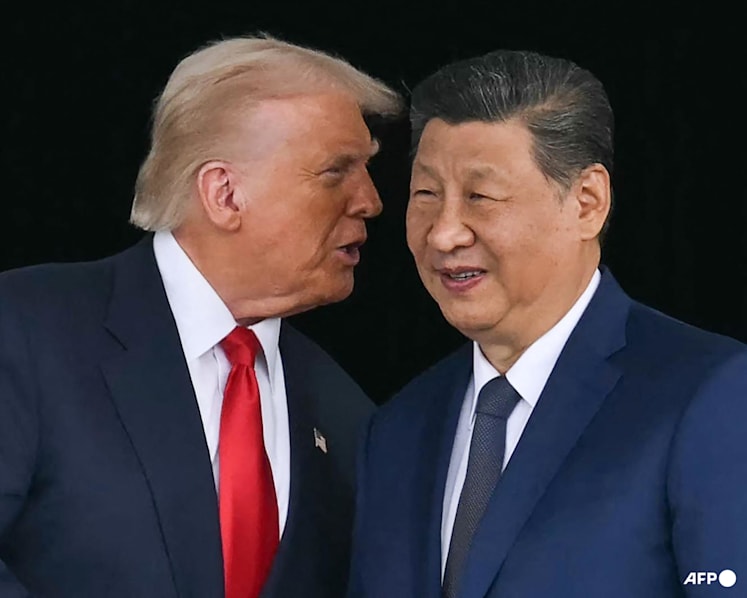
US President Donald Trump and his Chinese counterpart Xi Jinping meet in Busan on Oct 30, 2025. (Photo: AFP/Andrew Caballero-Reynolds)

This audio is generated by an AI tool.


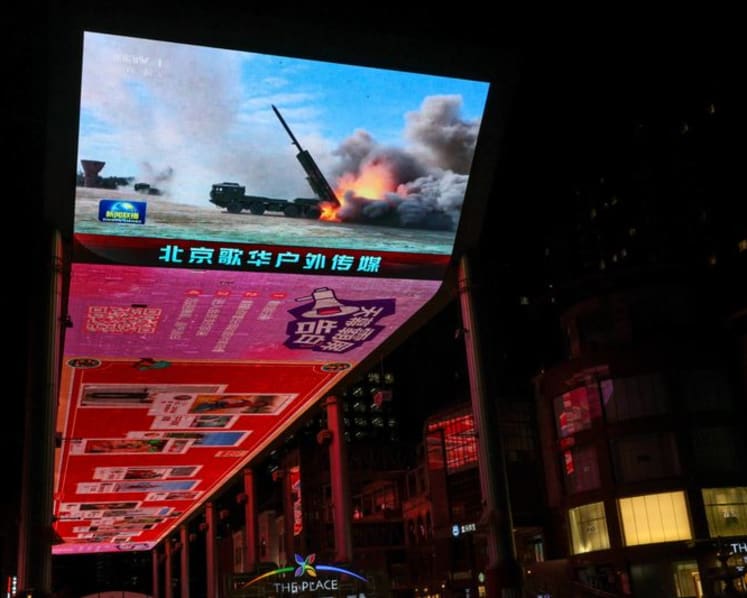
The omission was particularly striking given that Beijing had staged multiple military exercises around Taiwan in recent years, making the cross-strait situation more severe than during the previous US administration, she said.
Despite this, Taiwan was mentioned repeatedly in the earlier strategy and not at all in the latest one, Wang observed. She also pointed to “a growing mismatch” between Taiwan’s rising defence burden and the lack of any explicit reassurances from Washington.
Taiwanese leader Lai Ching-te has announced a NT$1.25 trillion (US$40 billion) special defence budget, while this year’s military spending – still pending legislative review – already exceeds 3 per cent of gross domestic product.
“Taiwan has met what the US has demanded,” Wang said. “But it cannot even get a single mention in return. That leaves people with a bitter feeling.”





Her KMT colleague, Ma Wen-chun, said the new strategy reflected Trump’s “America first” logic, under which US commitments to allies had become more transactional and less predictable.
“The US now negotiates everything based on its own interests,” she said. “That inevitably injects greater uncertainty into its security commitments.”
Taiwanese officials and lawmakers from the ruling Democratic Progressive Party (DPP) have pushed back against the criticism, cautioning against reading too much into the wording of a single report.
They argued that US policy towards Taiwan was shaped far more by operational realities than by rhetoric.
Joseph Wu, secretary general of Taiwan’s National Security Council, said on social media that the core objective of the 2026 strategy was to prevent mainland China from “dominating the Indo-Pacific”.
This was to be achieved by building a “strong denial defence along the first island chain” which stretches from Japan through Taiwan to the Philippines. As a key node in that chain, Taiwan would “continue to invest in defence to deter aggression and achieve peace”, Wu said.
According to DPP legislator Chen Kuan-ting, US policy towards Taiwan has never existed solely on paper but is reflected in “actions and institutions”.
Among the real tests for Taipei would be whether Washington continued to deepen military and security cooperation – including arms sales – and whether the deterrence against Beijing remained credible, he said.
Another test would be whether Taiwan remained integrated into the US' operational architecture in the Indo-Pacific, Chen said.
“In just the first year of Trump’s second term, approved US arms sales to Taiwan have already exceeded US$11.4 billion,” he said. “Those are far more meaningful indicators than whether Taiwan is named in a strategy document.”
Academics are divided over what the omission really means, with Li Da-jung, a professor of international relations and strategic studies at Tamkang University in New Taipei City, among those remarking on a change in tone in the 2026 strategy.
According to Li, the overall tone of the new document was more pragmatic and restrained than in the past, with a noticeable cooling in how the Chinese mainland was portrayed.
“Mainland China is no longer treated as the US’ enemy,” he said, adding that the document echoed the National Security Strategy released in December, which suggested Trump’s second term defence doctrine was coming into focus.
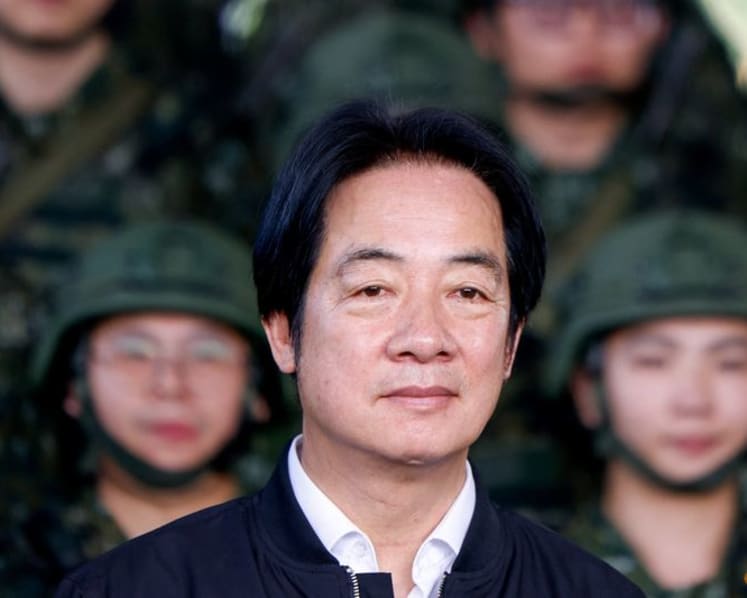
Li said the defence strategy rested on four main pillars: defending the US homeland; deterring China in the Indo-Pacific through strength rather than confrontation; increasing burden-sharing by allies and partners; and strengthening the US defence industrial base.
He noted that the document explicitly stated that Washington’s goal was “not to dominate, contain or humiliate” Beijing, while stressing the need for military communication and dialogue between the two sides.
Yet Taiwan’s disappearance from the text was “striking”, Li said – particularly since last year’s security strategy referred repeatedly to the island’s role in the first island chain and Washington’s opposition to “unilateral changes to the status quo”.
He suggested that the omission reflected Trump’s priorities, with trade and tariff negotiations with Beijing now ranking ahead of the Taiwan Strait.
“If US-China trade talks go smoothly this year, Washington’s Taiwan policy may stay relatively stable,” Li said. “But if negotiations go badly, Taiwan could again be raised as a bargaining chip. Right now, Taiwan is like a chess piece between Washington and Beijing."
Other analysts took the opposite view, arguing that Taiwan’s absence from the Pentagon document was a reflection of its deep embedding within US military planning.
Su Tzu-yun, a senior analyst at the government-funded Institute for National Defence and Security Research, said the strategy’s focus on building a “strong denial defence” along the first island chain made Taiwan an “irreplaceable” element of US deterrence.
“Whether the US values Taiwan should not be judged by whether Taiwan is mentioned in a report,” Su said, arguing that what mattered was the US narrative on the threat from mainland China, its military investment in the region, including training and deployments, as well as arms sales and security cooperation with Taiwan.
“All of these indicators show that US attention to Taiwan Strait security has not cooled – it has increased,” he said.
Not all observers were reassured.
Tang Shao-cheng, a research fellow at National Chengchi University’s Institute of International Relations in Taipei, said Taiwan also needed to confront the underlying political impasse with Beijing.
“If we rely entirely on the US, and Washington reaches certain deals with Beijing, we are very likely to become a bargaining chip,” he warned.
The debate over Washington’s intentions has come as public confidence in Taiwan over any US military intervention appears to be ebbing.
A survey this month by the Taiwan Inspiration Association found 56.4 per cent of respondents did not believe the US would send troops to help defend the island in the event of a cross-strait conflict, compared with 42.1 per cent who believed it would.
Scepticism was particularly high among people aged 20 to 59, at 60 per cent, compared with 49.5 per cent among those aged 60 and older.
Fan Shih-ping, a political scientist at National Taiwan Normal University, said he was especially struck by the results among the 20-29 age group, where 63.4 per cent said they did not believe Washington would come to Taiwan’s defence.
“This scepticism towards the US among young people is something that deserves close attention,” Fan said.
Beijing, which sees Taiwan as part of China to be reunited by force if necessary, has intensified military pressure on the island since Lai took office in 2024.
Most countries, including the US, do not recognise Taiwan as an independent state but Washington is opposed to any attempt to take the self-ruled island by force and is committed to supplying it with weapons.
This article was first published on SCMP.