







Cycle Around Japan - Akita: Discovering The Traditions of the North
A three-day cycling journey through Akita’s countryside reveals local craftsmanship, soothing hot springs, traditional foods and songs, and the people keeping Japan’s rural culture alive.

This audio is generated by an AI tool.
Cycling through Akita reveals craftsmen, hot springs and foods that keep northern traditions alive.
Japan’s mountains, coastlines and farmlands offer a world of quiet stories beyond the cities. In a new series, a cyclist takes to the road to explore these landscapes at a slower pace, discovering how nature shapes everyday life and how traditions endure along the way. The first journey begins in Akita Prefecture, where spring melts the snow and the countryside awakens, revealing craftsmen, farmers and singers who keep the spirit of northern Japan alive.
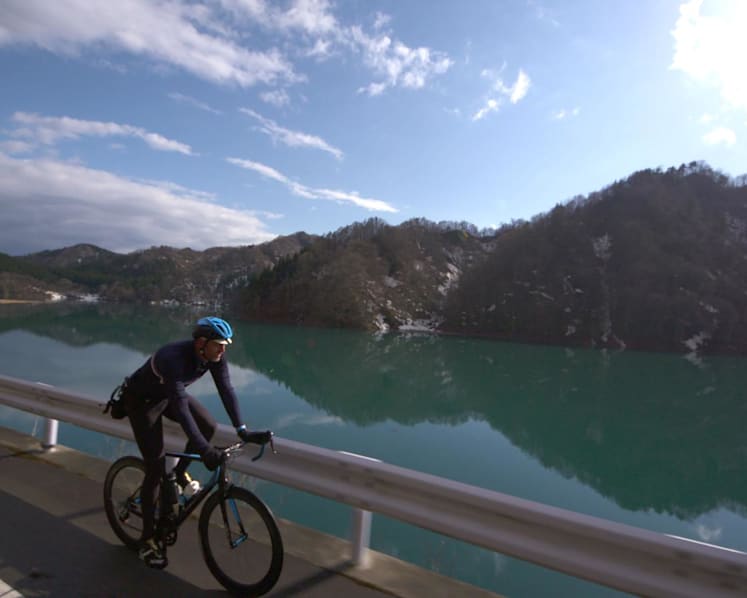
The trip starts in Kakunodate, a castle town of about 12,000 people on the Hinokinai River, where 400 shidarezakura cherry trees are in full bloom and signal the end of a long winter. Michael Rice, a cyclist from Colorado who has lived in Japan for 28 years, says he has ridden “a total distance about seven times the circumference of the Earth.” For this journey he chooses a featherweight bike, “only about six and a half kilograms,” and plans three days of riding that will take him into mountains, along rivers and around the Oga peninsula.
Kakunodate’s streets give a quick lesson in local craft. Michael is drawn to kabazaiku tea canisters made from cherry bark, and to a workshop run by Kengo Yonezawa, one of only eleven certified kabazaiku makers in Japan and at 37 the youngest of the group. Yonezawa harvests sheets of bark from nearby mountains and pares them “millimetre by millimetre,” dampening and ironing each piece to make it supple. He lets the wood speak for itself, using no colouring or engraving, and explains the subtle fit of a finished piece as, “It’s just perfectly matched, so that it’s not too tight, it’s not too loose.” The craft dates back two centuries and was born from the practical needs of the samurai class, but Yonezawa’s work shows it still has life and precision in the present.





From town to mountain, the ride brings Michael to Goshogake Onsen, a hot spring with a 300-year history and a reputation for medicinal properties. He experiences the communal warmth of the baths, sits in a natural box sauna and tries a mud bath, describing the sensation as “definitely a first.” The onsen culture, with shared kitchens and daily routines of bathing, knitting together wellbeing and community, offers a vivid counterpoint to the long climbs and cold roads.
Descending from the highlands, Michael follows the Yoneshiro River to Mitane, where he discovers junsai ponds. Junsai is a slimy water herb used in traditional cuisine whose buds sprout in early spring. 82-year-old junsai farmer Takeshi Abe demonstrates the delicate harvest from a handmade box boat. The plants are covered in a viscous gel called mucin that protects leaves and stems, and Abe shows how the crop requires patience and skill rather than brute strength. Mitane is Japan’s leading producer of this plant, and local dishes such as a junsai hot pot, made with chicken broth and rice dumplings, celebrate the prefecture’s pure water and seasonal bounty.
Akita’s bond with its native dog breed is another thread of local identity. In Odate Michael meets owners and society members who cherish the Akita inu, dogs that trace back to mountain hunting lines, can grow to 60 centimetres tall and weigh over 30 kilos. Clothing shop owner Yoshio Kondo, who has raised Akita inu for more than 30 years, stresses the daily rituals that build trust, advising long walks twice a day.
The route skirts land reclaimed six decades ago at Ogata, once Japan’s second largest lake, where migrants transformed a vast plain into fertile fields. There a continuous 11-kilometre avenue of cherry blossoms marks community memory and pride, planted to celebrate the town’s anniversary and now a living symbol of the labour that created the farmland.
On the Oga Peninsula, Michael samples a local sweet treat sculpted into a rose shape and watches fishing boats dot the clear waters of the Sea of Japan. He climbs steep coastal roads and then visits a small port town where young girls rehearse Oga folk songs. The practice sessions are intergenerational, with singers aged eight to 18 learning from older mentors so the music survives. 15-year-old Amika Takahashi is singled out for her prizewinning voice, and the programme shows how these songs carry stories of hardship, harvest and celebration.
By the time Michael reaches the summit of Mt Kanpu the view stretches from the sea to the rolling fields below. He reflects on what he has seen. “This has been an unforgettable cycling trip for me, besides all of the culture, and besides all of the people, and besides all of the warm-heartedness, and incredible food and incredible places to stay and onsens,” he says, and adds that he found young people who are keeping traditions alive.
That observation is this episode’s quiet conclusion. Modern life often threatens small customs, yet artisans, farmers and singers are sustaining heritage by practice, commerce and community.




