







22,000 given nod to register for private-hire driver’s licence
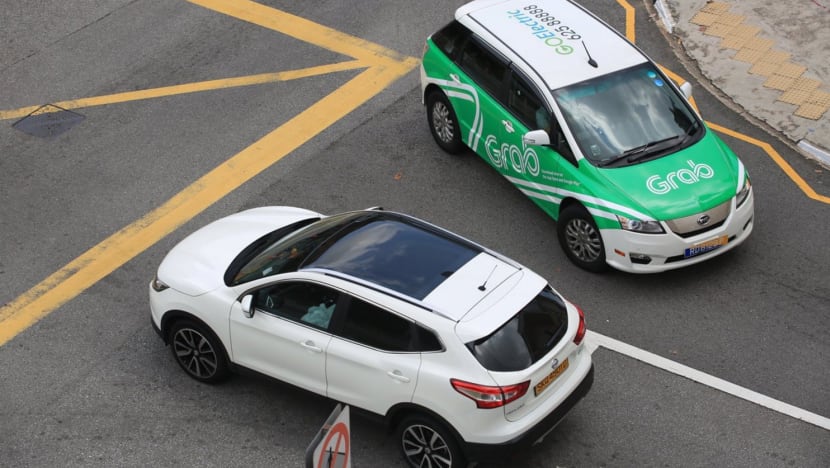
TODAY file photo


SINGAPORE — Three months after applications opened for the Private Hire Car Driver’s Vocational Licence (PDVL), the Land Transport Authority (LTA) said yesterday that about 22,000 private drivers have been given approval to register for the PDVL course.
“About 13,700 private hire cars have been affixed with the tamper-evident decals,” added the LTA.
The decals, which must be affixed by July 1, is to allow for easier identification of registered private hire cars, and facilitate enforcement against offences such as unregistered cars providing chauffeured services.
In a media briefing yesterday, car-hailing company Uber said that over 90 per cent of its drivers had signed up for the technology start-up’s FastLane programme, designed to ease the PDVL application process for them.





The programme covers application fees and medical check-ups, among other costs.
Grab, which held a separate media briefing in conjunction with its fifth anniversary, said it does not share the figures publicly.
The PDVL regime was among a slew of new rules announced in April last year to regulate the private-hire car industry. Applicants must hold a valid Class 3 or 3A driver’s licence for at least two years and take a 10-hour course by the Singapore Taxi Academy to obtain the PDVL.
Existing drivers who submit their applications by June 30 will have a one-year grace period to take the course, during which they can continue to drive. But those who apply after the deadline will have to obtain their licence before they can hit the roads.
To facilitate applications for its remaining drivers who have not gotten their PDVL, Uber began offering medical screening services at their Paya Lebar office on Monday.
Over 200 drivers can book appointments online each day for the on-site service, offered by three doctors and nurses from Fullerton Health.
Previously, drivers had to go to Raffles Medical Clinics around the island.
In an update on other aspects of their business, Uber Singapore head of operations Jonathan Wong said since rolling out a daily report on the driving patterns of drivers six months ago, the company has been able to provide information to drivers “so that they can self-improve their driving or change their driving patterns”.
Uber declined to share the trends picked up through these daily reports, which are not tied to any incentive schemes.
Grab also said it will be expanding the use of its telematics programme, which will now track and cover other indicators of driving behaviour, including dangerous swerving, hard-braking as well as sudden acceleration.
Drivers who exhibit such driving patterns will be sent a corrective message through the driver’s mobile application, said its head of product Jerald Singh. VALERIE KOH and ALFRED CHUA




