







Academics hesitant about all-encompassing laws to deal with deliberate online falsehoods
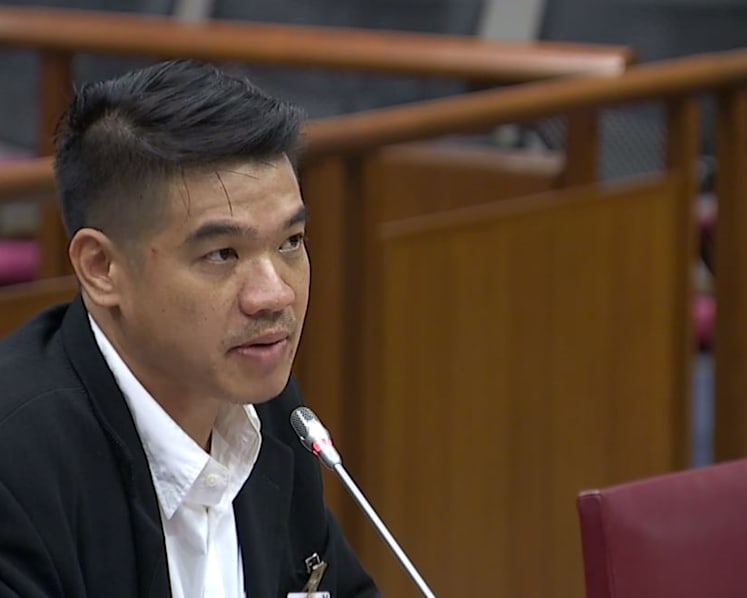
Nanyang Technological University’s Assistant Prof Liew Kai Khiun testifying at the Select Committee hearing. Photo: Parliament screencap


SINGAPORE — Unlike civil society activists a day earlier who said there was no need for new laws to deal with online falsehoods, law and communications academics who testified at the Select Committee hearing on Wednesday (March 28) did not rule it out, but wondered if all-encompassing legislation would be too blunt a tool.
They advocated non-legal measures such as a system flagging “contested” content that users could challenge, and said laws should ultimately promote robust public discourse for the good of society.
“Any legal regime that this committee might recommend must continue to promote robust public discourse. Ultimately it is people who defeat deliberate falsehoods,” said Singapore Management University law don Eugene Tan on the second-last day of public hearings. “If we have a population that is discerning, that is able to unpick falsehoods and to be able to engage in that robust debate, I think that makes for a much healthier society (and) able to deal with deliberate online falsehoods without having to resort to very extreme measures.”
Associate Professor Tan felt dedicated omnibus legislation that would include taking provisions from other laws would be too blunt an approach, but did not rule out the need to address gaps in existing laws.





“If you look at social media platforms, they have been around for 14, 15 years. So... I think there will obviously be a need to update the legislation, tweak them, sharpen them and refine them. But I would be cautious about wanting to go for an all-encompassing one,” he said.
Laws are not the panacea to the problem, said Assoc Prof Tan, who suggested more public education efforts to enable Singaporeans to ask the right questions and pass sound judgement on information they read about.
The messaging of public education efforts should be subtle in order not to be seen as another form of “national education”, he felt.
People tend to believe what is sensational and scandalous, and regulation – including of tech companies – is needed to allow counter-narratives to be heard and understood, said Paris-based lawyer Dan Shefet, who specialises in European and IT laws.
He previously suggested to a Paris senator a system that allows Internet users to challenge a piece of content, which would be tagged as “contested content”. The information would not be taken down and censored, but the tag would allow others to judge the content for themselves.
The system can be easily calibrated to accommodate events such as the elections, which can improve visibility of “counter narratives” during this period, he said.
Another system proposed by Nanyang Technological University’s Assistant Prof Liew Kai Khiun was a “traffic light” approach, where the authorities’ response is calibrated according to “normal” days – where Singapore’s vulnerability to exploitation via deliberate online falsehoods is relatively low – times of “heightened incidents” such as election periods, and a state of emergency.
During a state of emergency, there can be restriction of information flows and application of the Internal Security Act, said Asst Prof Liew of the Wee Kim Wee School of Communication and Information.
Even if laws targeting deliberate online falsehoods are introduced, the authorities have to accept that a degree of falsehoods will persist, said Asst Prof Liew, who also said legislation alone is not the answer.
Meanwhile, Mr Andrew Loh, founder of publichouse.sg, called for more engagement – instead of confrontation – of citizen journalists by the government.
In his written submissions, Mr Loh said it is not as easy for bloggers and other online users to fact-check because many are amateurs and poorly-resourced. Their “perceived intransigence” is not borne out of malicious intent, he said.
“In order to combat falsehoods, deliberate online falsehoods, we need everyone on board. And I agree with that because we are talking about things like national security, our sovereignty and our national harmony… In order to shield ourselves or to build this resilience, you need everyone on board and that everyone must include the alternative media,” the former editor of The Online Citizen told the committee.
The Government could set aside a small fund for those interested in writing or journalism to attend relevant courses, he suggested. It can also encourage those with relevant knowledge to conduct lessons or workshops for the online community.




