







Aloysius Pang’s death 'preventable' had all three men in howitzer complied with safety rules: Ng Eng Hen
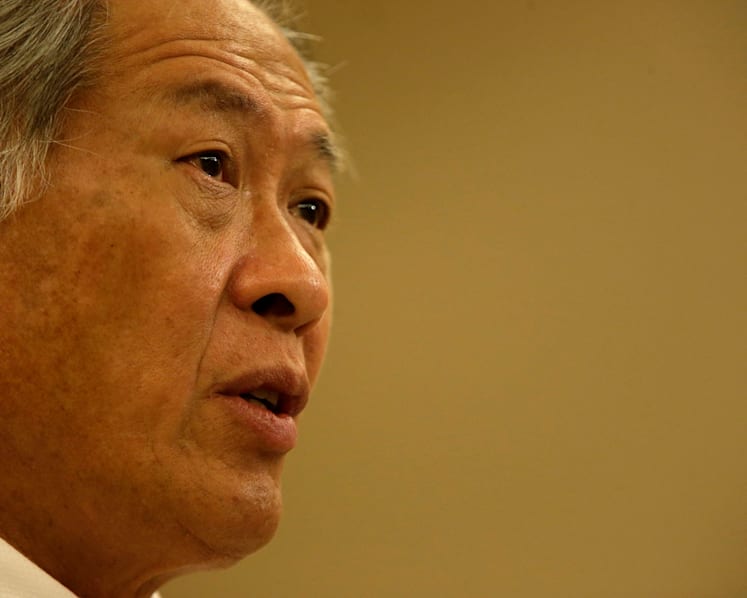
Defence Minister Ng Eng Hen said that although the COI has completed its investigations, it does not mean the case has been closed.


SINGAPORE — Two months after a Committee of Inquiry (COI) was convened to investigate the death of actor Aloysius Pang, it concluded that the incident was caused by safety lapses committed by all three national servicemen — including Pang — who were in the howitzer at the time.
In the wake of Pang’s death, the Singapore Armed Forces (SAF) will also implement new safety measures, including a “think-check-do” drill before any maintenance tasks and a mandatory annual safety awareness test for all servicemen.
The measures were recommended by the COI and the External Review Panel on Singapore Armed Forces Safety (ERPSS).
Disclosing the COI findings and recommendations in Parliament on Monday (May 6), Defence Minister Ng Eng Hen said: “It is sad but undeniable that the direct causes determined by the COI that resulted in the death of Corporal First Class (National Service) Aloysius Pang were preventable had there been compliance to safety rules.”





“It was not for lack of knowledge of these rules or inexperience of personnel working on the howitzer gun.”
During his 30-minute ministerial statement, Dr Ng brought members of the House through the sequence of events leading to the incident on Jan 19.
READ ALSO
- COI findings in detail: Safety breaches and panic led to Aloysius Pang’s death
SAF should step up training for medical officers in helicopter evacuation protocols: COI
Pang, who was on overseas reservist training in New Zealand, died four days later from severe sepsis — a serious complication of an infection arising from his severe chest and abdominal injuries.
Pang’s death was met with a public outpouring of grief and was the latest in a spate of SAF training related fatalities dating back to 2017.
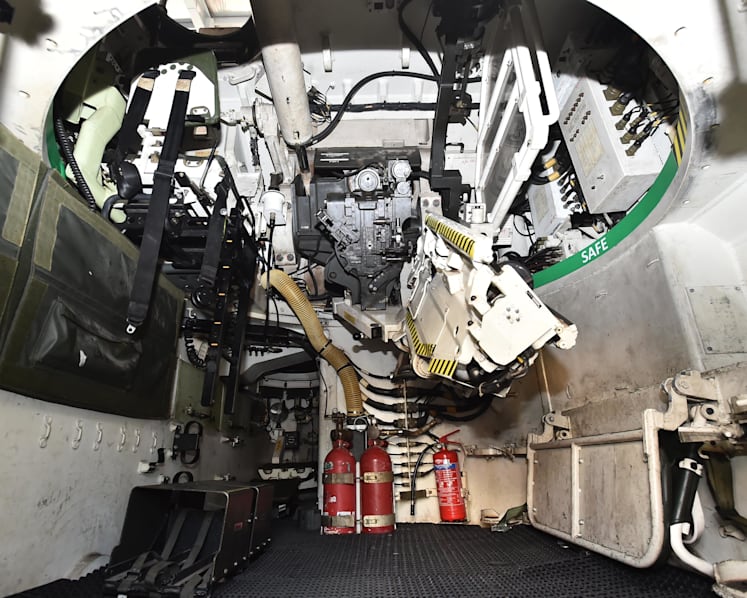
Dr Ng said that although the COI has completed its investigations, it does not mean the case has been closed. Under military law, the SAF’s Special Investigation Branch (SIB) has jurisdiction to investigate Pang’s death.
The SIB has “nearly completed its investigations” and will report directly to the chief military prosecutor, who will determine if any servicemen are to be prosecuted under the military court for offences relating to Pang’s death.
Dr Ng said: “Servicemen under investigation are reassigned to administrative duties and if found to have been culpable, will be charged and punished accordingly.”
Following his speech, six Members of Parliament (MPs) rose to ask supplementary questions, including if the COI revealed why the servicemen did not follow standard operating procedures and whether there was a time pressure to complete maintenance and if this was a contributory factor.
CAUSE OF DEATH PREVENTABLE
The five-member COI was formed on Jan 25 and chaired by a State Court-nominated judge for the first time.
The other members were: a consultant medical specialist, an ERPSS member, a member of the Workplace Safety and Health Council and a senior-ranked national serviceman.
The Ministry of Defence (Mindef) had previously announced the COI members without naming them. None of the members work within Mindef or are SAF regulars.
The COI ruled that Pang’s death was a result of safety breaches committed by all three men in the howitzer at the time and set off by the lowering of the gun barrel “without ensuring that everyone was in their safe positions”.
There was no evidence of foul play or that the incident was caused by any deliberate acts, said the committee.
It also said there was “no mechanical fault with the gun that had directly caused the accident”.
Sign up for TODAY's newsletter service on any of these platforms. Click here:
Pang, an armament technician from the 268th Battalion Singapore Artillery, was in the howitzer with the gun commander — who was also on reservist — and another technician, who is a regular servicemen.
They were rectifying a fault in the gun of the howitzer, which was being used in a live firing exercise.
From the onset, there was “non-compliance with the standard operating procedures and safety breaches”, said the COI. The gun should have been in a locked position — meaning that it should be lowered first — before maintenance work ought to commence, it added.
Though the two other servicemen were in designated safe positions, Pang was not.
Despite being warned by the other technician that the barrel would be lowered, the COI stated that Pang said it was fine and that the gun barrel would not hit him.
Nevertheless, the COI said the other technician did not ensure that Pang move to a safe position, while the gun commander proceeded to move the barrel even though Pang was not in a designated safe position.
As the gun barrel made contact with Pang, instead of pressing the emergency stop buttons, the two other servicemen “panicked and acted irrationally”.
The other technician tried in vain to stop the barrel’s movement with his hands and the gun commander tried to do the same via the control system. Pang ended up being pinned between the end of the gun barrel and the cabin wall of the vehicle.
Among the lapses raised, the COI said there was a “lack of coordinated safety control procedure between the gun crew and the maintenance crew”.
“There was a lack of clarity on who should be in the gun, the command and control, and whether there was a need for acknowledgement before the gun barrel is moved,” it said.
SAFETY MEASURES AND JUDICIAL PROCESS
In the aftermath of the incident, among the additional safety measures to be rolled out include a new “think-check-do” drill, which has to be conducted before any maintenance tasks are carried out.
As part of the drill, technicians will plan and brief all personnel of their expected roles and tasks. There will be a dry run of team-based maintenance tasks to ensure “tight integration”.
Servicemen will carry out emergency procedures, which include knowing the positions of emergency stop buttons.
All soldiers will also be required to undergo an annual safety awareness test. Currently, only commanders and trainers take the test.
“We need a strong SAF that can defend Singapore, but it must and can be built up without compromising the safety and well-being of our national servicemen,” Dr Ng reiterated.
Convened under the SAF Act, the COI is empowered to conduct fact-finding. However, it has “no mandate to determine the culpability of individuals”, Dr Ng pointed out.
Section 8C of the Act specifies that “no statements made to the COI shall be admissible as evidence in the court martial or for any subsequent disciplinary proceedings that may take place”. Likewise, Dr Ng noted that his comments in Parliament will also not be used in court.
As Pang’s death occurred in New Zealand, the authorities there have jurisdiction over the case. However, no inquiry was directed by New Zealand’s Attorney-General, Dr Ng said.
Nevertheless, the SIB has jurisdiction to investigate Pang’s death. It will report directly to the chief military prosecutor, who is a senior legal officer deployed to Mindef by the Legal Service Commission headed by Chief Justice Sundaresh Menon.
The chief military prosecutor will decide if any servicemen are to be prosecuted in a military court for offences relating to Pang’s death, Dr Ng said. The military court is presided by former or current State Court judges.
Concluding his speech, Dr Ng again expressed his deep condolences to Pang’s family, who have been informed of the COI’s findings and the actions taken to deal with lapses and prevent recurrences. Mindef will continue to assist the family, he said.
As described by his peers, Pang was a “motivated and competent” soldier, said Dr Ng.
“The loss of a good soldier like CFC (NS) Pang is deeply grievous to us. There was an outpouring of grief from many Singaporeans as a result of his untimely and tragic demise.”
"BOILS DOWN TO CULTURE"
Responding to questions from Sembawang Group Representation Constituency (GRC) MP Vikram Nair on the risk arising from human errors, Dr Ng said the SAF “found a gap”.
“While we are paying a lot of attention to live firing exercises, one would think that (for) the risk assessment in maintenance, you don’t have a high risk and yet here you have an incident where you ignore the safety rules and something very tragic happened,” said Dr Ng.
Ultimately, having strong safety “boils down to culture” and goes beyond just “the articulation of rules”, he stressed.
Responding to Nominated MP Walter Theseira’s question on whether the servicemen involved revealed why they did not follow standard operating procedures, Dr Ng said: “The reason given was that they want to get on with it. They couldn’t wait for the few seconds for whatever reasons.”
However, there was no indication that the servicemen were under any time pressure to carry out maintenance, he added.
Nee Soon GRC MP Louis Ng asked whether the SAF could use technology to prevent future accidents by equipping gun barrels with sensors so that they could immediately stop moving when they detect an obstruction.
Likening this to “houseproofing when a new baby arrives”, Dr Ng reminded the House that military equipment have to function in a battle or war.
“We take it seriously and we will design our systems to design away flaws as much as we can, (but) always with the eye that we mustn’t render us operationally incapable or put us in a disadvantage.”
Dr Ng also said there was no indication that language was an issue in this case, after Workers’ Party chief Pritam Singh asked if that was a contributory factor. Mr Singh pointed out that the other technician had warned Pang in a mix of English and Mandarin, while Pang responded in Mandarin.
Dr Ng reiterated that the COI “made explicit reference” that the three servicemen in the howitzer’s cabin knew the safety rules and were clear that “no one should stand in the path of the gun barrel”.
“There was no indication that Pang did not understand or took a longer time to understand that the gun barrel was moving into him and he was in the path.” he added.




