Bedrock values, updated for the times
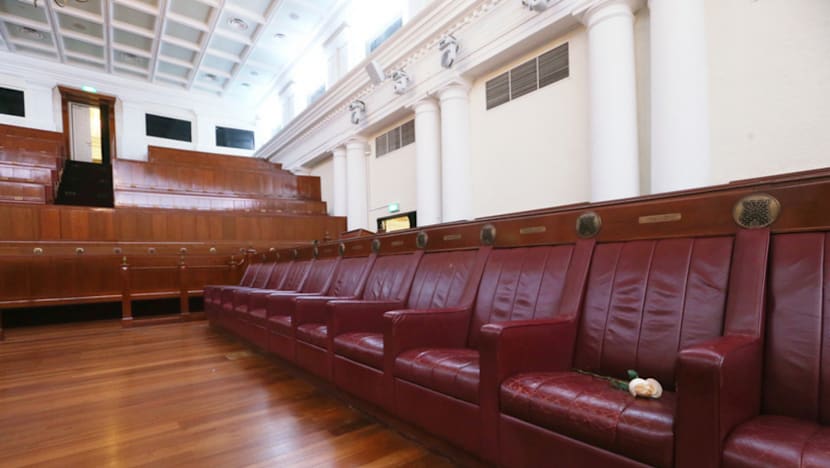
A flower is placed where Mr Lee Kuan Yew used to sit, at the Chambers in The Arts House, last week. The Arts House used to be the Parliament House, which was home to the Parliament of Singapore from 1965 to 1999. Photo: Ooi Boon Keong


SINGAPORE — Multiculturalism, meritocracy, incorruptibility and efficiency — born out of necessity in the formative years of a Singapore fresh out of a failed merger with Malaysia — are among the traits that have become synonymous with the late founding Prime Minister Lee Kuan Yew’s brand of governance over the years.
While many of these values and principles remain relevant in present-day Singapore, with its bright lights and towering skyscrapers, there are those that need to be revisited or adjusted — such as meritocracy and the ruling party’s governing style, say political analysts and former politicians.
Back in 1965, Mr Lee, as leader of a newly-independent city-state, was acutely aware of the difficulties that lay ahead. Singapore had no hinterland and no natural resources apart from its people. Racial tensions remained an undercurrent in a society that was fragmented, and largely made up of migrants hailing from different homelands and speaking various mother tongues.
Years later, Mr Lee continued to hammer home the point that Singapore was racially diverse, and hence, its policies had to factor that in.





In a hard-hitting speech delivered in Parliament in July 1984, the man himself posed this question to Singaporeans: “Ask yourselves, let us be honest, let us not bluff ourselves, what are we? Anglo-Saxons with phlegmatic temperaments, not excitable?”
Then, he said: “We are Chinese or Chinese ethnic descent, Malays, Indians, Punjabis, Pakistanis, Sri Lankans ...”
And referring to the lack of democratic traditions in countries where the earlier generations came from, he added: “It is just not part of our history to count heads to decide who is the leader. It is not part of either Chinese, Malay or Indian culture or tradition. Indeed, it is anathema to Chinese culture that the Emperor’s mandate from heaven should depend on the counting of heads.”
Reminding the House that Singapore had achieved a partially-representative government only in 1955, Mr Lee noted that “our attitudes, our practices” had been shaped by the 29 years of history since then.
“How we will progress depends on how we direct our social, economic and political policies, and including how Opposition leaders or Members accept the basic parameters of what Singapore is about — the independence and sovereignty of Singapore, its multiracial, multi-religious, multilingual, multicultural character,” he said then.
EVERGREEN VALUES
Today, political watchers recognise that multiracialism, meritocracy and incorruptibility had formed the bedrock of Mr Lee’s governance model. Communism was “rearing her ugly head” in the 1960s, and there was a need to instill in Singaporeans the confidence that the Government would not be corrupt, recalled Mr Inderjit Singh, a former Member of Parliament (MP) for Ang Mo Kio GRC.
Dr Alan Chong, an associate professor at the S Rajaratnam School of International Studies, said: “You have to understand that this was not a natural nation-state. The British never designed us to be a nation-state. They brought in the different races for very instrumental reasons ... If you talked about the struggle to master the destiny of this society called Singapore, it had to be artificially brought together.”
Against this backdrop, Mr Lee had pushed for the survival of a multi-racial society, across racial, ethnic and religious fault lines.
“That meant that we should not talk about contentious issues too much. That’s how democracy was amended to the Singapore context,” said Dr Chong.
Dr Lam Peng Er, of the National University of Singapore’s East Asian Institute, pointed out that while Mr Lee championed speaking Mandarin, he made it clear that it must not be at the expense of minority groups.
“I think Singapore will unravel if you go for populism by pandering to the ethnic Chinese majority ... this is a fundamental value that I don’t think the post-Lee Kuan Yew era or even opposition parties can disagree with,” said Dr Lam.
Over the years, Singaporeans have internalised the view that everyone should have their own space, as far as minority groups are concerned, he added.
In Singapore, multiracialism is practised in a unique fashion, given that the majority ethnic group is not allowed to assert its rights based on sheer numbers, said Institute of Policy Studies deputy director Gillian Koh.
Singapore is not race-blind, she added. Rather, the authorities are conscious of ethnic identities.
“If we didn’t recognise those ethnic categories, or identities around religion and even key language communities, then we can’t tell if they are given fair recognition,” said Dr Koh.
Meritocracy came hand in hand with multiracialism, said Singapore Management University law don Eugene Tan. Any preferential treatment for the majority or affirmative action for the minority would undermine the fundamental basis of nationhood, he added.
Over time, meritocracy has become ingrained in the societal DNA — weaved into the education system and the job market.
“Rightly or wrong ... the initial passport is an emphasis on academic excellence,” said Dr Lam, while acknowledging that this was insufficient. “In other words, you need to have the credentials and afterwards, you have to perform. That is the general principle. But we know in real life, there is always this thing called social networks,” he added.
Mr Lee’s insistence on a clean, corruption-free government was known around the globe, and he held his fellow officeholders accountable to unyielding standards.
In 1979, Phey Yew Kok, then MP for Boon Teck constituency and National Trades Union Congress chairman, was investigated for corruption. He skipped town in the same year, and turned himself in to the Singapore authorities only in June last year. Phey, now 81, was sentenced to five years’ jail in January.
Even today, the value of incorruptibility remains a key element of the Singapore Story. This year, the Republic took the eighth spot on the Corruption Perceptions Index released by Berlin-based watchdog Transparency International.
Singapore slipped a notch from last year’s ranking, overtaken by the Netherlands.
Singapore’s reputation for incorruptibility — among other factors such as efficiency — has attracted foreign enterprises to set up their businesses here, instead of neighbouring countries with more natural resources and larger populations.
“The efforts have reaped real results for Singapore and its people — the country has achieved stability and a thriving economy over the years, and created a more fair and just society,” said Ms Irene Ng, a former Tampines GRC MP.
Aside from his zero-tolerance for corruption, realism, idealism and foresight also featured heavily in Mr Lee’s governance mantra.
He was realistic about Singapore’s position in the world, and the steps it had to take to succeed way beyond the island’s shores.
“Paradoxically, he was quite idealistic as well. Because he wouldn’t have implemented so many policies if he didn’t believe that we could survive. If he was a hardcore realist, he would have taken one look at Singapore and said we wouldn’t survive,” said Nanyang Technological University Assistant Professor Woo Jun Jie.
This mix of realism and idealism, along with foresight, allowed the Government to be flexible and responsive to the needs of its people. While Mr Lee was adamant that Singapore should not become a European-style welfare state, the current Government has made a concerted leftward shift over the past decade.
“(There’s) greater focus on social welfare policy, minority groups, elderly ... 20 years ago, we would not have moved in this direction,” said Asst Prof Woo.
Besides foresight, an openness to the world — and to create new opportunities for Singapore — was also part of Mr Lee’s governance style.
Giving the example of his spearheading of early efforts to claim a slice of China’s economic pie for Singapore, Ms Ng said: “By the early 1980s, he clearly saw that China was going to grow ... To build the Suzhou Industrial Park, Singapore trained over a thousand officers (from China) in Singapore, running courses in Mandarin.”
ARE THESE VALUES RELEVANT TODAY?
The analysts and former politicians that TODAY interviewed largely felt that while many of the values which Mr Lee held dear remain valid today, the governance style could be more adaptive.
Ms Ng, for instance, felt that Mr Lee’s handbook on governance continues to hold answers. After all, the key challenge for Singapore remains unchanged: Surviving without any natural resources, except for its citizens.
The nation is in a strong position today because of the “systematic and consistent” policies put in place over the past five decades, said Ms Ng. She urged the Government to take the same long-term view in its policies, adding that current leaders — and the people — must be willing to make tough but necessary decisions.
The basic principles, such as meritocracy, are evergreen, said Mr Singh. “The day certain people are given more privileges than others, we will see a serious decline in Singapore’s prosperity and peace.”
However, with a more mature and educated population, the old sledgehammer approach to push unpopular policies through will no longer work, he added.
Mr Singh felt that the present Government needs to gain buy-in for its policies by engaging citizens more, and be willing to make adjustments “if things don’t seem comfortable for the majority”.
Indeed, faced with changing circumstances and needs, Singapore has been tweaking its governance style gradually.
Associate Professor Eugene Tan pointed out that the country is transitioning towards a more broad-based measure of merit, beyond academic excellence.
For example, in 2014, the ASPIRE committee, chaired by then-Senior Minister of State (Education) Indranee Rajah, recommended developing multiple pathways for individuals to progress, based on skills, contributions and experience.
The SkillsFuture movement was born out of this, encouraging Singaporeans aged 25 and above to pick up new skills by tapping on the S$500 SkillsFuture credit they are entitled to.
Musing over the relevance of Mr Lee’s values today, National University of Singapore political scientist Bilveer Singh felt that the late leader was right about certain “eternal hard truths”, such as meritocracy, racial fairness and equality.
Citizens today are more informed and daring, and are also quick to compare their country with others. “Today, Singapore’s success will be measured with others not just economically, but also on other indices such as democracy, human rights ... (Beyond) economic growth, we may not always look good,” said Prof Singh. “Something may have to give.”