







The Big Read: Collaboration — something food firms still need to chew on
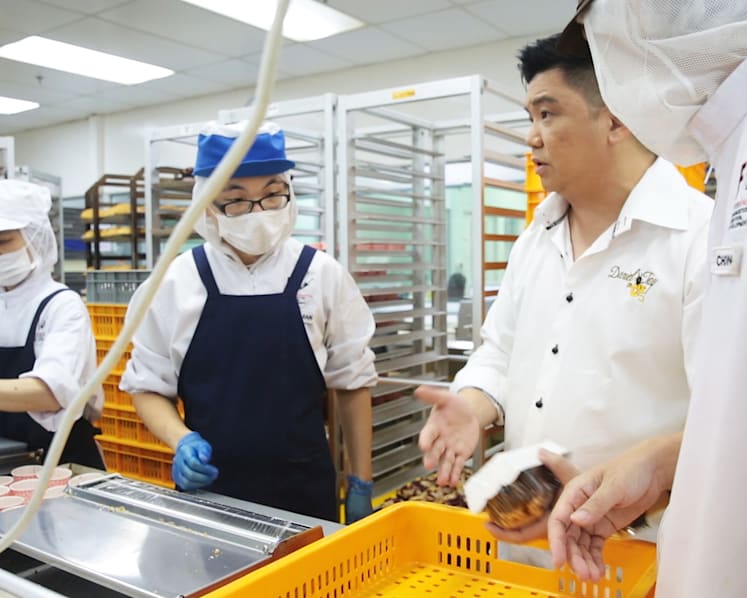
Chef Daniel Tay speaks with his employees. Photo: Jason Quah/TODAY

SINGAPORE — Collaboration may be the new mantra for many businesses these days, but keen competition among the players and uneven benefits that arise from a partnership have made it difficult for companies in the food industry to work together.
The need for companies to collaborate more closely was stressed by Finance Minister Heng Swee Keat himself in his Budget speech last month.
“We must come together as partners to transform our economy through enterprise and deeper innovation ... the potential for collaboration has never been greater. We must work together to muster our resources, to innovate, scale up and internationalise,” he said.
However, it seems few businesses have taken up the call. The food industry here is highly competitive and eateries tend to want to keep their cards close to their chest, said business owners.





“We gather a lot to talk about market trends, but we don’t talk a lot about how to help each other. That’s our culture. I wish it would happen, though,” said Mr Daniel Tay, founder of Bakerzin and who now also owns a food solutions company, Foodgnostic.
On his part, he says, he helps out by producing items for other food companies, some of which are reputable brands, if they are unable to cope with large-scale orders. “I produce for them, and they really save a lot of money,” he said.
Mr Richmond Te, group assistant general manager of Owl International, said it is tough for Singapore companies to form a consortium or organisation because ultimately every business has a bottom line to meet.
If, say, an organisation made up of 10 non-competing food companies wanted to launch overseas, and distributors there wanted to forgo two members’ products, the organiser will be in a bind. While the other eight companies would want to continue, the two left out would be unhappy, said Mr Te.
“As long as there is this conflict, you’d never be able to move as one group ... Unless your main objective is to push Singapore food culture and not to expand your own brand,” he added.
Despite such challenges, some players in the food industry have started to take tentative steps towards working together, including collaborating on initiatives to reduce their manpower needs amid a tight labour market.
Mr R T Sekar, managing director of Komala’s Restaurants, said he is part of a consortium called Veg Kitchen Pte Ltd. It was formed in January with five other top Indian vegetarian restaurants with the aim of coming up with concrete ideas on “how to survive in the near future”. Among other things, a central food-processing unit has been mooted.
The initiative is a pilot project supported by the Government. Another eight non-vegetarian Indian restaurants have formed a separate group too.
When approached by TODAY, SPRING Singapore would only say that discussions about the consortium are still at the preliminary stage and a work in progress, and it is unable to furnish more details.
“We have to see what we can do (with regard to) reducing manpower. If we can’t do it, all will raise hands (and fold),” said Mr Sekar. “The fact is, we’ve all got to work towards a leaner manpower (force).”
Mr Thomas Pek, the president of the Singapore Food Manufacturers’ Association (SFMA), said the association has been helping its more-than-300 members in various ways.
The association has been getting funding from SPRING and International Enterprise (IE) Singapore under the Local Enterprise and Association Development Programme, which supports up to 70 per cent of eligible costs for qualifying projects.
The SFMA also organises 14 to 18 roadshows, exhibitions and fairs worldwide every year — for example, in Japan, Paris and Cologne — and at least 40 to 50 members participate, Mr Pek said.
With the Government’s support — for example, in the renovation of booths and in tax rebates — members pay only around S$9,000 for a small booth, he said, compared with forking out S$15,000 to S$20,000 per booth for those participating in fairs on their own.
On whether efforts are successful, Mr Pek said: “There will surely be deals made when they go, otherwise they wouldn’t want to go. We have so many companies involved.”




