







The Big Read: Pitfalls lurk, even as cabbies and commuters take to dynamic pricing
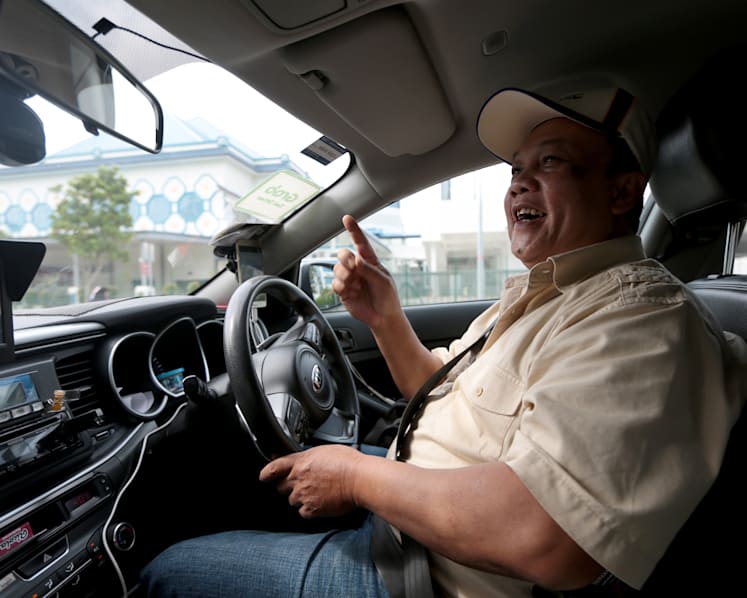


SINGAPORE — Over the past week or so, cabbie Daud Baharom has never been busier.
The jobs have come in fast and furious, after dynamic pricing was introduced by all but one taxi operator here via the new JustGrab service under a collaboration with ride-hailing company Grab.
On Thursday morning (April 6), for example, the Premier Taxis driver - who has been plying the roads for more than a decade - scored 11 bookings around River Valley through the Grab mobile application, of which more than half were JustGrab passengers paying dynamic fares. The rest of the passengers had opted for metered fares via the app.
Gone are the days where Mr Daud, 57, would receive only three or four bookings every morning, and spend the rest of his time prowling the streets or waiting by taxi stands to fill the empty backseat of his Silvercab taxi.





“Nowadays, I don’t get a chance to go to the taxi stand anymore,” he said. “I don’t take street hails anymore.”
Like Mr Daud, many cabbies TODAY spoke to said they are seeing a sharp spike in the number of jobs they are getting daily, after five taxi operators rolled out dynamic pricing two Wednesdays ago.
However, that has not necessarily translated into higher earnings for them. With Grab taking a 10 per cent commission, some taxi drivers told TODAY that it was not worth their while to take on bookings for short trips.
The experience so far has been positive for commuters in general: They find it easier to get cabs during peak hours and save about a dollar or two on bookings during off-peak periods. Grab is also dishing out generous promotions to entice passengers to use its app.
However, older and less tech-savvy commuters could lose out: Several said they are clueless about how to use the app, while one taxi driver recounted how he felt so bad for an elderly woman who was trying to no avail, under the hot afternoon sun, to flag down a cab that he ended up picking her after bypassing her three times to pick up passengers who had booked his taxi via the app.
Overall, it has been a mixed bag but experts cautioned that much remains to be done, and the introduction of dynamic pricing to level the playing field for traditional taxi operators should not mask the underlying challenges facing the taxi industry.
WHEN NUMBERS DON’T ADD UP
Dynamic pricing was introduced as the taxi industry’s latest attempt to fend off growing competition from the private-hire car industry. It comes after the taxi availability framework was relaxed this year to do away with the rules requiring cabbies to clock a minimum daily mileage and ply the roads during peak shoulder hours (6am to 7am, and 11pm to midnight).
Following applications submitted by the taxi operators, the Public Transport Council (PTC) gave the green light last month for SMRT Taxis, Prime Taxi, Premier Taxis, Trans-Cab and HDT Singapore Taxi to implement dynamic pricing in a tie-up with Grab.
Fully rolled out on March 29, the new service JustGrab combines the operators’ fleet of around 10,700 taxis with private-hire cars, and allows commuters to book from this pool of vehicles through the Grab app.
Ranging between S$4 and S$100, fares are made known to commuters upfront, and vary according to market forces, travel time, distance and booking fees. High demand would push prices up, and vice versa.
TODAY’s checks showed that while taxi drivers, on the whole, have been getting more app bookings after dynamic pricing kicked in, their earnings have not gone up in tandem.
Using the attractive discounts dangled by Grab, many commuters have turned to the new service for first- and last-mile travel around an estate, and these short trips can start as low as S$4.
After Grab takes its 10 per cent commission, the taxi drivers find themselves earning less than ever.
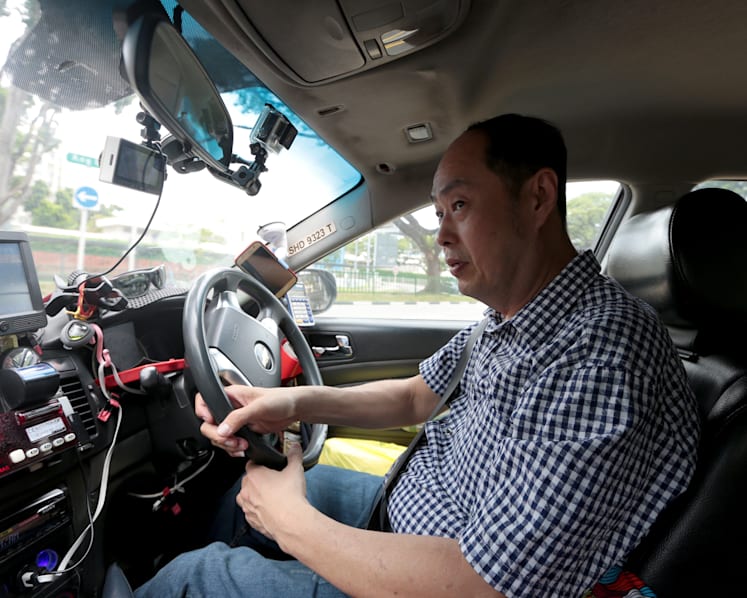
SMRT Taxis driver Rani Krishnasamy, 51, found that her earnings have dipped by about S$10 to S$15 a day, despite accepting more JustGrab bookings. “My taxi is seldom empty (but) the money may not be as good, and I have to put in more hours at work (up from 10 hours to 12 hours a day),” she said.
During periods of low demand, dynamic fares fall below metered ones. While commuters are happy, some taxi drivers complain that at times, the dynamic fares are so low that they hardly make any money.
Trans-Cab driver Desmond Lee noted that with dynamic fares hitting as low as S$4 per trip, a flag-down rate of S$3.90 plus a peak hour surcharge of 25 per cent will mean that the starting fare on his meter was already above that amount.
It was “too miserable”, so he rejected the booking. “You want cheap fares but taxi drivers are not robots. They also have families to feed,” said Mr Lee, 56.
On Monday, HDT driver Michael Ng picked 27 passengers, of which 12 were JustGrab jobs. The following day, he completed 23 jobs, with 14 of them JustGrab bookings.
His earnings on both days were S$380 and S$224 respectively, and Mr Ng attributed the significant fall in earnings to him taking more bookings over the new service.
Mr Stephen Lam used to accept every metered-fare booking that came his way. But of late, the Premier cabbie has become more selective of the bookings, and chooses to avoid JustGrab jobs with low fares. Unlike Uber, Grab does not penalise drivers who consistently reject bookings.
“More taxi drivers are more cautious now because we have to look at the job carefully. By not accepting the lower fare job, commuters will face a longer waiting time for a taxi or car, or some not at all,” said Mr Lam, 38.
He added that his acceptance rate - tied to Grab’s incentive scheme for drivers - has been affected as well.
Acknowledging the drivers’ misgivings about the new system, Prime Taxis chairman Neo Nam Heng said that taxi drivers can pick passengers off the streets during off-peak periods, and take up bookings during “super peak hours”, such as holiday eves and rainy days.
While it is still early days yet to assess the impact of JustGrab’s entry into the market, taxi operators insisted that the move towards dynamic pricing was necessary in the wake of disruptive technology transforming the transport industry.
“We have to support this idea to let our drivers have a more level playing field,” Mr Neo said.
BOON OR BANE
Earlier this week, Second Minister for Transport Ng Chee Meng told Parliament that the taxi operators had implemented dynamic pricing to compete against private-hire car services. “Livelihoods are at stake, and the competition will drive the industry to deliver better services to commuters,” he said. While the PTC was “conscious” that some commuters were uncomfortable with dynamic pricing, Mr Ng noted that competition with private-hire car services would keep fares in check. Metered fares remain an option for commuters looking for a taxi, he stressed.
Market leader ComfortDelGro, instead of hopping onto the bandwagon, chose to roll out a flat-fare option for commuters on its mobile application on Monday. The fixed fares will be tabulated based on the distance to be travelled and existing surcharges, and provide an additional option for commuters on top of metered fares.
In a statement last week, ComfortDelGro said that it was important to ensure that street-hail commuters are still being served, even as it continued to mull over implementing dynamic pricing. A day after the announcement, the taxi operator’s shares surged to its highest in more than five months.
Beyond closing the gap between cabbies and private-hire car drivers, having another avenue to get commuters will ensure that taxis are better utilised, said HDT Singapore Taxi managing director James Ng.
He added: “My intention is that with an increased number of jobs, regardless of whether fares are higher or lower, the drivers can hit their (targeted earnings) earlier and rest more.”
Indeed, some taxi drivers said they had been making more trips of late.
With over a decade of driving experience under his belt, HDT’s Michael Ng usually picks about 13 passengers a day. The number has doubled in recent days, he estimated.
“In time to come, those driving without using the app will have problems getting customers,” said Mr Ng, 52.
Other cabbies, such as SMRT Taxis’ Krishnasamy, have managed to pare down time spent cruising empty along streets from about three hours a day to two hours.
After a recent trip from town to Jurong, Ms Krishnasamy was heading back to town when a few JustGrab bookings blipped on her screen. These were short trips around the western part of the island, and she accepted them.
“The money is not big. It’s just S$5 to S$6, but in the past, if I go to Jurong, I’ll come back (to town) empty,” she said.
To promote its latest service, Grab has trotted out S$5 discount codes for commuters. The codes have worked like a charm, with commuters thrilled that short trips within an estate cost next to nothing.
Some commuters told TODAY that they had tried the new service mainly because of the discount.
Accounts executive Toh Ching Siah, 30, used it twice this week from Bukit Merah Bus Interchange to her Lower Delta Road office.
“I saw that Grab had combined its car fleet with taxis, and wondered how much the price difference will be. I wanted to see which service is more worthwhile for me,” she said.
Homemaker Lynn Toh felt that with cars and taxis under a common service, it would be faster to get a ride under JustGrab. “I like knowing a fixed fare, knowing upfront what I’m going to pay, rather than metered rides where traffic lights and jams can push up my eventual fare,” said Ms Toh, 37.
Asked if they would take JustGrab again, some commuters said that the fare would be the deciding factor, and they would compare the various fixed fare options in the market – namely rival company Uber – before making a choice.
Others said they still prefer to hail taxis from the streets, with some citing unfamiliarity with the app. Ms Christine Lim, 55, who is self-employed, said: “It’s easy to get a cab outside my workplace ... The use of apps is a bit difficult for me because I don’t consider myself tech-savvy.”
Communications executive Michelle Scully, 43, added: “It’s a hassle to use an app, and it’s easy to flag a cab. I want to make sure these taxi uncles still have a job.”
A BLANK CHEQUE FOR TAXI OPERATORS, OR THE ROAD TO IRRELEVANCE?
As drivers grapple with dynamic pricing and learn to use it to their advantage, commuters may find themselves at their mercy during the rush hour, some experts warned.
Recalling the widespread complaints in the past about taxi drivers lying low till midnight to enjoy the 50 per cent surcharge, National University of Singapore transport researcher Lee Der-Horng felt that taxi drivers could game the dynamic-pricing system by avoiding street hails during periods of high surge fares. In such situations, commuters will be left with little choice but to accept pricier rides.
“Taxi drivers will play another kind of hide-and-seek, not in the physical space but in the virtual space,” said Prof Lee. “Consumers may have other options, but if these options are not acknowledged or responded to by the service provider, then it’s not a real choice.”
However, not all cabbies have fully embraced dynamic pricing.
After dabbling with the ride-hailing app for three years, Trans-Cab driver Patrick Teo decided to quit it earlier this year. He recounted an episode where he was en route to pick a passenger. Midway to the pick-up point, his handphone crashed, and he had no way of locating the passenger.
“I realised that I had gotten too used to using an app. And when my phone shut down, the information on the passenger was lost, and I felt helpless,” Mr Teo said.
On another occasion, the 53-year-old veteran cabbie saw an old woman waiting for a taxi in Redhill. He passed her thrice - each time, ferrying a passenger found through Grab - and finally decided to pick her.
“She said: ‘Thanks for fetching me. I saw you pass three times, and you came to pick me’.”
“I realised that people will appreciate you for these things ... Since then, I never took any app bookings,” Mr Teo added
With dynamic pricing now part of the landscape, could Grab and taxi operators tweak their algorithm and force fares up over time?
Urban transport expert Park Byung Joon of the Singapore University of Social Sciences (SUSS) thinks not.
As long as competition remains in the market, the various players would try to keep prices low to win favour among commuters, and hence, regulation would not be necessary.
Also, Grab would have learned from rival company Uber’s experience during the massive train disruption in 2015 and exercised restraint on fares, said Dr Park.
Uber fares then had soared by almost four times the usual price, and commuters cried foul over the astronomical amount they had to fork out.
It would be bad publicity for Grab to adopt the same approach as it could be accused of exploiting commuters, Dr Park said.
Ahead of the roll-out last month, GrabTaxi Singapore head Melvin Vu told TODAY that dynamic fares would be introduced in a “measured and calibrated” way, with a “huge” supply pool right from the start.
In response to queries this week, Grab said that the affordability of fares is dependent on market forces.
“Since JustGrab combines fixed-fare taxis and cars into one service to form the largest supply of fixed-fare vehicles (more than 50,000), fares will always be more affordable than GrabCar as dynamic pricing is more stable,” said a Grab spokesperson. GrabCar is the company’s private-hire car only option.
Dynamic pricing would help better allocate scarce resources in the taxi industry by signalling to drivers areas with greater demand, said Singapore Management University transport expert Terence Fan. But they may not be the silver bullet for the woes of the notoriously rigid taxi industry.
Singapore University of Social Sciences economist Walter Theseira noted that taxi operators believe that dynamic pricing will help to close the earnings gap between taxi companies and ride-hailing companies. But this disparity stems largely from the subsidies offered by ride-hailing companies, and hence, dynamic fares alone will be insufficient in helping the taxi drivers, he said.
In fact, Dr Theseira went as far as to describe the taxi operators’ latest move as a short-sighted decision - a “stop-gap measure” which they may come to rue. Over time, he expects the smaller taxi companies to “become little more than glorified rental car agents, and some will probably exit the industry”.
“While in the short run, the playing field may be more level in the sense that a major barrier to differential pricing of taxis and private hire has been eliminated, in the long run, the companies that have allied with Grab to deliver dynamic pricing have given up control over pricing and booking to a competitor,” he said.
He added: “In the case of the smaller players, I think it is the first step on the road to irrelevance in the market... Just like any Grab or Uber driver has no power over the platform because commuters book Grab or Uber, not ‘Driver X’, the small taxi companies will also soon find that commuters don’t care, and won’t notice, if their company gets replaced with another.”




