







The Big Read: Sydney a proving ground for S’pore’s newest bus entrant
SYDNEY — Happy drivers — that appears to be the secret behind the bus services in Sydney run by Transit Systems, which have won the hearts of commuters in less than 20 months since the operator started plying routes here.
Transit Systems is the sister company of United Kingdom-based Tower Transit, which bagged Singapore’s much-coveted first public bus contract last Friday.
Tower Transit’s bid was deemed superior to 10 others put up by the Republic’s incumbent public transport operators SBS Transit and SMRT, private bus companies as well as foreign operators from countries such as UK, France and Australia.
Tower Transit, which has been operating in London since 2013, is a spin-off from Transit Systems which has been running public bus services in Australia since 1996.





Singapore’s Land Transport Authority (LTA) said Tower Transit’s proposal stood out for aspects of operations, manpower, maintenance, customer service and track record.
Speaking to reporters last Friday (May 8) soon after clinching the contract, Tower Transit chairman Neil Smith spent most of his time explaining how his firm puts its bus drivers and other employees first, pledging to make the bus driver occupation more attractive to groups including women, the young, and those looking to switch careers.
And, following a four-day visit to Sydney to observe the operations of Transit Systems and speak to its bus drivers and commuters, TODAY saw why Mr Smith was raving about his company’s manpower plans.
What stood out was the way Transit Systems drivers were treated. And it was not only about higher pay and shorter shifts, which are largely due to a powerful union. The operator has a pool of part-time drivers, who can be quickly called upon to fill in for full-time drivers who need to take time off at short notice.
As a result, the drivers enjoy some flexibility in work schedule if they need it. They enjoy career progression too — bus drivers can rotate to the back-end departments and learn new skills such as customer service. Those who perform well could be promoted to management roles.
According to the drivers, members of the senior management team also regularly mingle with the drivers at depots and interchanges.
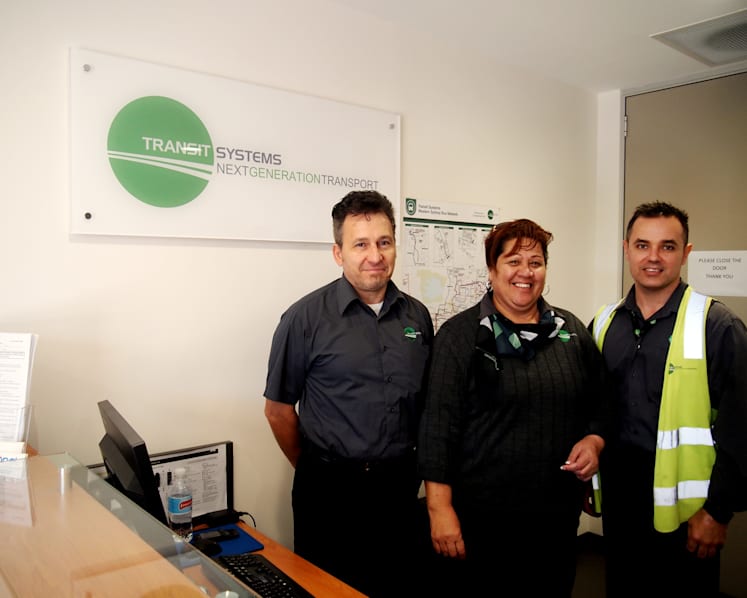
“The boss comes in with a smile and greets us good morning, and comes down to the depot to chat with us. There’s a connection,” said Ms June Simiona, 53, who was transferred to Transit Systems after her previous company’s bid to retain the routes failed. She worked as a bus driver for five years in New Zealand and has been a driver in Sydney for five years.
Since October 2013, Transit systems has been managing routes covering the Liverpool, Fairfield and Holroyd suburb areas in Sydney. Transit Systems took over the routes from five operators, after it single-handedly won the Sydney Metropolitan Bus Service Contract.
A spokesman from Transport for New South Wales said the contract — a performance-based contract with a strong customer focus and detailed key performance indicators — was secured through a competitive tender process. It runs for eight years, subject to the operator meeting performance standards. The contract outlines the payment model for operators and the strict performance regime that operators must maintain.
Each year, Transit Systems’ 29 bus services carry about 11.5 million passengers. Its bus services include T80 — a bus rapid transit line in the western suburbs of Sydney that goes onto the Liverpool–Parramatta T-way — which has a frequency of three to 10 minutes during peak hours.
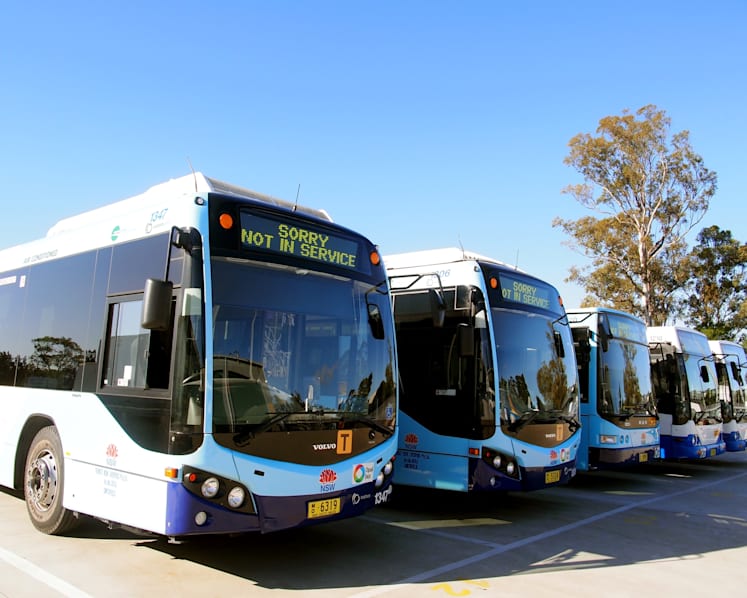
Transit Systems operates out of three depots in Hoxton Park, Moorebank and Smithfield— a new depot completed last year. It has 227 buses in total, 102 of them in Smithfield, where TODAY visited.
OVERCOMING A ROUGH START
Commuters were full of praise for Transit Systems’ bus services.
Bar manager Shannon Johnson, 27, said he takes the T80 every day from his home to his work place, and the service is reliable. “It is usually on time, maybe it’s been late once or twice by about 10 minutes before, but that’s not a common occurrence. It’s very good,” he said.
Ms Pamela Sepulveda, 23, a receptionist, who takes the bus twice a day, said she has never had any problems with the service. “Even if there’s an accident, the next bus is there within 10 or 15 minutes. There’s always a bus available. The drivers are nice too.”
New South Wales has begun progressively rolling out the use of the Opal card, a smartcard with stored value that can be used to pay for fares across different public transport modes. Paper tickets and coins are still being used, and Ms Sepulveda said waiting time is longer when drivers have to collect cash, issue tickets and change.
Still, for Transit Systems, not all was rosy from the beginning. The operator had faced teething issues when it first commenced, with local media reporting issues such as buses not turning up, drivers unsure of routes, and buses coming late and deviating from the timetable.
Mr Balkin said the model in Sydney is different from Singapore’s, and he does not expect the same issues to occur here.
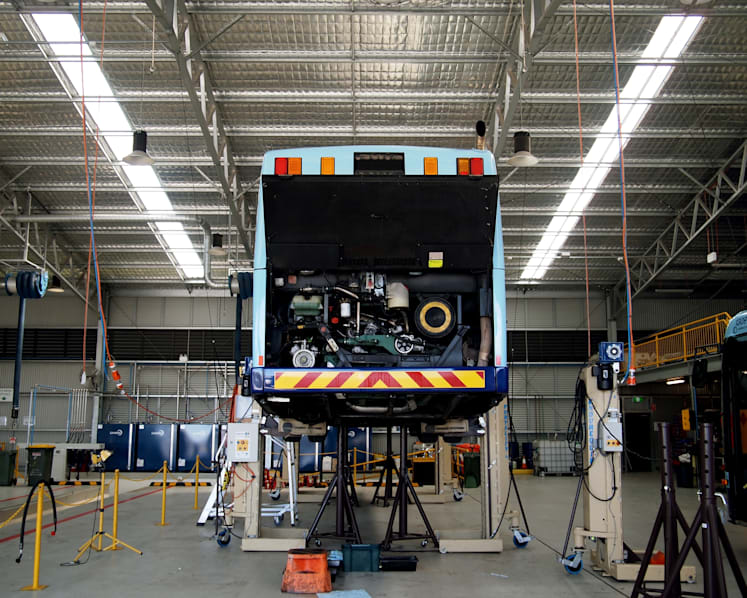
In Sydney, there was a lot to do in a short amount of time, he said. For example, Transit Systems had received 98 buses only one day before they had to roll out the bus services. Getting the buses ready was no mean feat: The radio frequencies had to be changed, signage of the previous owners removed, and safety and mechanical checks conducted.
Mr Balkin noted that in Sydney, bus services could be diverted several times within a day. For example, during a school day, a service may go to a certain area to pick up school children in the morning, and then the same afternoon it might go another way to pick them up from school, he said.
Mr Balkin said it took the firm about four months to fully settle in, and overcome the teething issues in Sydney.
Now, about 19 months after the company set foot in the city, things are going well: Some 95 per cent of all its buses are on time. Its buses are expected to be no more than 5.59mins early, or 1.59mins late.
Mr Balkin said: “Until you actually started operating ... did you really get to understand some of the complexities and fix them.”
‘A SMOOTH TRANSITION IN SINGAPORE’
In contrast to its sister company’s experience, Tower Transit did not encounter any transition issues, a representative from London’s transport authority told TODAY.
Mr Leon Daniels, the managing director (surface transport) for Transport for London who was in Sydney on a work trip, had high praise for Tower Transit. He said: “The transition was incredibly smooth, as far as the passengers were concerned, nothing changed other than the name on the side. They just carried on running beautifully when they took over.”
Mr Balkin said the transition process involving Tower Transit’s managers and drivers in London was encouraging. “We’ll do the same — same philosophy and same management approach with this transition (in Singapore) as we did in London,” he said. “We think we’ve got it all covered, but there will always be things you don’t know, and it’s a matter of how well we deal with it,” he added.
Mr Daniels said that in London, performance obligations are placed on the operators, and those who do not meet the obligations will pay financial penalties. “But we never had to go anywhere near that (for Tower Transit) because Tower Transit’s performance was so good,” he said.
He added that Tower Transit had offered a high quality of performance in terms of the amount of scheduled mileage that was being covered, the reliability of the services, and condition of the fleets. The company is also operating more services than the previous contractor.
“So they’ve brought the quantity up, brought the reliability up, the number of complaints went down. We consider them to be a very good contractor in London,” he said. Mr Daniels added that Tower Transit has also impressed him with its innovation and how it often suggests ideas to improve the services.
The operator was also successful in keeping its staff motivated, with its senior management being proactive, hands on and approachable to employees. “Everybody says it’s like a breath of fresh air,” Mr Daniels said.
Mr Balkin was confident that Tower Transit will implement a smooth transition in Singapore, as the process would follow a “systematic 12-month roadmap” which the LTA, National Transport Workers’ Union and the operators would be working on together. He noted that the Republic’s Government Contracting Model, the typical challenges for a new operator replacing an incumbent — such as obtaining bus assets and depot space — “simply do not exist”.
Tower Transit is expected to take over the Bulim depot in the second half of the year, with implementation of the 26 routes in three tranches from the second quarter of next year. TODAY understands the first tranche of services will start at the end of May next year.
An LTA spokesman said the cooperation of both outgoing and incoming operators, as well as affected employees, “are critical to a smooth transition” in Singapore. “Operators are required to have a transition plan that covers early activities that commence upon the award of contract, all the way to the actual hand-over of bus services, and thereafter post-implementation monitoring,” said the spokesman.
The LTA said it intentionally catered a one-year transition period for the first tender to ensure that there is sufficient time for transitional activities. “LTA, together with the incoming and incumbent operators, will also conduct a condition survey of the buses to ensure that they are roadworthy and fit for operational use before being handed over to the new operator,” the spokesman said.
DRIVERS’ BENEFITS: BBQS AND PRESENTS
Transit Systems employs 324 drivers. Of these, nine are full-time female drivers. About 11 per cent — or 35 — of the drivers work part-time.
“At present ... most employees are looking for full time employment, but we attempt to provide flexibility within the needs of the business,” said Mr Greg Balkin, general manager for Transit Systems’ Sydney operations and the Transition Director at Transit Systems and Tower Transit.
All their part-time drivers go through the “same comprehensive training programme” as their full-time counterparts.
Mr Sergio Fiorenza, 51, who owns a business, drives the bus part-time. Describing working conditions as “pretty good”, he said: “If you tell them you need to do this on a certain day, then they’ll change your shift, especially if you’re someone who always helps them. It’s a give-and-take, I’ve never had a problem.”
He added: “No matter how trivial you think the matter is, if they think you deserve the day off they’ll give it to you.”
In Sydney, the morning peak traffic period is from 6am to 10 am, and the evening peak starts from 3pm and lasts till 7pm.
Drivers receive training on customer service — including identifying and assisting disabled commuters — ticketing, and safe driving, among other things.
Mr Balkin said the company keeps track, on a monthly basis, the punctuality of the bus services.
Drivers who perform well would receive a certificate of appreciation. Those who are having difficulties in their job are sent for re-training.
An award based on criteria such as punctuality, customer feedback, attendance, and safety record would be handed to a driver from each depot every three months. Annual Employee of the Year awards are also given out. The management also organises and pays for social events such as Christmas parties for the drivers.
In Sydney, drivers are paid A$24 (S$26) per hour and they can choose to work extra hours if they want to earn more money. They typically work about eight hours per shift.
Mr Balkin noted that Sydney has high cost of living and tax rates. There is also a strong union presence. Labour regulations stipulate that the ordinary hours of work should not exceed an average of 38 hours per week, excluding meal breaks.
Ms Simiona said that while the work schedule is tough — she gets to spend time with her 23-year-old daughter only on Sundays — she has the flexibility of taking time off to attend to pressing issues. “It’s quite cool here, I love the way they run things here. When you need help, it’s there and when they need you, you give,” she said.
She added that the company’s management goes the extra mile by “showering us with presents”, having barbecues and providing the drivers with cold bottled water on hot days. “Where do you get that anywhere else? From my experience with other companies, you don’t get that. Here they treat you like family, it’s so different. They really reward us with the efforts we put in, they recognise our hard work,” she said.
Mr Fiorenza said the operator gives its drivers a variety of tasks, so that they are “not doing the same thing all the time”. He has tried working in the office and dealing with customers’ complaints, which he described as a good experience.
Mr Christopher Benson, 38, who was in construction before making the switch seven months ago to become a bus driver, said some drivers are trained to do a coordinator’s job as well. “There’s incentive to stay in the company and progress. You’re not just driving all the time,” he said.




