







Proposed licensing regimes to beef up security, sustainability of Singapore's data centres and cloud services
The Bill will give businesses, organisations, and citizens assurance that the infrastructure they depend on is secure and resilient, said MDDI.
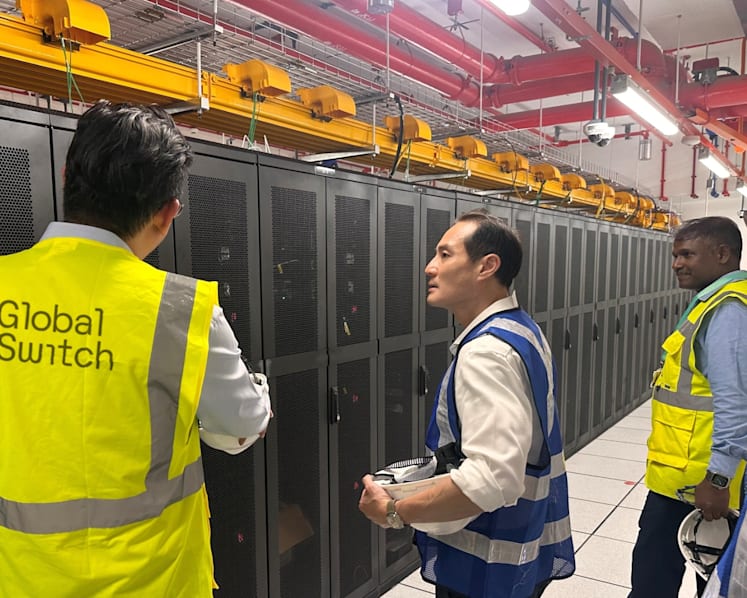
Senior Minister of State for Digital Development and Information Tan Kiat How at a visit to data centre operator Global Switch as part of the industry engagement efforts for the Digital Infrastructure Bill. (Photo: MDDI)

This audio is generated by an AI tool.


SINGAPORE: Data centres in Singapore could soon be required to meet various energy efficiency requirements under a new licensing regime proposed by the Ministry of Digital Development and Information (MDDI).
Under the Digital Infrastructure Bill, introduced in parliament on Tuesday (Sep 8), all operators of data centres in Singapore with a critical IT load of at least 3 megawatts (MW) will need to be licensed.
As a first step, data centres will be required to meet facility-level energy-efficiency requirements, including power usage effectiveness requirements, said MDDI in a press release. These requirements will apply to existing and new data centres.
The framework will also allow further requirements, including for IT equipment and water efficiency, to possibly be introduced in the future.





The Bill will also introduce another licensing regime aimed at strengthening the security and resilience of major cloud services and data centres.
This will be applicable to major co-location and cloud data centres with a critical IT load of at least 10MW, as well as major cloud service providers whose Infrastructure-as-a-Service and Platform-as-a-Service services generate at least S$100 million (US$79 million) in average annual revenue from users in Singapore over the three preceding years.
Such thresholds are calibrated to cover the data centres and cloud service providers whose disruption would have a “significant impact” on Singapore's economy and society, said MDDI.
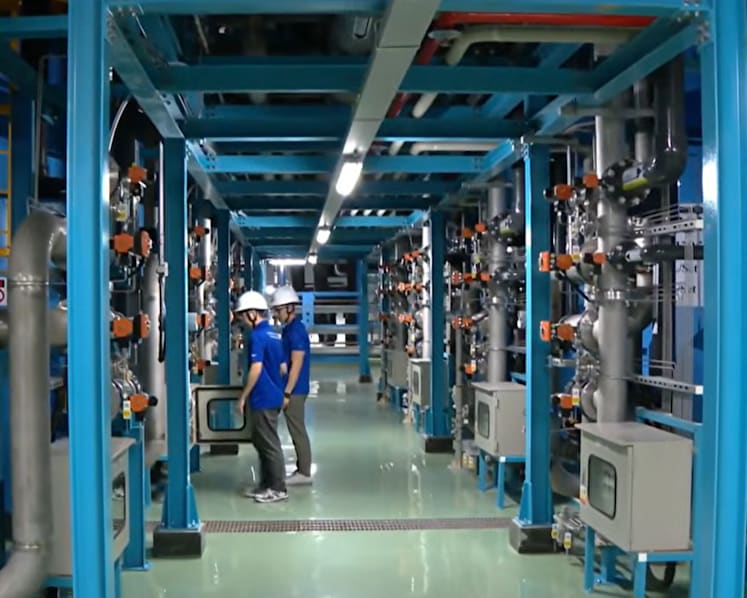
There are about 70 data centres in Singapore, with the ministry expecting about two-thirds to fall within the scope of the two licensing regimes.
Both licensing regimes will be administered by the Infocomm Media Development Authority (IMDA).
The Bill was developed in collaboration with industry stakeholders, including major data centre operators, cloud service providers, industry associations and enterprise users of these digital infrastructure.
It will complement the Cybersecurity Act, which sets out cybersecurity requirements for major foundational digital infrastructure, by covering a broader range of operational resilience risks.
These risks include technical failures, power or cooling issues, fires and other physical or operational incidents that can also disrupt the delivery of digital services.
To manage these risks, licensees will be required to implement security risk management measures, business continuity and disaster recovery plans, as well as report specified incidents and disruptions to IMDA.
“Predictable and credible rules are part of Singapore's value proposition, especially for capital-intensive digital infrastructure investments with a multi-decade lifespan,” said the ministry.
“The Bill will give our businesses, organisations, and citizens assurance that the infrastructure they depend on is secure and resilient – and give businesses the clarity and predictability they need to invest in Singapore's digital infrastructure for the long term.”
It will also ensure that the data centre sector continues to grow in a sustainable manner and makes the best use of Singapore’s national resources.
“Altogether, the Bill will strengthen the foundations on which Singapore's digital economy, and our AI ambitions, will be built,” MDDI said.




