







Calls for ambulance are being screened so urgent cases get priority
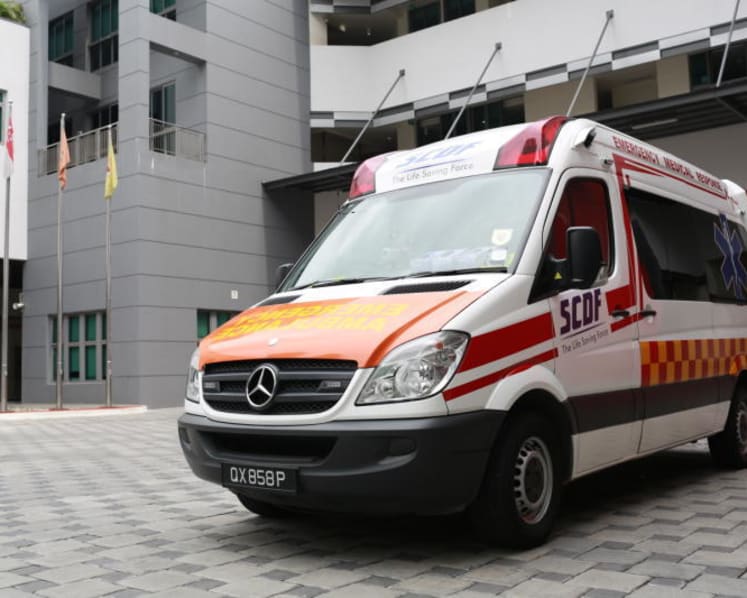
The SCDF's emergency ambulance. TODAY file photo


SINGAPORE — Amid a rising number of 995 calls, of which an average of 50 a day last year involved minor ailments and fake alarms, the Singapore Civil Defence Force (SCDF) has started screening cases, so that resources are deployed to urgent, life-threatening cases first, departing from the first-come-first-serve approach.
Operators answering 995 calls are now armed with a set of questions for 30 emergency medical scenarios, ranging from chest pains to animal bites, to assess how urgent a case is in order to prioritise help. These questions take one minute tops.
Cases that require immediate attention continue to have an 11-minute response time target. Those with minor conditions could also be told to seek outpatient treatment or make their own way to the hospital using a private ambulance or other forms of transport.
On average, 50 calls a day last year involved minor ailments and fake alarms. The new way of handling 995 calls, which kicked in last month, was announced at the SCDF’s workplan seminar. Speaking at the event, Home Affairs Minister K Shanmugam said beefing up resources to meet the growing demand for emergency medical services will not be sustainable.





Speaking at the event, Home Affairs Minister K Shanmugam said beefing up resources to meet the growing demand for emergency medical services will not be sustainable.
“To expect us to attend to all of these (non-emergencies) is not going to be possible. It’s putting a strain on resources. Every time we respond to this, it takes away our ability to deal with an actual emergency,” he said.
Last year, there were 178,154 calls requesting emergency medical services, up 7.4 per cent from the preceding year. Of these, nearly 19,000, or 10 per cent, were for minor ailments such as constipation or chronic cough, or false alarms.
The Ministry of Health (MOH), which co-developed the set of screening questions, has seconded eight staff nurses to the SCDF to support 995 call operators, such as by giving medical advice or coaching callers on performing cardiopulmonary resuscitation (CPR). Six more nurses will join the operations by the end of the year, bringing the total to 14.
For faster response to life-threatening cases, fire-fighters have also undergone training to double-hat as emergency medical technicians (EMTs). They can hop onto three-wheeler fire bikes equipped with a bag of medical equipment containing oxygen cylinders and drugs and reach patients first, in case an ambulance is held up by traffic.
So far, about 230 fire and rescue specialists have been cross-trained to respond to cases such as cardiac arrest, trauma, fits, and respiratory emergencies.
For situations where patients have minor injuries such as cuts or bruises, these EMTs could also be dispatched to render first-aid and assess whether an ambulance is required.
Apart from bikes, SCDF officers will be also able to attend to emergencies on a new fire medical vehicle, a hybrid that is equipped with firefighting appliances and medical equipment that has room to ferry patients with slight injuries — such as from a road traffic accident — to hospitals. Six such vehicles will be in operation by the end of this year.
MOH’s director (Unit for Prehospital Emergency Care) Marcus Ong said the new screening approach is similar to that in hospital emergency rooms.
“For the public, what you need to know is that if you have a dispatcher on the line asking you questions, please cooperate with them because they’re trying to help you to assess your condition better and also send the appropriate response for you,” he said.
On Wednesday (May 3), Mr Shanmugam, who is also Law Minister, also announced that the Dispatcher Assisted first REsponder (Dare) programme started in 2015 will be scaled up in the face of terror threat.
In the pilot phase of this programme, 2,000 residents in six constituencies were trained in performing CPR and using automated external defibrillators. The SCDF targets to train at least 300 residents in every constituency in first-aid and fire extinguisher use by 2019.
Mr Shanmugam said: “SCDF, police will respond. But however quickly they respond, we still are better off if people on the ground are able to help themselves and help others in those few minutes before the security forces and SCDF forces turn up.”




