







Up to 1,000 more people annually to get access to civil legal aid as income threshold set to be increased
The top three most common civil legal aid categories are matrimonial, monetary claims and probate matters.
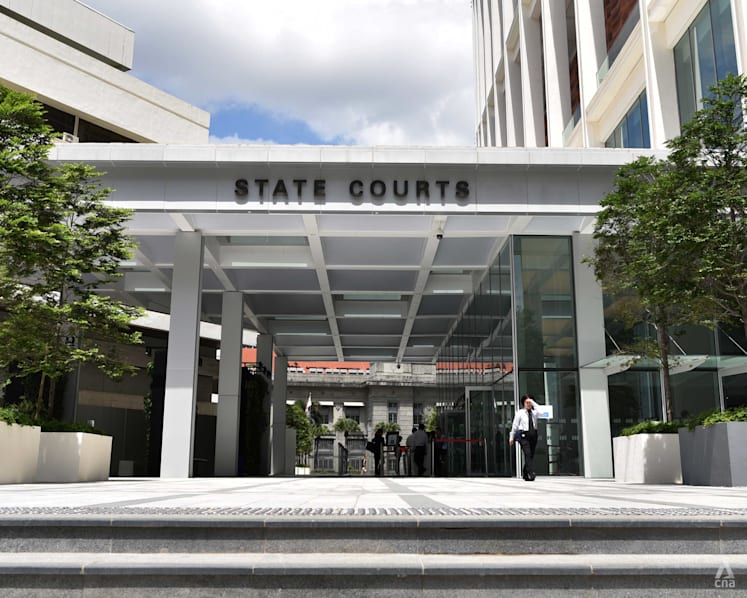
The State Courts in Singapore. (File photo: CNA/Jeremy Long)

This audio is generated by an AI tool.


SINGAPORE: Up to 1,000 more Singaporeans and permanent residents annually are expected to get access to civil legal aid when the income threshold is raised later this year.
The per capita household income threshold for civil legal aid will go up from S$1,050 (US$850) to S$1,650, Law Minister Edwin Tong said in parliament on Monday (Mar 2) as he laid out the Ministry of Law’s spending plans for the coming year.
Currently, about half of the litigants for civil matters within the expanded income percentile range remain unrepresented, said the ministry.
The threshold for bank savings and non-Central Provident Fund investments will also be increased from S$10,000 to S$12,000 for both civil legal aid and criminal defence aid.





Singapore will have to redouble efforts to keep its laws updated and relevant and press on with reform and progress in its legal policies, said Law Minister Edwin Tong. Speaking in parliament on Monday (Mar 2), he told the House that the Ministry of Law will continue to build Singapore as a legal and professional services hub, by reviewing key legislation to ensure that the laws stay fit for purpose. These include reforms in arbitration, corporate insolvency and intellectual property. The government will also identify opportunities in emerging areas, such as supporting the green transition, digital economy and major regional infrastructure projects, as well as sports and entertainment dispute resolution. Beyond domestic reforms, Singapore will continue to contribute to international thought leadership by actively playing a role in shaping the law. Turning to the challenges ahead, Mr Tong stressed the need for a collective response; as a first step, the legal industry will be gathering on Mar 6 for an "open, frank and candid conversation". Addressing MP Sylvia Lim’s call for public disclosure on the appointment of the Attorney-General, he explained why there is a system which is careful, structured and designed to preserve independence and public trust.
"Applicants with extenuating circumstances will continue to be reviewed by an independent means test panel comprising legal and social service professionals," said Senior Parliamentary Secretary for Law Eric Chua.
The top three most common civil legal aid categories are matrimonial, monetary claims and probate matters.
The government provides legal aid to vulnerable and lower-income Singaporeans and permanent residents through the Legal Aid Bureau and the Public Defender’s Office.
The Legal Aid Bureau provides civil legal aid with the support of volunteer lawyers appointed as assigned solicitors, while the Public Defender’s Office co-delivers criminal defence aid with Pro Bono SG, which administers the criminal legal aid scheme.
Since 1958, the Legal Aid Bureau has provided vulnerable residents with civil legal aid, Mr Chua noted, adding that the bureau receives an average of about 7,000 applications annually.
The Public Defender’s Office, established in 2022, received about 2,400 applications last year.
The Ministry of Law will enhance legal services and intellectual property to support the economy, uphold the rule of law and expand access to justice, said Senior Parliamentary Secretary for Law Eric Chua. It will also optimise land to meet Singapore’s community needs, he said in parliament on Monday (Mar 2). One key priority is ensuring that the legal processes and frameworks remain accessible, fair and effective. The government will continue to review them to ensure that Singaporeans can seek recourse and resolve frictions whenever they arise, such as in community justice. It has been studying ways to streamline and simplify the enforcement of civil judgments to be more effective, efficient and affordable - by giving the Court greater powers and introducing new enforcement modes. It has been consulting with relevant stakeholders and aims to introduce a bill later this year. Another area is legal aid for low-income and lower middle-income Singaporeans. The government plans to expand civil legal aid coverage, such as raising the per capita household income threshold from S$1,050 to S$1,650.
To qualify for government legal aid, applicants have to satisfy the means and merits tests.
“Eligible legal aid applicants are not required to pay for civil legal advice, but may be required to pay a financial contribution for legal aid matters. The amount of contribution charged takes into account the applicant’s financial resources,” MinLaw said.
Beyond government legal aid schemes, the ministry continues to work with the legal fraternity and key stakeholders to strengthen Singapore’s legal aid ecosystem.
This includes the ministry co-funding Pro Bono SG’s community law centres, which provide socio-legal support to residents in need.
CIVIL ENFORCEMENT PROCESSES
A Bill will be introduced later this year to simplify civil enforcement processes, Mr Chua said.
This would provide the court with greater powers to identify the assets and means of the judgment debtor and introduce new modes of enforcement to deter and punish non-compliance with court orders.
It will also allow the creation of new civil judgment enforcement officers, who will be regulated by a department under MinLaw, and assist parties seeking to enforce their civil judgments.
"We received feedback that the time, the effort and the costs of enforcing judgments can be disproportionate to the judgment sum, leaving some judgments unenforced," said Mr Chua.
"This is undesirable. We aim to simplify the enforcement process to be more effective, efficient and affordable."
It was also announced that the Singapore Land Authority (SLA) has worked with relevant agencies to lease out selected state properties for a longer tenure, subject to planning considerations.
Currently, state properties are typically let out for interim uses with tenures of less than 10 years.
This move aims to encourage greater innovation in optimising the use of state properties, said MinLaw.




