







Combustible panels still a risk despite fire safety measures: Experts
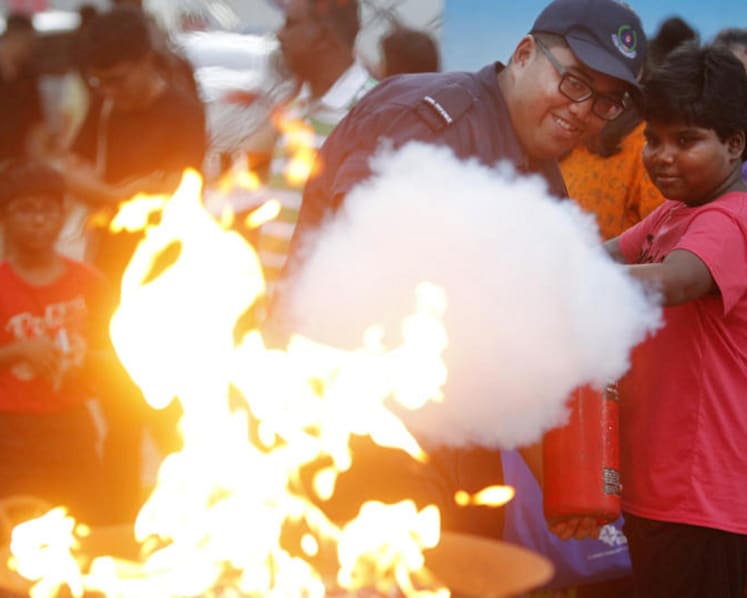
Experts say it's highly important to remove fire hazards as soon as possible to remove any vulnerability to fire. TODAY file photo


SINGAPORE — While having safety mechanisms in place would help to prevent a fire from spreading, the presence of combustible cladding in buildings still serves as a potential hazard and exposes those working or living there to danger, said experts.
“It’s highly important to remove the hazard as soon as possible, then you won’t have any vulnerability,” said assistant professor Moshood Olawale Fadeyi, from the Singapore Institute of Technology (SIT) on Thursday (Aug 24).
With the Hungry Ghost Festival now taking place, Mr Seet Choh San, who sits on the board of directors of the National Fire and Emergency Preparedness Council, also advised owners and residents of the affected buildings to take extra precautions, and not indiscriminately burn their joss paper directly near the buildings.
This, he added, might increase the chances of the cladding catching fire.





Commenting on what could have caused the mix-up in the different models of cladding at Chip Soon Aluminium’s warehouse, Mr Seet noted that the packaging of cladding delivered to distributors would have been clearly marked with its classification.
However, errors do occur at either the delivery or design stage.
“It’s like you buy a pizza, you order Hawaiian flavour, but you got pepperoni. Did the pizza company purposely want to cheat you? Perhaps not. Maybe they accidentally gave you the wrong box,” he added.
Such errors might also happen at the manufacturing and testing stage.
However, Mr Seet said that this is “highly unlikely” as manufacturers and laboratories would want to protect their reputation.
Meanwhile, experts pointed out that the classification of cladding in Singapore is similar to most other countries. Manufacturers also understand the importance of meeting standards set by regulators, said Mr Seet, who has over 30 years of experience in the field of workplace safety and health. To ascertain that standards have been met, he noted that samples of the cladding are tested by an external party, known as certification bodies, in their laboratories.
Once the samples have passed the tests, the manufacturer will receive a certificate of conformity which is valid for five years.
In response to TODAY’s queries, a Singapore Civil Defence Force (SCDF) spokesperson said that local certification bodies issue a certificate of conformity stating the extent of flame spread for composite panels, based on the test results by accredited laboratories. These laboratories could be based in Singapore or overseas.
Periodic audits are also conducted to ensure that the composite panels adhere to the certificate of conformity, the spokesperson said.
Mr Seet pointed out that a holistic approach is usually taken when conducting risk assessment of a building.
This involves ensuring that other safety mechanisms are not just in place, but also properly functioning as well, even if the buildings are fitted with combustible cladding, he said.
As such, the SCDF would ensure that in the event of a fire, sprinklers and fire extinguishers are located nearby to prevent it from spreading.
It would have also ensured that the emergency stairs could compartmentalise a fire and are properly ventilated to prevent smoke from suffocating evacuees.




