







Covid-19: Organising a gathering or wedding? Here's what you need to know about the authorities' guidelines
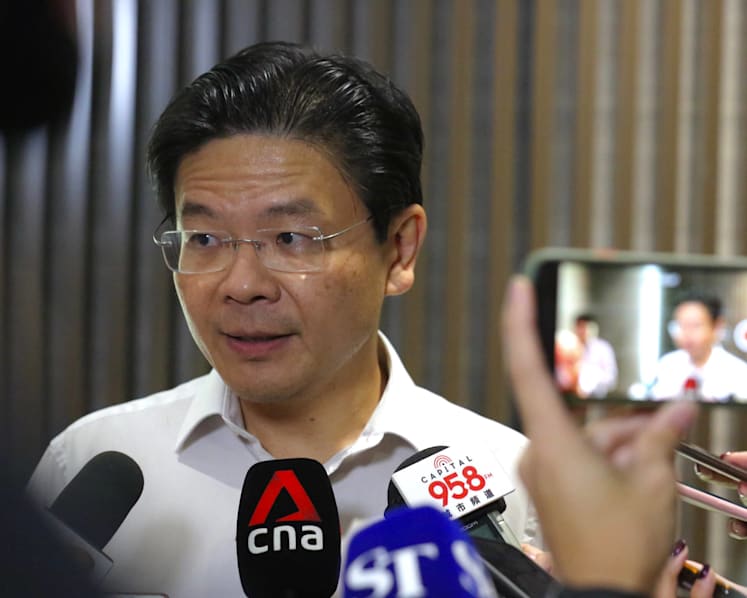
National Development Minister Lawrence Wong on March 13, 2020 outlined the guidelines for people holding non-ticketed events such as weddings and family get-togethers.




SINGAPORE — People here organising private functions, such as weddings or family get-togethers, should take “sensible precautions” in light of the escalating Covid-19 outbreak, National Development Minister Lawrence Wong said on Friday (March 13).
These could include seating your guests further apart, implementing temperature checks, as well as compiling a list of the names of guests attending, among other precautions, said Mr Wong at a multi-ministry taskforce media briefing.
However, this is only an advisory and will not be imposed on every private function, especially weddings, he added.
“We know that given the nature of a wedding function, (for the) bride and groom, obviously social distancing one metre apart may not be a very good start to a wedding,” he said, eliciting chuckles from some reporters present.





“But your guests (who are) seated around the table...you don’t have to crowd everybody at the table. You can let them sit slightly further (apart),” he said.
At Friday’s press briefing, journalists were made to sit further apart than usual, as chairs were placed one metre apart. It was the first time such seating arrangements have been implemented since press briefings with the multi-ministry taskforce started more than a month ago.
WEDDINGS AND PUBLIC FUNCTIONS
Mr Wong suggested several precautions that can be taken by organisers, including:
Taking temperature of guests or participants
Sending reminders to those who have travelled overseas and to areas affected by the Covid-19 outbreak to not attend if they feel unwell
Keeping a list of the names of guests which can be used to facilitate contact tracing, if necessary
OTHER SOCIAL GATHERINGS
Health Minister Gan Kim Yong said due to the huge variety of the types of social events, it’s not possible to implement specific rules for private social events.
For non-ticketed events which are usually attended by one’s own circle of family and friends, Mr Gan said organisers can choose to:
Postpone the gathering
Decrease the number of guests
Have different rooms or venues to segregate the guests.
“These are the friends and family members you would know. You want to protect them as well,” said Mr Gan.
TICKETED EVENTS
The taskforce announced on Friday that all ticketed events with more than 250 participants are to be cancelled or postponed in light of the Covid-19 pandemic.
The mandatory cancellation or postponement of ticketed events with 250 participants or more does not apply to events that have already been committed to — for example, if tickets have been sold.
However, organisers are advised to put in place these precautions:
Reduce the scale of events to below 250 participants where possible
Reduce crowding and improve ventilation. For example, participants could be seated at least one metre apart and advised to reduce physical contact, such as the shaking of hands
Carry out temperature and health screening measures and turn away people who are unwell
Put in place measures to facilitate contact tracing, such as obtaining the contact details of participants
While the number of participants is a useful guide, Mr Wong also urged event organisers to consider the density, duration and nature of the activity and follow the guidelines accordingly.
He also expects event organisers to let the public know at the appropriate time whether they intend to postpone or proceed with the event, and the precautions they are taking if they are going ahead.
PUBLIC VENUES
Owners or tenants of venues that are accessible to the public, such as casinos, cinemas, theme parks, museums and sports centres with indoor facilities are also advised to put in place measures to reduce close contact among patrons and customers, where possible.
These include:
Placing seats at dining venues at least one metre apart
Limiting the number of visitors at entertainment venues and tourist attractions at any one time and increasing spacing among them
Limiting the number of patrons, introducing physical separation measures, increasing the frequency of cleaning at sports centres with indoor facilities. Advisories can also be issued to reduce unnecessary contact between people and encourage people to practise public hygiene
WORKPLACES
Employers are also advised to implement measures “to reduce close contact where feasible”, said the Ministry of Health in a press release.
In a separate advisory issued on Friday, the Ministry of Manpower (MOM), alongside its tripartite partners the National Trades Union Congress and the Singapore National Employers Federation, also encouraged employers to adopt social distancing measures to provide a safe working environment for their employees.
Under the guidelines set out by MOH and MOM, employers are encouraged to:
Adopt tele-commuting and video-conferencing to allow employees to work from home
Pay special attention to vulnerable employees such as older or pregnant employees or those with underlying medical conditions to enable them to work from home
Review work processes and provide the necessary IT equipment to employees to be able to work from home
Space seating in meeting rooms and workstations further apart
For job functions where working from home is not feasible such as frontline operations and fieldwork at construction sites, shipyards or plants, employers can consider:
Reducing the duration and proximity of physical interactions
If physical meetings are necessary, limiting the number of attendees and shortening duration. Those involved could also be dispersed to more than one meeting venue and linked up through video-conferencing or tele-conferencing.
Staggering working hours and allowing employees to commute during off-peak hours. Where feasible, reducing the congregation of employees at common spaces such as entrances, exits, lifts, pantries or canteens. Reporting times can also be staggered at one-hour intervals between 7.30am and 10.30am. Breaks can also be staggered.
Deferring or scaling down non-critical events, such as welfare activities or celebratory functions
Implementing shift arrangements for suitable workplace settings such as manufacturing. Employers can consider deploying employees in shifts and ensuring the clear separation of the employees on different shifts, such as managing human traffic and stepping up cleaning of common areas during shift changeovers.
In its statement, MOM said that prior to implementing such measures, employers should clearly communicate and explain them to employees.
Unionised companies should also engage their unions on such arrangements.
Meanwhile, employees are reminded to observe good personal hygiene, monitor their own health condition and stay at home to rest if unwell.




