







COVID-19 vaccination to become part of Singapore’s national immunisation schedules from Oct 12
COVID-19 vaccination will be recommended for people aged 60 and above, medically vulnerable people aged six months and above, and residents of aged care facilities.
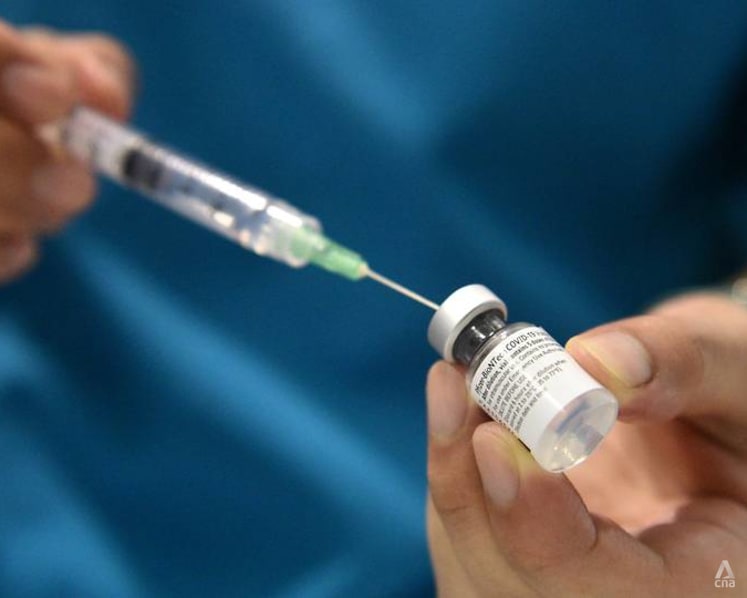
A healthcare worker preparing a dose of the Pfizer-BioNTech COVID-19 vaccine in Singapore. (File photo: CNA/Jeremy Long)

This audio is generated by an AI tool.


SINGAPORE: COVID-19 vaccination will become part of Singapore’s routine national immunisation schedules from Oct 12.
It will be recommended for people aged 60 and above, residents of aged care facilities, as well as medically vulnerable people aged six months and above, the Ministry of Health (MOH) and Communicable Diseases Agency (CDA) said on Wednesday (Oct 7).
This means that for children, COVID-19 vaccination will be recommended under the National Childhood Immunisation Schedule (NCIS) for those with certain medical conditions that put them at greater risk.
For adults, COVID-19 vaccination will be incorporated into the National Adult Immunisation Schedule (NAIS).





COVID-19 vaccination has been offered under the National Vaccination Programme since 2020 to facilitate uptake during the pandemic.
“As COVID-19 will continue to circulate and pose a risk of severe disease, particularly among older and medically vulnerable individuals, COVID-19 vaccination will be added to the NCIS and NAIS to ensure the vaccine remains accessible and affordable for the public,” MOH and CDA said.
Healthcare workers and people who live or work with medically vulnerable individuals are also encouraged to get vaccinated to help protect those around them.
Those considered medically vulnerable include individuals with diabetes; heart conditions such as heart failure; chronic lung, kidney and liver conditions; as well as pregnant women.
For a full list of health conditions that classify a person as medically vulnerable, the public can refer to MOH's website.
Others aged six months and above who are not in the recommended groups may still choose to receive a COVID-19 vaccine. They may consult their doctor about the benefits of vaccination for their circumstances, the authorities said.
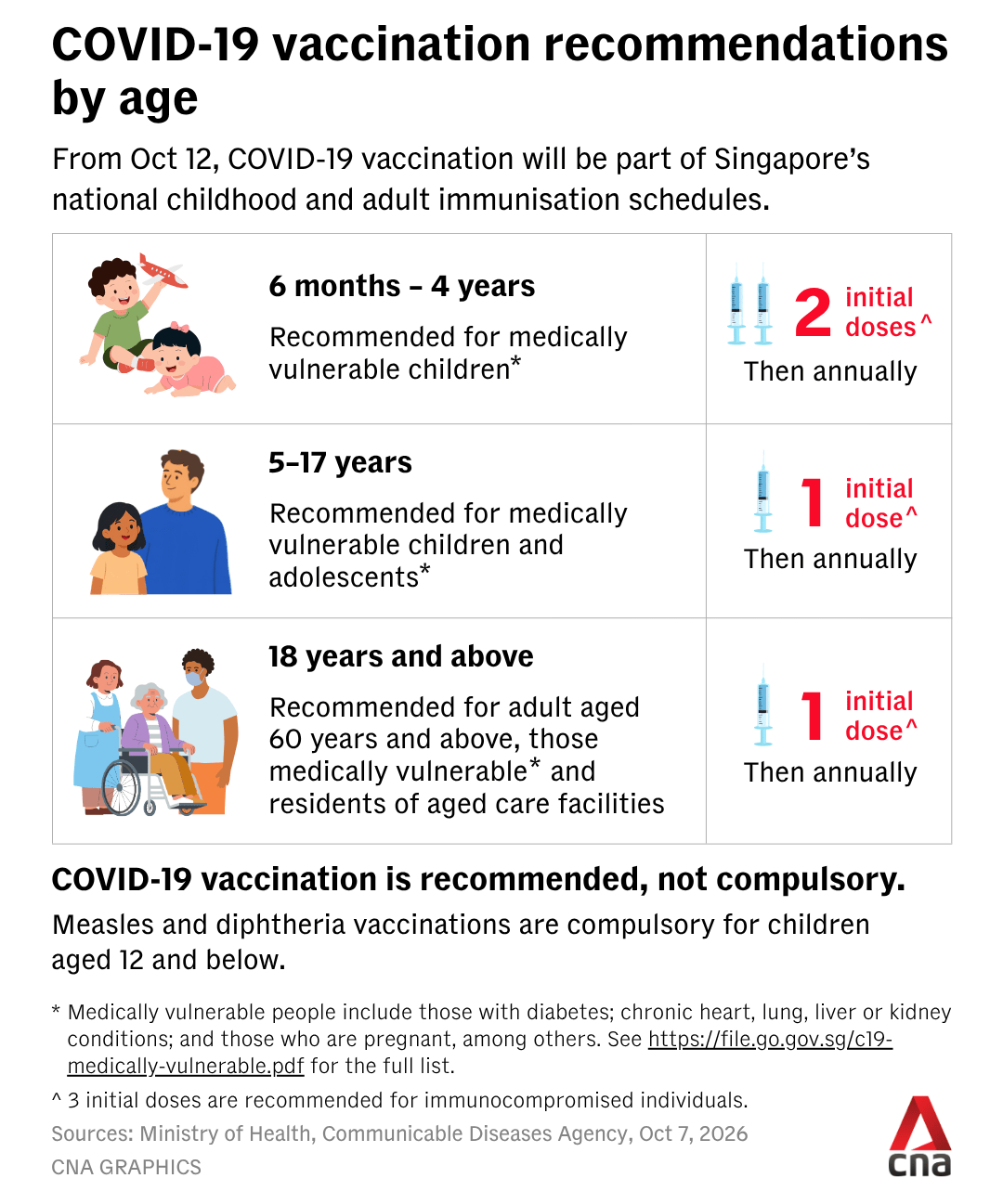
For those receiving a COVID-19 vaccination for the first time, children aged six months to four years should receive two doses eight weeks apart, while those aged five and above should receive one dose.
People aged six months and above who have previously been vaccinated should receive an additional dose about one year after their last dose, with a minimum interval of five months.
COVID-19 vaccination will continue to be fully subsidised for Singapore citizens, permanent residents, long-term pass holders, and certain short-term pass holders at participating CHAS GP clinics, polyclinics and mobile vaccination teams (MVT) sites, until further review.
As such, COVID-19 vaccinations will not be claimable under MediSave 500/700, or the MediSave Chronic and Preventive Care scheme from Jan 1, 2027, until further review.
ROLLOUT OF UPDATED COVID-19 VACCINES
Updated COVID-19 vaccines targeting the XFG strain will also be rolled out from Oct 12 at more than 600 GP clinics, all polyclinics and MVT sites across Singapore.
The XFG Moderna/Spikevax and XFG Pfizer-BioNTech/Comirnaty vaccines provide better protection against current and emerging strains of COVID-19, MOH and CDA said.
Their safety profiles are comparable to those of previous versions, they added.
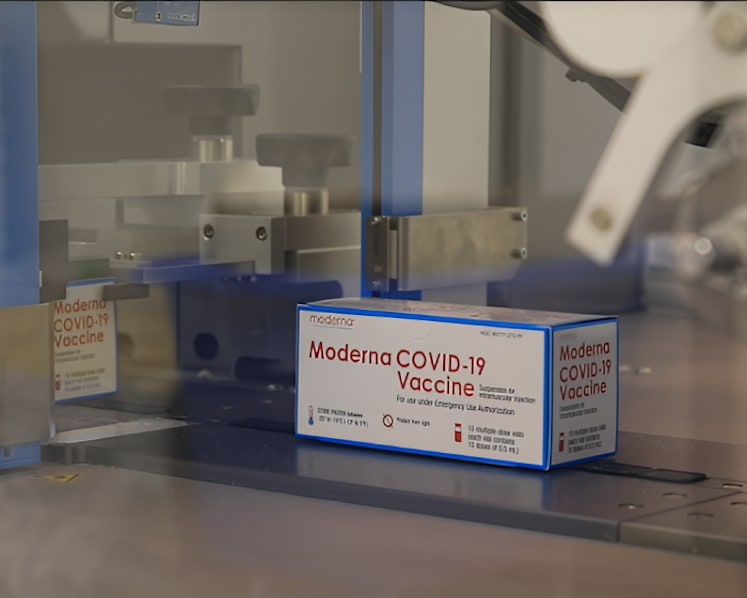
From Oct 12, the updated Pfizer-BioNTech/Comirnaty vaccine will be administered at all vaccination locations offering the updated vaccines for individuals aged 12 years and above, while the Moderna/Spikevax vaccine will be administered for individuals aged six months and older.
From Nov 2, the updated Pfizer-BioNTech/Comirnaty vaccine will be administered for those aged six months to 11 years old.
“COVID-19 waves will continue to occur from time to time and can cause severe disease among those who are older or medically vulnerable,” MOH and CDA said.
“We strongly encourage individuals in the recommended groups to stay up to date with their COVID-19 vaccination, to better protect themselves and those around them.”




