The hidden cost of fast, cheap delivery: Why Singapore's parcel delivery workers are walking away
Plummeting pay rates and harsh penalties are driving last-mile delivery workers out of the industry, even as e-commerce demand continues to surge.
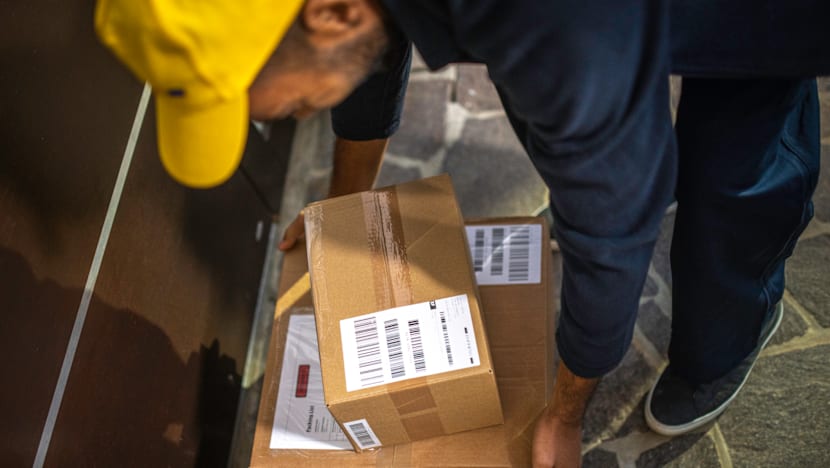
Payout rates per parcel have decreased over the years amid increased competition. (Photo: iStock)

This audio is generated by an AI tool.


SINGAPORE: When the COVID-19 pandemic triggered an e-commerce boom, TH was earning around S$2.40 (US$1.80) a parcel as a last-mile delivery driver – roughly S$400 a day.
But as the years passed, the rate kept dropping. By 2024, it was S$1.60 a parcel. For the 44-year-old, it was the final straw.
“The price keeps going down. Now you can't really make much,” said TH, who left the job last year. The difference in earnings could cover the cost of his vehicle rent and petrol.
TH, who declined to share his full name, is far from alone. Across Singapore's delivery sector, workers say they are being squeezed between consumer expectations for fast, cheap delivery and a business model that pushes costs down to those at the bottom of the chain.
50 CENTS A PARCEL





Years of fierce competition between platforms have made rapid, low-cost delivery the norm, said Assistant Professor in Economics Chua Yeow Hwee of Nanyang Technological University (NTU). The result: tighter delivery windows, higher parcel volumes and zero tolerance for delays.
For last-mile workers, who are usually paid per parcel, meeting these expectations means longer hours and mounting stress.
“The pressure created by consumer demand is effectively borne by workers at the end of the day, causing many to leave,” Asst Prof Chua said.
While major logistics companies in Singapore typically employ their own delivery drivers, they also rely on main contractors and subcontractors who source last-mile workers to complete the final leg of delivery on foot or by vehicle.
The pandemic temporarily inflated pay rates as e-commerce orders spiked, said Asst Prof Chua.
“As demand normalised and more workers entered the sector, rates declined. Logistics firms are also rationalising costs after rapid expansion, and subcontracting structures allow cost pressures to be pushed down to workers,” he said.
A main contractor who asked to be identified as David said rates from one major logistics company have fallen by at least two-thirds since the pandemic – to under S$1 per parcel.
“There's no one to regulate all these prices. The person who actually gets discounted is the last-mile drivers and workers,” he said.
Retirees who once supplemented their income through delivery work have largely disappeared, David said. “It has become so low that there's no point in them working so hard for this amount of money.”
Another main contractor, Lyn, pays subcontracted walkers about 50 cents per parcel after taking her cut of 20 cents.
“If you want to adjust (the cut), then the last-mile personnel are left with nothing much, really,” she said.
HARSH PENALTIES
Low pay is only part of the problem. Delivery workers often bear the cost when things go wrong – and the penalties can be hefty.
At David's logistics company, workers who lose parcels must fork out the cost of the item, plus pay a penalty of S$75 to S$125. "As good as one whole day's salary gone," he said.
In other cases, the penalties seemed arbitrary. Ms Talya Poh, who used to work part-time as a last-mile walker with her mother, was told by her contractor that she would have to pay S$500 for any missing parcel, regardless of its actual value.
“Which, in my opinion, is ridiculous since parcel deliverers at the point in time when I was working were only earning 80 cents per parcel,” said the 22-year-old.
In a WhatsApp message seen by CNA, a logistics firm warned delivery drivers to send separate messages to customers for parcels requiring special handling, or face a fine of S$1,000.
One of Lyn's drivers forgot to send such a message before delivering a package. He had to pay the full fine with no opportunity to appeal.
THE COST OF CONVENIENCE
Singaporeans' appetite for online shopping shows no signs of slowing. During this year's 11.11 sale, Shopee shoppers alone racked up more than S$11 million in purchases within the first 30 minutes.
E-commerce platforms have subsidised delivery speed to attract users, Asst Prof Chua said.
“And once consumers internalise that level of convenience, expectations rarely adjust downward. The true cost of last-mile work is largely invisible to consumers,” he said.
Since the pandemic, doorstep and express delivery have become the expected standard, said TH, the former delivery worker. As companies tighten delivery timeframes, the pressure cascades down to workers – without corresponding incentives.
“That's why a lot of people have left,” TH said.
The working conditions and poor compensation have made hiring increasingly difficult, Lyn said.
"Consumers want to have cheap, want to have fast. They don’t want to pay a higher delivery fee. It's normal,” she said. “But because of this, of course, it also affects our employment. Imagine you are the delivery person. You go and send something, you only get 50 cents, but you get scolding."
As local workers exit the industry, delivery personnel say more foreign workers have stepped in – and some are operating without proper permits.
In February, CNA’s Talking Point reported on the surge of unlicensed delivery drivers on the roads.
The Ministry of Manpower said it receives an average of 40 complaints annually regarding suspected illegal parcel delivery work. However, most prove unsubstantiated, with the foreigners typically being legitimate work pass holders employed by delivery companies.
“Where there are cases of foreigners performing platform work illegally, we will take action as this compromises the livelihoods of local platform workers,” a ministry spokesperson said.
Under the Employment of Foreign Manpower Act, foreigners doing platform work illegally face a fine of up to S$20,000, imprisonment up to two years, or both. Locals who abet them face identical penalties, and the foreigners may be barred from Singapore.
WHAT IS BEING DONE
According to MOM, 15,300 Singapore residents worked regularly as delivery platform workers in 2024, covering both food and parcel delivery. The authorities do not track parcel delivery workers separately, as platform workers often switch between different delivery types.
The new Platform Workers Act that took effect earlier this year extended protections to ride-hailing and delivery platform workers, including work injury compensation, Central Provident Fund (CPF) contribution and representation rights.
Last-mile workers engaged directly by courier platforms now receive better protection. Those working under subcontractors may also qualify for Employment Act coverage if their arrangement resembles an employment relationship, said Adjunct Associate Professor in Practice Terence Ho from NUS' Lee Kuan Yew School of Public Policy.
However, workers informally engaged by subcontractors may fall through the cracks, qualifying under neither Act. It remains unclear how many delivery workers operate in this grey zone.
“What could help is to step up worker education on their rights, and the risks of informal employment. They should be encouraged to seek formal employment contracts with subcontractors or to be directly engaged by platform companies,” said Adj Assoc Prof Ho.
Professor Agarwal Sumit, the Low Tuck Kwong Distinguished Professor of Finance, Economics and Real Estate at NUS' business school, said a “more honest system” is needed.
“If consumers want instant delivery, they should pay for the true cost – including the human cost,” he said, adding that companies could nudge people toward “eco-delivery” slots that batch orders efficiently.
“And most importantly, workers need rest breaks, safety nets and predictable income, not just app-based incentives.”
The National Delivery Champions Association (NDCA) can legally represent parcel delivery workers who accept jobs through platform operators for issues like payment disputes, said executive secretary Andy Ang. For jobs arranged directly with companies, workers can seek help from the National Trades Union Congress' (NTUC) affiliated unions and associations.
Most major parcel delivery platforms including Lalamove, GogoX and uParcel have accorded recognition to NDCA. The association is currently in talks with other operators, Mr Ang said.
Some companies have taken steps to improve conditions. Delivery firm uParcel now pays CPF contributions to all platform delivery workers and has increased subcontractor earnings by 2 to 4 per cent per parcel. Workers who receive positive customer feedback earn an additional S$5 per compliment.
SingPost said worker welfare and safety remain a "top priority", and it collaborates with unions and conducts regular engagement sessions. Delivery personnel are not held personally liable for losses, damages or delays occurring under "normal operational circumstances".
Major courier companies Ninja Van, J&T Express and SPX Express did not respond to queries.
Former part-time walker Ms Poh said stronger protections are urgently needed – starting with reducing the “customer is king” mentality.
“There have been instances where my and my mother’s self-esteem was trampled on due to rude customers who verbally abused us, and there was nothing we could do about it for fear of being reported by them,” she said.
Last-mile workers sort and ensure every parcel reaches its destination, yet some look down on them for performing what is perceived as menial work, she added. “It is very unfortunate that some look down at them for doing menial tasks without understanding their importance.”
Delivery contractor David said that change must start with the courier platforms.
“We can't say that there's nothing can be done. We can say that we can always improve,” he said. "If they can't change from the top, they will not be able to do anything for us also."