







Dementia patients get therapy through work-based activities
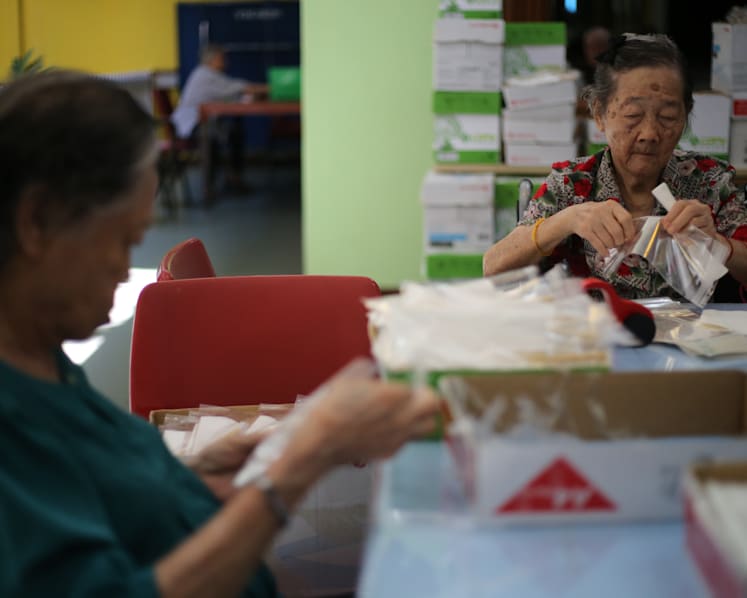
Senior residents at Apex Harmony Lodge packing paper tissue and disposable cutlery into bags. Photo: Don Wong


SINGAPORE — Even after spending two hours at a seemingly mundane task of slotting wooden chopsticks and plastic spoons into bags and sealing them, 76-year-old Loh Soh Chye was still raring to go.
He has been residing at the Apex Harmony Lodge, which houses people with dementia, for slightly over a year, and is one of around 20 residents who gather daily at an activity room from 2pm to 4pm to pack and seal cutlery sets for food packing supplier Cheng Moh Huat Trading.
Taking part in the home’s Therapy through Work programme, the residents form an assembly line. Some fold paper napkins, some, like Mr Loh, slot items into plastic bags, while others seal the bags.
“The tasks are personalised based on each individual’s abilities,” Ms Petrina Goh, a staff member in charge of the programme, said. They are also assigned tasks based on their interests and how well they grasp the skills needed during training sessions.





Residents such as Mr Loh often stay beyond their stipulated “work hours” to finish what they have to accomplish, she added.
The home’s chief executive officer Soh Mee Choo said: “The activity gives them something to look forward to each day ... It brings out life in them. Work activities, to them, is a form of identity. It makes them feel good.”
Speaking to TODAY in Mandarin, Mr Loh said he takes part in the activities to “help others and make friends”.
The programme, initiated by Ms Soh at the end of 2013, engages about 50 residents who are diagnosed with mild to moderate dementia in work-related activities offered by three business partners.
Dementia, which leads to a loss of brain cells, affects one in 10 people aged 60 and above in Singapore, figures from the Institute of Mental Health state. Early symptoms include problems with memory and thinking. As the disease progresses, patients may find it difficult to walk, balance and swallow. The most common type of dementia is Alzheimer’s disease.
Besides packing cutlery, residents who are wheelchair-bound or visually impaired also tend to the nursery at Greenology Pte Ltd and fold towels at Orchid Laundry’s headquarters in Tuas. The home charters a bus to take them to these workplaces.
Through such activities, which vary in frequency, they are kept occupied and more alert. Ms Goh said: “They become more aware of what is expected of them when it is a ‘work day’.”
They also learn to interact better among themselves and with nursing attendants. On a day out, two residents who are mobile are assigned to care for someone who is on wheelchair, for instance.
Ms Soh said: “Do we look at what they cannot do, or what they can do? It is easy to dismiss them, say they are demented. But what we believe, is that when you give them the opportunities, you see the possibilities. However, if they are not interested, we won’t force them.”
Residents have demonstrated enthusiasm and ability that surprised even the staff members. Ms Goh recalled her panic when Orchid Laundry asked residents to fold towels using four different methods instead of the one they were used to doing.
“It was scary at first because we thought the residents wouldn’t be able to do it ... To our surprise, they took just two or three sessions to get them right,” she said. “It was an eye-opening experience.”
While participants are not paid, the lodge provides their meals when they are out. “Being able to take the bus and choose their own dishes instils a sense of pride in them,” Ms Soh said.
There is a change in attitude from others who come into contact with the residents. The bus drivers, for instance, tend to be more patient with them. Orchid Laundry director Harry Toh said: “I also see my team grow out of their initial scepticism to become more compassionate.”




