







Despite recent volatility, STI on track to reach 11-year high: Analysts
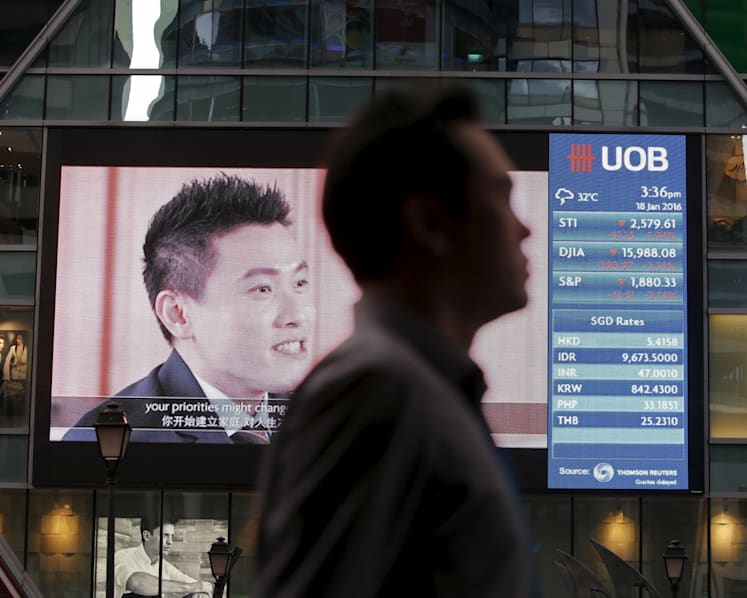
A man passes a board showing the decline of Straits Times Index (STI), Dow Jones Industrial Average (DJIA) and the Standard and Poor's (S&P) index at the central business district in Singapore. Reuters file photo


SINGAPORE – In the past month or so, volatility was seen on the Straits Times Index (STI), as it surged above 3,500 points post-Budget — only for fears of a global trade war to cause a huge selloff just days later.
After the market regained from the hit earlier this week, the sacking of key personnel in the Trump administration spooked the markets again, causing the STI to pull back slightly.
Despite the recent market upheaval and expectations of retaliation by Europe and China to the recently-announced US trade tariffs, experts told TODAY that banking and technology stocks — with their strong fundamentals — will continue to do well, and these will drive the STI to a 11-year high by May.





ROLLER COASTER RIDE
The STI was at 3,487.88 points on Feb 19 – the day the Budget measures were announced. By Feb 26, it went up to 3,555.85 points but fell to 3,438.61 points by Mar 5.
“The STI surged above 3,500 after the Budget announcement as investors were reacting positively to the policies, especially the delay of the Goods and Services Tax hike till 2021,” said Phillip Futures analyst Samuel Siew.
But the euphoria was short lived when US President Donald Trump announced on Mar 1 his intention to tax steel and aluminum imports. “The fears of a trade war developing led to a selloff in global equity indices”, including the Singapore market, Mr Siew said.
Factors such as the US monetary policy and trade tariffs whipsawed prices, IG market strategist Pan Jingyi noted.
After a slight recovery days later, the markets were down again after the sacking of US Secretary of State Rex Tillerson on Mar 13. Following the news, the STI fell from 3,553.73 points to close the week at 3,512.14 points. “The sacking of (Mr Tillerson) came as a shock to the markets,” said Mr Siew.
OUTLOOK IN THE COMING MONTHS
Going forward, Mr Siew expects “more volatility ahead” as Europe and China start to react to Mr Trump’s protectionist policies. “This may put STI further under pressure,” he noted.
Albeit the uncertainty, analysts are still bullish on the Singapore stock market in the medium term. They predict the STI will hit 3,650 points by May – the highest level since 2007 before the Lehman Brothers collapse ushered in a global financial crisis.
“If we look at the fundamentals, second quarter corporate results are expected to be positive and this should help boost the STI,” said Mr Siew.
Compared to a decade ago, the STI today has “more resilience”, given the change in the components stocks which cover more “defensive” sectors. The stricter regulations on financial markets globally – post-financial crisis – adds to the resilience, Mr Siew added.
Mr Marc Tan, an analyst at KGI Securities (Singapore), said the market is “stalling” at the moment due to geopolitical risks but the effects are unlikely to persist.
As for other risks, investors should keep a close eye on inflation, said Mr Tan. A faster-than-expected inflation can “expedite the actions of central banks and lead to a faster, sharper rate hike cycle”, he pointed out.
BANK AND TECH-RELATED STOCKS ‘ON A ROLL’
Despite the recent volatility, bank stocks have gained steadily since last year, the analysts noted.
Mr Siew said the use of technology by Singapore financial institutions has raised their efficiencies and brought down operational costs for example. Banks also look to have recovered from non-performing loans in the oil and gas sector two years ago, and the quality of loans issued has improved.
Technology stocks in Singapore have also performed well in the past few months, driven by expectations of orders from US multinational corporations, said Mr Tan.
Citing the example of homegrown tech firm Creative which is listed on the Singapore Exchange, its six-fold share price gain after the Chinese New Year took the market by surprise, Mr Tan said. This was partly due to a new invention by the company.
Last month, Creative announced that it has “found the holy grail of headphone audio”, with its invention called the Super X-Fi headphone holography which is powered by a chip that fits into a slim dongle that can be plugged into most headphones or earphones.
The firm’s share price went up from S$1.22 on Feb 15 to S$6.62 as of last Friday.
The technology-related engineering sector is “something to watch” with Singapore moving towards becoming Smart Nation, Mr Siew said. Demand for services offered by this sector will be high, he added.
ANALYSTS MIXED ON PROPERTY STOCKS
The recovery of the property market has cast the spotlight on stocks from the sector.
However, the analysts advised caution on these counters going forward due to the slightly stretched valuations. The recent measure to raise the top marginal buyer’s stamp duty rate could make the environment more challenging for developers, said Ms Pan.
Still, Mr Tan expects further upside for property stocks at least for this year, albeit signs of slowing momentum. He believes that the negative reaction from the hike in stamp duties is not enough to “derail an ongoing price recovery from a four year slump”.
Like property stocks, manufacturing counters were performing well heading into 2018. However, the growth for manufacturing stocks looks to be “quite limited,” as current valuations already take into consideration future orders, said Mr Siew.
He noted that last year, the strong growth in Singapore’s manufacturing sector was due to the one-off launch of an unexpected product, the iphone X. The reoccurrence of such an event is unlikely, and he expects manufacturing numbers to slow down this year.




