







Direct School Admission exercise to continue as scheduled with new methods of evaluation: Ong Ye Kung
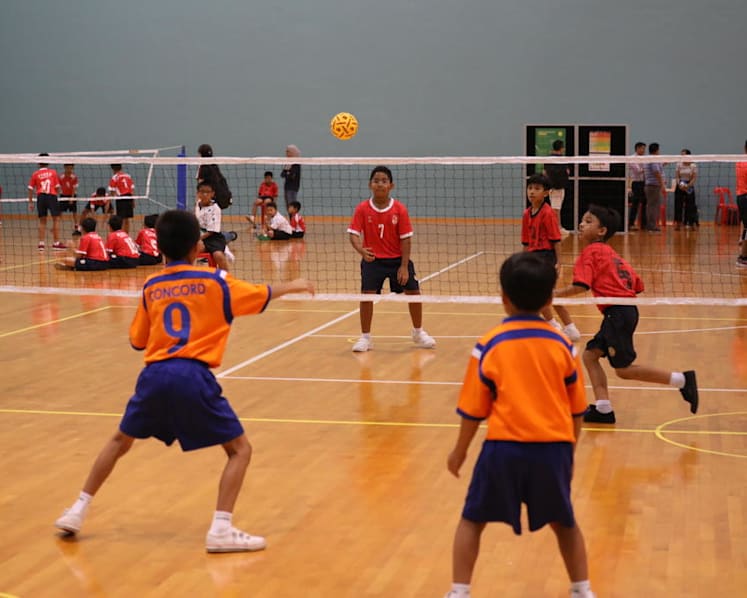
The Direct School Admission recognises pupils’ achievements in non-academic areas such as the arts and sports, and grants Primary 6 pupils places in secondary schools before they sit for the Primary School Leaving Examination.
SINGAPORE — The Direct School Admission (DSA) exercise this year will continue as planned although evaluation methods will have to change, Education Minister Ong Ye Kung said in Parliament on Tuesday (May 5).
This will involve relying on e-interviews as well as giving greater recognition to a pupil’s talent or potential based on their school track record, he added.
He was responding to a parliamentary question by Mr Darryl David, Member of Parliament (MP) for Ang Mo Kio Group Representation Constituency (GRC), who asked how home-based learning and school closures will affect pupils applying to secondary schools under DSA.
DSA was introduced in 2004 to recognise pupils’ achievements in non-academic areas such as the arts and sports, and grants Primary 6 pupils places in secondary schools before they sit for the Primary School Leaving Examination.





In his response, Mr Ong said that while the schedule for accepting applications will remain similar to previous years, which is mid-May to early June, changes will be made to how pupils are selected, in order to abide by safe distancing measures during the Covid-19 pandemic.
The way pupils are assessed will also have to be changed given the cancellation of the National School Games and other inter-school competitions since February.
Firstly, instead of depending on traditional selection methods such as trials and auditions, schools will conduct interviews using video-conferencing tools.
To ensure an even playing field with a common setting and equipment for e-interviews, pupils will go to their own primary school to take part in the e-interviews, Mr Ong said.
However, these sessions, which will take place from early July to mid-September, will be spaced out to avoid pupils mingling with each other.
E-auditions may be conducted for arts categories such as singing, dancing or drama, he added.
Secondly, with the suspension of the National School Games and selection trials, schools will need to give more recognition to the pupil’s talent, potential, passion and character through their school track record, as well as information provided in the pupils’ online applications, Mr Ong said.
“Schools will look out for the student’s demonstrated dedication to a sport and training attitude, even without placement in a national competition.
“This is not entirely new, but if the circumstances this year force schools to re-evaluate their definition of a good sportsperson, it would be a good outcome,” Mr Ong said.
Thirdly, primary schools will step up efforts to encourage pupils, especially those from less advantaged family backgrounds, to apply through DSA to suitable schools if they have the ability and potential.
Mr David asked if schools will adhere to a common set of guidelines to ensure transparency in the selection process, given that objective information such as qualifying times, for example, will no longer be available. To this, Mr Ong said that schools will have to “dig deeper” to come up with alternate criteria to assess pupils.
“(If) we want to judge a child and bring the child into DSA at the age of 12 or 13, I think we will have to go beyond timings or grades and really put some weight on the child’s dedication, how hard he or she trains... the school has those records," Mr Ong said.
“So you are right and I think schools have to dig a bit deeper this year given the circumstances, and have to come up with alternate criteria and explain them transparently to students and to parents so that they can apply into DSA.”
With qualitative attributes coming into play in the absence of the National School Games, Mr Ong urged parents and pupils to accept that schools will have to exercise judgement in this manner this year.




