







Driverless truck launched at Jurong Island
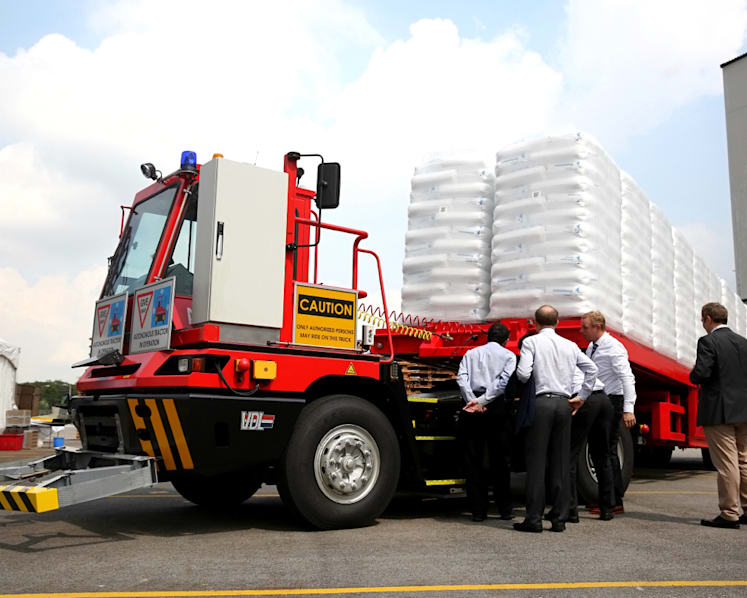
The driverless truck will operate 24 hours a day and, if successful, the project will be scaled up to 12 trucks after a six-month test run, moving some 3 million tonnes of cargo annually. Photo: Nuria Ling/TODAY


SINGAPORE – Belgium-based logistics and engineering firm Katoen Natie launched its driverless truck at Jurong Island on Tuesday (October 24).
Part of a collaboration with Singapore Management University and Dutch-based firm VDL Groep, the truck began operations at ExxonMobil’s manufacturing hub in Singapore. It will transport products between the company’s packaging and intermediate storage facilities, covering a round-trip distance of about six to eight kilometers.
The truck will operate 24 hours a day and, if successful, the project will be scaled up to 12 trucks after a six-month test run, moving some 3 million tonnes of cargo annually.
The trucks will go on to public roads in the final phase, shuttling between chemical plants on Jurong Island and to Tuas.





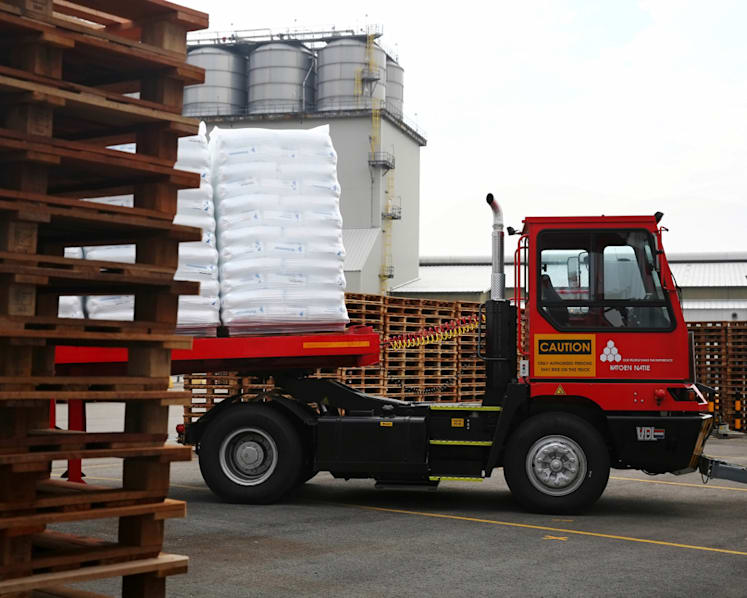
Katoen Natie Singapore chief executive Koen Cardon previously said at a forum that given the limited availability of truck drivers in Singapore, moving to autonomous transport would be “the right path forward”.
To ensure safety, there will be demarcated speed zones with regulated speed controls built into the vehicle, the installation of key signs on roads within the facility and on the truck, as well as a safety bumper that triggers an emergency stop when it comes into contact with objects.
Other developments in the autonomous-vehicle arena include the Land Transport Authority (LTA) and ST Engineering’s land systems arm, ST Kinetics, inking an agreement in April for a three-and-a-half year autonomous vehicle trial, which could pave the way for driverless buses to ferry passengers along fixed routes based on selected feeder and trunk bus services.
ST Kinetics will build two 40-seater electric buses — the first time a Singapore company is building an autonomous bus — and test them at an industrial area during off-peak hours, before progressing to more complicated test sites.
The buses will use a satellite-based Global Positioning (GPS) System and sensors to scan and determine their location and immediate surroundings. They will also have radars and sonars to detect other vehicles and pedestrians up to 200m ahead.




