







Early childhood educators applaud decision to launch centralised institute
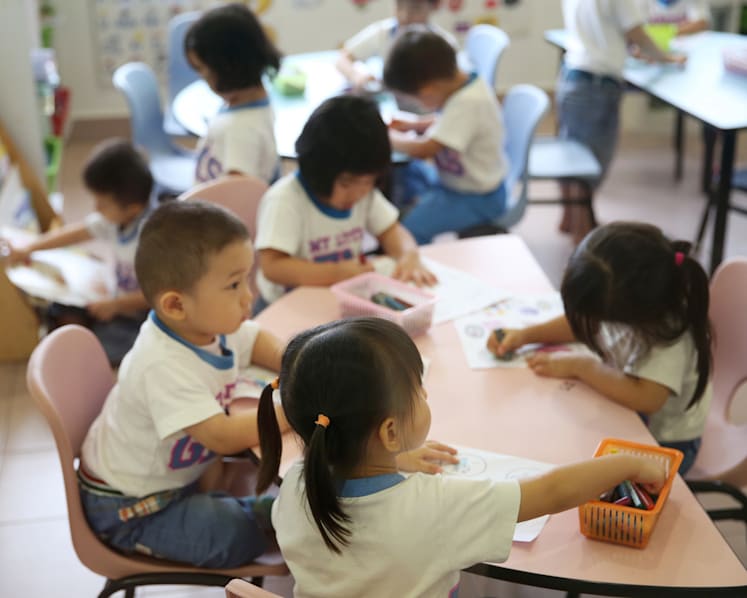
The National Institute of Early Childhood Development (NIEC) is expected to offer a full range of diploma and certificate programmes to pre-school teachers and caregivers of pre-school children. TODAY file photo
SINGAPORE — Mr Melvin Lim, 25, graduated with a degree in communications from a private university this year, and landed a job teaching part-time at a private pre-school.
After just a week of training and co-teaching with a senior teacher at the school, he was deemed good enough to teach a class on his own.
However, he is aware that being a good pre-school teacher takes more than just a week of on-the-job training.
“The burdens and expectations (from parents) of a pre-school teacher are much more ... We are acutely aware that the key developmental stages of a child are within the years they spend in pre-school,” he told TODAY.





As an educator, Mr Lim would like to have the relevant skills to give the children “a more holistic and well-rounded education”.
This is why he welcomes the Government’s decision to set up a new centralised national training institute for early childhood educators.
Prime Minister Lee Hsien Loong announced this initiative at the National Day Rally on Sunday. The National Institute of Early Childhood Development (NIEC) is expected to offer a full range of diploma and certificate programmes to pre-school teachers and caregivers of pre-school children.
It will bring together existing programmes in Temasek Polytechnic, Ngee Ann Polytechnic, the Institute of Technical Education (ITE) and the NTUC’s Seed Institute.
The length of the programmes varies across the educational institutions. For example, at NTUC’s Seed Institute, the WSQ Professional Diploma in Early Childhood Care and Education for full-time students is 18 months long, while the Diploma in Early Childhood Education at Ngee Ann Polytechnic is a three-year course.
Ms Michelle Ang, 26, who has a degree in mass communications, is now studying for the diploma offered by NTUC’s Seed Institute. She is a trainee pre-school teacher at Active Learners Childcare in Woodlands.
After she left her previous job as a marketing and public relations executive, she often has friends asking if she is with the National Institute of Education (NIE), which is the national institute for teacher education and educational research in Singapore.
She has to explain that pre-school teachers are supported by the Early Childhood Development Agency (ECDA), which oversees the regulation and development of kindergarten and child/infant care programme for those below the age of six.
She is hoping that the NIEC would give greater credibility to pre-school teachers like herself. Apart from teachers getting the relevant education professionally, there is also room for them to develop other skills.
One former pre-school teacher at NTUC My First Skool, 26, who declined to be named and who left the job last year after giving birth, said that there is insufficient training for pre-school teachers at the moment.
“Sometimes, we have children who behave differently from the rest (like those with different learning capabilities), and we are not equipped with the skills to give them the best education,” she said.
Aside from professionals teaching in government-linked pre-schools, private pre-school operators are also looking forward to having a centralised institute dedicated to pre-school teachers.
Mrs Clara Yeong, principal of St James’ Church Kindergarten (Leedon Campus), said that the NIEC could be “a common place where we can share resources (and) network”.
“With this (initiative), the Government (is signalling that it) is very serious in raising the quality of early childhood education,” she added.
Although the number of kindergartens under the Ministry of Education (MOE) will be expanded from 15 to 50 in the next five years, private pre-schools such as St James’ Church Kindergarten are confident that they will still have a niche.
Mrs Yeong pointed out, for example, that her kindergarten is a “faith-based” one, which is not what parents would find in public pre-schools.
“(So if that is the) priority (for families), then they will still choose to enrol with us,” she said.




