







Ex-CHC fund manager’s legal bid snubbed
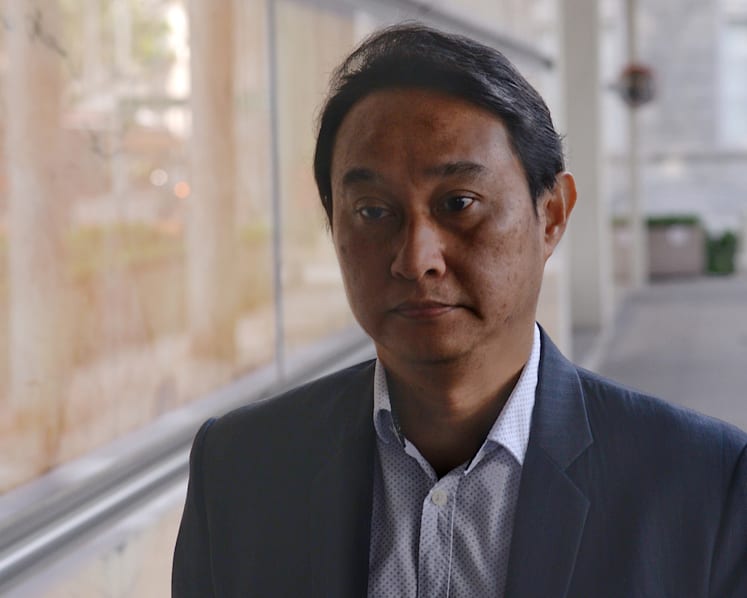
Chew Eng Han. TODAY file photo


SINGAPORE — City Harvest Church’s (CHC) former fund manager Chew Eng Han’s hopes of challenging his conviction for criminal breach of trust have been dashed, after he failed to convince the highest court of the land that questions of law of public interest had arisen in the case.
Arguing his case without a lawyer, Chew raised 10 points, which, among others, questioned the lower court’s interpretation of the terms “misappropriation” and “wrongful loss” relating to a criminal breach of trust offence — which he and five other church leaders were found guilty of committing.
His opponent in the hearing was Deputy Attorney-General Hri Kumar Nair, who labelled Chew’s actions a “back-door appeal” which had been launched by mounting a “root and branch assault” on the High Court’s decision.
The case, heard by Judges of Appeal Andrew Phang and Judith Prakash as well as Justice Quentin Loh, ruled that Chew’s points did not come close to meeting the threshold for the Court of Appeal to address, as they were either questions of fact or settled points of law.





Six former CHC leaders were convicted in 2015 of misappropriating S$50 million of church funds and were sentenced to jail terms of between 21 months and eight years.
However, following an appeal, a three-judge High Court panel reduced their jail sentences significantly in April this year.
Chew was sentenced to three years and four months’ jail, but his sentence has been deferred. The five other church leaders started serving their jail terms on April 21.
On Monday, Chew, 56, claimed that the use of the church’s funds for the Crossover Project was for the church’s benefit, and hence, could not amount to misappropriation.
He also asserted that there can be no wrongful loss in circumstances where the property — in this case the church’s money — would ultimately be returned to the owner. This should also be the case when the unauthorised use was for the purpose and benefit of the owner and that there may be a potential gain to the owner, he argued.
Responding, Mr Nair said Chew’s points were “blatant attempts” to challenge the findings made by the State Court and the High Court.
“Any question of law which Chew Eng Han has raised has been well-settled in previous cases and there is no compelling reason for this Court to provide authoritative guidance on any of these questions for the sake of the legal system generally,” he added.
Agreeing, Judge of Appeal Phang said Chew’s questions were the subject of close scrutiny not only in the District Court but also by the High Court that heard the appeal.
A panel of three judges had been formed specially to hear the case, he noted, and the Bench had unanimously found Chew guilty of the offences of criminal breach of trust and falsification of accounts.
Despite being rejected in the present case, Chew was granted an additional deferment from surrendering to the authorities until the Court of Appeal has ruled on a separate matter brought by the prosecution, called a Criminal Reference.
The prosecution filed the Criminal Reference, after the six convicted CHC leaders’ sentences were slashed, to clarify whether a director or member of an organisation’s governing body who has been entrusted with property should not be considered as “an agent” under Section 409 of the Penal Code, as the High Court had found. The hearing has been scheduled for Aug 1.
If Chew’s application on Monday had been granted, he would have gone on to file papers for a Criminal Reference too. The prosecution does not need the court’s permission to file a Criminal Reference, which is limited to criminal cases in which a question of law of public interest arises in a High Court decision on an appeal.




