







Explainer: How often are false positive Covid-19 test results and why do they happen?
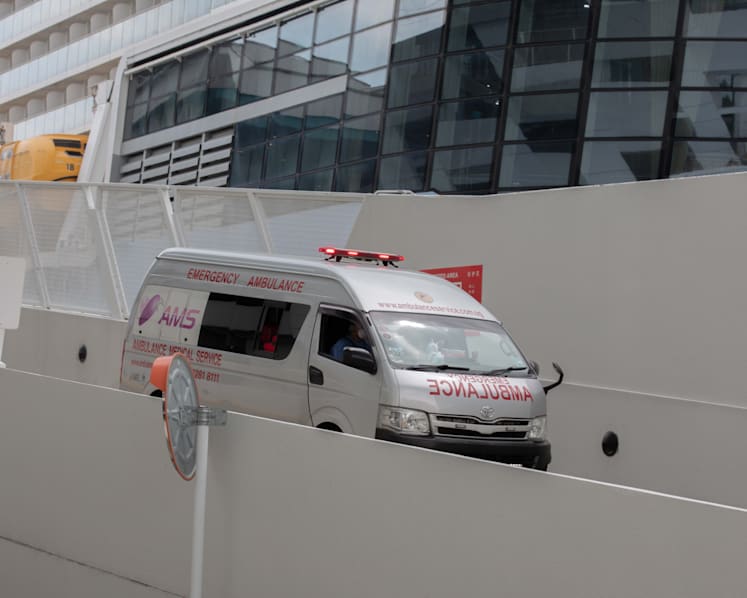
An ambulance was seen leaving Marina Bay Cruise Centre on Dec 9, 2020 after a cruise passenger tested positive for Covid-19 on board a ship.
- Even though the polymerase chain reaction test (PCR) for Covid-19 is highly accurate, no test is foolproof
- False positives can also happen when a sample is contaminated
- Not all PCR tests are made the same
- As more surveillance tests are being done, there could be more false positives in the future
SINGAPORE — An 83-year-old passenger who tested positive for Covid-19 while aboard the Royal Caribbean’s Quantum of the Seas cruise ship was later found not to be infected, the Ministry of Health (MOH) confirmed on Thursday (Dec 10).
The earlier polymerase chain reaction (PCR) test result, conducted with equipment on the ship after the man reported to the onboard medical centre with diarrhoea, turned out to be a false positive test result.





After the ship returned to dock on Wednesday, his original PCR sample was retested at the National Public Health Laboratory and came back negative. Two further negative tests, once on Wednesday and a final one on Thursday, confirmed that he did not have an infection.
“We have rescinded the quarantine orders of his close contacts, who had earlier been placed on quarantine as a precautionary measure while investigations were ongoing,” MOH said. “MOH will support the laboratory on board the Quantum of the Seas in its review of its testing processes.”
TODAY spoke to five infectious disease experts about how often such false Covid-19 results happen, why this could have happened and whether more of such cases could happen in the future.
How often do test results turn out to be false positives?
Experts said that it is difficult to pinpoint the rate at which false positives show up because they vary depending on many factors, but they estimated it to be less than 1 per cent for the PCR test.
The PCR is the most accurate test available today for the coronavirus and is used in Singapore to definitively declare whether a person has Covid-19.
However, with the sheer number of tests being done daily, there are bound to be false positives happening every day, infectious disease specialist Leong Hoe Nam said.
MOH figures show that last week, about 25,100 swabs were tested every day. Assuming that the PCR test can accurately tell if a person is infected 99.8 per cent of the time — which Dr Leong described as already a very good level for a virus test — that leaves about 50 people getting a false positive result a day on average.
MOH’s laboratory, however, would have the ability to detect these results as false positives and call for a retest to be done, he added.
Why do false positives happen?
No test is 100 per cent accurate and false positives can happen for a number of reasons.
The test could, for example, be falsely detecting fragments from a similar coronavirus as the Sars-CoV-2 virus that causes Covid-19.
Samples can sometimes be contaminated as well in the collection or testing process.
Why did test results on the ship’s equipment differ from MOH’s results?
Even though the ship’s medical crew had also used a PCR test, it is unclear if it was the same test as what is being used by the authorities, said Dr Paul Tambyah, president of the Asia Pacific Society of Clinical Microbiology and Infection.
“There are many different PCR tests using machines made by different companies — including Cepheid, Roche and so on — and they have different thresholds for reporting and use different reagents and methods,” he said.
Dr Leong added that the PCR test equipment aboard the ship would likely be more rudimentary than those in the authorities’ laboratories and might not be able to tell if a result is a “weak” or “strong” positive.
Which test is better at preventing outbreaks on cruise ships?
Currently, Royal Caribbean passengers have to take a PCR test 48 to 72 hours before departure while those on Genting Cruise Lines take an antigen rapid test immediately before boarding.
The antigen rapid test is also being used in Singapore at selected large-scale events such as wedding receptions and live shows.
As it is less accurate, there is a chance that an infected person may get a negative outcome with the antigen rapid test — resulting in a false negative.
Conversely, the PCR test takes a longer time to process and there is a risk passengers may get infected in the two to three days before and still present a negative result for boarding.
Associate Professor Alex Cook, vice-dean of research at the National University of Singapore’s Saw Swee Hock School of Public Health, said: “When we try to analyse this, actually the two tests are quite comparable. Taking an antigen rapid test today versus PCR two days ago, depending on what the transmission risk in the community is, I see they’re not too far off each other.”
Could more false positive cases emerge in the future?
Infectious diseases physician Ling Li Min thinks they might.
As more mass testing is being done on asymptomatic people as part of surveillance testing, it increases the likelihood of positive cases turning out to be false positives, especially when there have been few or no cases within the community for the past weeks, Dr Ling said.
But despite the inconvenience it brings, she said that it is always better to get a false positive than to have an infested person test negative and thinking he does not have Covid-19.
“False negatives will lull us into that false sense of security and we won’t institute the whole (slew) of measures that’s required because we think that a person is not infected.”




