







Explainer: New laws to pave the way for creation of Singapore Food Agency
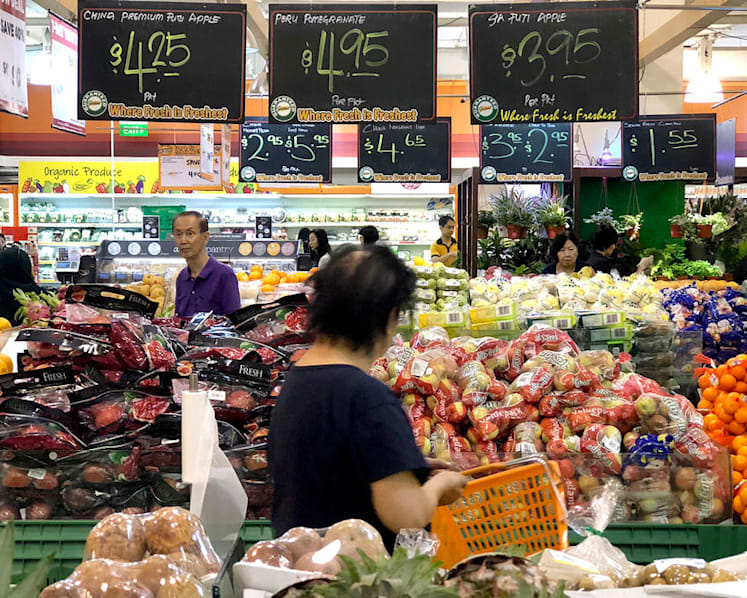
The Singapore Food Agency will begin operations in April, but first, Parliament will debate the new laws needed to set it up.


SINGAPORE — The upcoming Singapore Food Agency (SFA) will work to oversee food safety and security.
In order to set up the agency, the Government first has to pass new laws, which will allow it to dissolve the existing Agri-Food and Veterinary Authority (AVA) and then transfer AVA’s non-food responsibilities to the National Parks Board (NParks).
To this end, two Bills — the Singapore Food Agency Bill and the National Parks Board (Amendment) Bill — were introduced in Parliament on Tuesday (Jan 15).
Parliament will debate the two Bills next month, with the SFA set to begin operations in April.





THE SFA BILL
This Bill proposes a set of laws that will allow the Government to create the agency, by dissolving the AVA and consolidating the food-related responsibilities of the AVA, the National Environment Agency (NEA) and the Health Sciences Authority (HSA) under one body.
The SFA will take over NEA’s food hygiene and food-related laboratory functions, as well as HSA’s food safety lab.
The Bill also sets out the SFA’s responsibilities:
- It will aim to ensure the resilience of Singapore’s food supply chain and manage the impact of any adverse disruptions on food sources.
- It will also improve food safety, uphold international standards here and promote fair trade and commerce in the food industry here.
THE NPARKS (AMENDMENT) BILL
When passed, the set of new laws under this Bill will allow NParks to absorb all of AVA’s responsibilities that are not related to food.
A total of seven departments will be transferred from AVA to NParks, including community animal management, wildlife management, and plant science and health.
WHY THE MOVE?
Right now, AVA, NEA and HSA work together to regulate the food supply chain — from production, import and manufacturing to retail.
SFA will combine all food-related resources and capabilities to enhance regulatory oversight and strengthen food safety regimes.
By harmonising regulations across the three agencies, SFA also aims to provide better services to Singaporeans and businesses, since it will oversee all food safety and security policies.
When the plans for SFA were announced in July last year, Mr Masagos Zulkifli, Minister for the Environment and Water Resources, said that safeguarding Singapore’s food supply is increasingly challenging due to the complexities of global food supply chains.
“The formation of the SFA is timely as Singapore aims to turn our food challenges into strategic advantages,” he added. “The SFA will work closely with industry and R&D partners to develop new solutions and products, and seize global opportunities.”
Food security is a perennial concern in import-dependent Singapore, and is a topic that has received more attention lately because of export restrictions announced by Malaysia.
On Jan 1, Malaysia temporarily stopped its export of four species of fish and shrimp, to meet shortages because of the monsoon and festive seasons.
In December last year, Mr Saifuddin Nasution Ismail, the Malaysian domestic trade and consumer affairs minister, mentioned that the country may limit its export of eggs to Singapore to ensure sufficient domestic supply.
Rapid climate change is also threatening food security. The 2018 Global Food Security Index reported that despite Singapore’s strong food security, it is highly susceptible to climate and natural resource risks.
To tackle this, the Ministry of National Development (MND) is introducing requirements for key food importers to adopt plans, including preventive strategies, to mitigate the impact of supply disruptions.
“This will further enhance our food security and resilience, given the changing global food landscape and climate change,” an MND spokesperson said. These requirements are included in the legislative amendments to effect SFA’s formation.




