







Explainer: Pros and cons of delaying second dose of Covid-19 vaccine to allow more to get first jab sooner
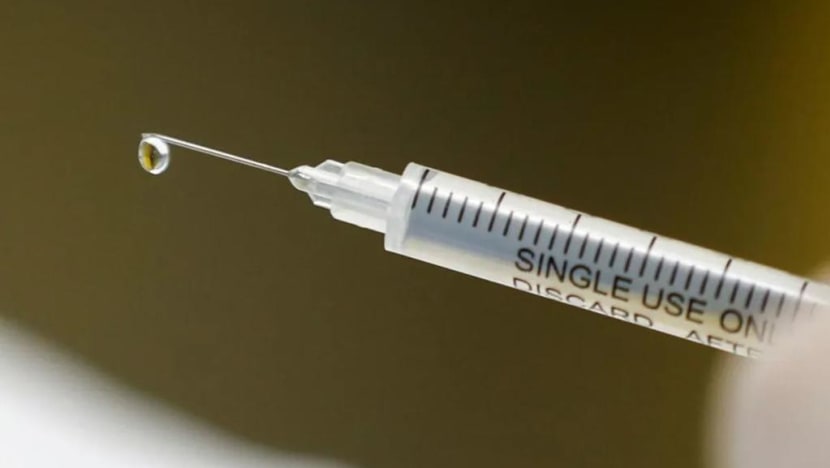
The Government is studying a plan to priorities getting more people the first dose of Covid-19 vaccination, which would mean a longer waiting time until the second dose.


- The authorities are looking at the possibility of increasing the wait between Covid-19 vaccine doses to six to eight weeks
- This is to give as many people as possible the protection of the first jab
- Experts say this is a good move, as the benefits of the protection granted by the first dose outweigh the cons of delaying the second dose.
- However, an overly long delay could mean a person would be more vulnerable to the virus.
SINGAPORE — As the authorities weigh up a possible change to the Covid-19 vaccination strategy to prioritise more people getting the first dose by introducing a somewhat longer waiting time between doses, experts generally agree that this could be a beneficial move.
Health Minister Ong Ye Kung said on Sunday (May 16) that such a change could mean some people may have to wait for six to eight weeks between doses. This is longer than the 21 days and 28 days wait that is advised for the Pfizer BioNTech and Moderna vaccines respectively.





TODAY takes a closer look at the issue.
Why are the authorities exploring the possibility of delaying the second vaccine dose?
Mr Ong said that the authorities are looking to give as many people as possible a good level of protection against Covid-19 by prioritising the administration of the first jab.
He noted that many international studies have shown that even just one dose of the Covid-19 vaccine “confers good protection without compromising efficacy”.
“The evidence locally and overseas points towards this. Immunologists around the world also express the opinion that it is reasonable for those two (shots) to be further apart,” he said.
What level of protection does the first dose confer?
A study by the Centres for Disease Control and Prevention (CDC) in the United States found that a single dose of Pfizer-BioNTech or Moderna Covid-19 vaccine is 82 per cent effective against the virus.
Dr Hsu Li Yang from the Saw Swee Hock School of Public Health at the National University of Singapore (NUS) and leader of its infectious diseases programme said that the licensed vaccines here are all “reasonably effective in protecting against moderate-to-severe Covid-19 after a single dose, even for the new variants”.
He added, however, that a second dose will help to boost the protection against the virus.
The 82 per cent figure is still short of the efficacy rates of the vaccines after the second dose, which stands at 94 per cent for both Moderna and Pfizer BioNTech, according to clinical trials.
How far can the second dose be pushed back?
Experts say that in theory, the administration of the second dose could be pushed back even longer than eight weeks and still achieve the same efficacy as for the recommended wait upon the administration of the second dose.
However, beyond 12 weeks, conclusive tests have not yet been done.
Dr Ling Li Min, an infectious disease specialist from Rophi Clinic at Gleneagles Hospital, said that a recent study conducted in the United Kingdom compared the effects of a three-week and 12-week delay between Pfizer BioNtech doses on the elderly, and found that those who received a second dose later had three-and-a-half times more antibodies.
Agreeing, Dr Leong Hoe Nam, an infectious diseases specialist at Mount Elizabeth Novena Specialist Centre, said as the level of antibodies falls over time, there will be fewer to neutralise the second dose of the vaccine.
“This will in turn create a lot more memory cells that can generate a lot more antibodies, resulting in a longer lasting, more potent immunity to the virus.”
Memory cells have the ability to recognise and eliminate recurrent pathogens, which cause infections.
As to whether the protection offered by the first dose will fade over time, Dr Leong said that should the waiting time for a second dose stretch out for months, a person would risk having their antibody levels fall to very low levels, such that the person could easily be reinfected with Covid-19.
Hence, the aim should still be to get the second dose as close to the recommended schedule as possible.
However, another first dose will not be needed no matter how long the wait.
Professor Paul Tambyah, president of the Asia-Pacific Society of Clinical Microbiology and Infection, said that it is “unlikely that the body will ‘forget’ an immune stimulus”.
For instance, those vaccinated against measles, mumps and rubella as infants remain protected till old age, he said.
Have other countries done this?
Yes, the UK has prolonged the waiting time between the two doses of its AstraZeneca vaccine from between three to four weeks as recommended, to 12 weeks. This is so that it could inoculate more of its population with the first jab.
It thus achieved one of the world's fastest inoculation campaigns, giving a first shot to almost 70 per cent of the adult population and a second to 36 per cent.
Data from the rollout within the UK shows protection against death of around 80 per cent from one dose, with a 70 per cent decline in infections, according to Reuters.
The CDC said on its website that the second dose of Pfizer-BioNTech and Moderna vaccines can be administered up to six weeks or 42 days after the first dose.
This is in cases when it is “not feasible to adhere to the recommended interval and a delay in vaccination is unavoidable”, CDC said.
A modelling study published by the British Medical Journal showed that having a delayed second-dose strategy with high daily immunisation rates can prevent between 26 and 47 deaths per 100,000 people compared to the usual rate.
What are the potential downsides of delaying the second dose?
Experts said that with only one dose administered, there may be a higher chance for mutant strains to emerge, but this is only a theoretical possibility.
“A vaccine-escape mutant might develop in countries where the outbreak is out of control and people only receive a single dose of the vaccine,” said Dr Hsu.
Dr Gavin Smith, a professor in the emerging infectious diseases programme at Duke-NUS Medical School, explained that should someone be only partially immunised, it could mean that less virus is killed by the immune response and that the surviving viruses would be immune to the antibodies produced from the vaccination.
However, he added that this is only a theoretical possibility, and may not be significant, as such mutations can also occur with those who are reinfected after recovering from Covid-19, the same way it does with the infection of partially and fully vaccinated people.
“We are already seeing the emergence of variants from large outbreaks, possibly because previously infected people are being reinfected,” said Dr Smith.
“So it is unlikely that the vaccinated population would drive the emergence of new variants any more than natural infection and re-infection already does.”
What are the pros and cons of both approaches?
While the Government should ideally follow the schedule of the vaccine manufacturers, this will be contingent on the supply of vaccines and so a compromise has to be struck, say the experts.
Health Minister Ong said the number of doses of vaccine in the inventory here “goes up and down based on arrivals” and that the speed of the vaccination exercise is “limited by the pace of the supply arriving in Singapore”.
He assured the public that Singapore receives a “steady” stream of vaccine supplies from both pharmaceutical companies, and the number of shots the authorities have secured is enough to cover the entire population.
Dr Hsu said that while the plan to vaccinate according to schedule has been shown to work, this may not be ideal if vaccine supply is an issue.
“It may take a long time to vaccinate the majority of people in the population, and large outbreaks can happen were the virus to spread out of control,” he said.
“The proposed strategy would mitigate the risk by vaccinating more people at the start, and reduce mortality should the Covid-19 virus spread out of control.”




