







Explainer: S'pore requiring Covid-19 patients unvaccinated by choice to pay for medical care. How are other nations tackling jab hesitancy?
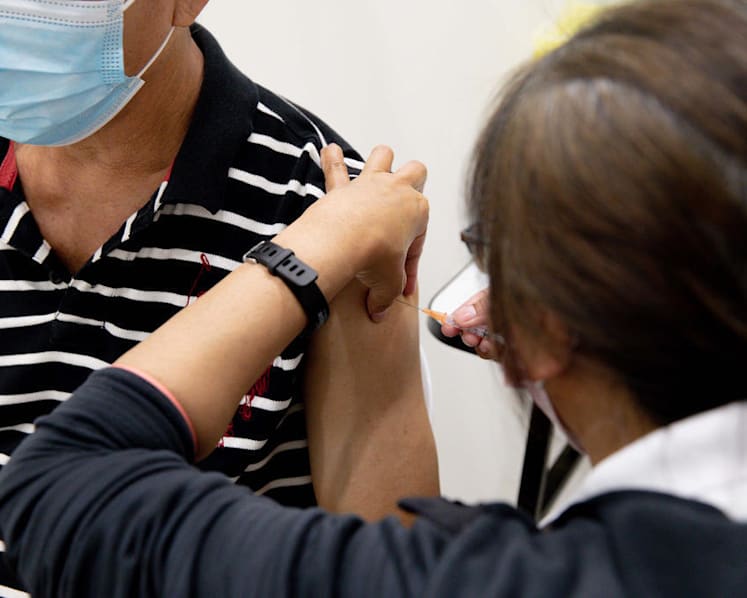
Countries around the world are trying various "carrot" and "stick" approaches to tackle vaccine hesitancy.
- Singapore is one of the first countries in the world to require Covid-19 patients who are unvaccinated by choice to foot their own medical bills
- Other countries have introduced their own policies in a bid to drive up vaccination rates and tackle vaccine hesitancy
- These include penalties for the unvaccinated, mandatory jabs in selected sectors and even “health passes” to gain entry into public places
SINGAPORE — In a bid to tackle remaining vaccine hesitancy, Singapore on Monday (Nov 8) became one of the first countries in the world to require Covid-19 patients who are unvaccinated by choice to foot their own medical bills from Dec 8.
During a media conference on Monday by the governmental task force on Covid-19, Health Minister Ong Ye Kung said that the policy was designed to send an “important signal to urge everyone to get vaccinated”.





The Ministry of Health (MOH) said in its nightly update on Monday that 85 per cent of Singapore’s population is fully vaccinated. This is one of the highest levels in the world.
Although only a small percentage of those eligible for the jabs remain unvaccinated here, Mr Ong still warned of the dangers of an insufficient level of vaccination take-up when he referenced a new wave of Covid-19 outbreaks in Europe.
The World Health Organization said that three-quarters of the new patients in Europe were more than 65 years old and most were unvaccinated. Case numbers have spiked in countries including Germany and the United Kingdom as winter approaches.
MOH said on Monday that in the past seven days in Singapore, the number of fully vaccinated patients who were critically ill in intensive care units was at 0.5 per 100,000 population and for non-fully vaccinated patients, it was more than 10 times that figure at 5.2.
Singapore is one of the first countries in the world, perhaps even the first, to introduce the policy on medical bills for those choosing not to be immunised.
Other nations have used various different measures to try to tackle vaccine hesitancy. These include a range of penalties for those choosing to decline the vaccines, mandatory vaccinations in selected sectors and even “health passes” to gain entry into public places.
TODAY takes a closer look at some of the different approaches around the world.
MANDATORY VACCINATIONS
Policies on mandatory vaccinations vary from country to country.
Indonesia, a nation of 270 million people, took one of the most hardline stances around the world, when the authorities reportedly made it compulsory earlier this year for those eligible to get inoculated. Those who refuse would get stiff penalties.
In Malaysia, vaccination is required for all federal civil servants.
The country’s Public Service Department said in September that the mandate was meant to inspire confidence in the general public and was also in line with the aim of restoring government services to optimum capacity ahead of the economy’s reopening last month.
Other places have introduced mandatory vaccinations only in certain sectors of the economy.
Australia’s Northern Territory in October introduced a vaccination requirement for shop workers, tourist guides and barbers, among other other groups.
In other parts of Australia, Covid-19 vaccines have been made mandatory for teachers, healthcare workers and aged care workers.
In England, the BBC reported on Tuesday that all frontline medical workers will be required to get vaccinated by early next year. Up to 100,000 such workers are estimated to be unvaccinated.
The country earlier decided that those working in care homes have to be fully vaccinated.
Some governments, however, have faced challenges in introducing these mandatory vaccination policies.
On Nov 4, the United States' Biden administration introduced a mandate requiring companies with at least 100 employees to be vaccinated or be tested weekly starting Jan 4 next year.
The rules will also apply to federal contractors and employees of nursing homes and other healthcare facilities that receive reimbursements under US healthcare programmes.
However, the US Court of Appeals for the 5th Circuit halted the requirements last Saturday, pending a judicial review.
The court said that petitions against the mandate “give cause to believe there are grave statutory and constitutional issues” to be addressed, CNBC reported.
Even then, the White House said on Monday that businesses should proceed with the requirements, adding that delaying it “would likely cost dozens or even hundreds of lives per day” as the coronavirus spreads.
PENALTIES
In a bid to ensure that their policies can be rolled out, various nations have introduced some form of penalties for those declining to be vaccinated.
In Australia, for example, workers in the Northern Territory who do not comply with the rules will not be allowed back to work and face a fine of A$5,000 (S$4,960).
German health authorities have announced that from Nov 1 onwards, unvaccinated workers will not receive compensation for lost pay if Covid-19 measures force them into quarantine.
German broadcaster Deutsche Welle reported that critics said such rules would be equivalent to making Covid-19 vaccinations mandatory, “as many workers cannot afford to stay at home without pay”.
In China, unvaccinated individuals are banned from accessing public services, including hospitals, schools and nursing homes, CNN reported in July.
HEALTH PASSES
In France, the government has imposed vaccine policies in the form of a “health pass” — which shows the holder’s vaccination status — that is required for many activities in the country.
Aside from allowing the pass holder to sit in restaurants, cafes and bars, it also allows them to access facilities such as museums, cinemas, concert halls and even open-air festivals.
The Wall Street Journal (WSJ) reported in September that there was initial resistance to the health pass when it was introduced in August, but the move also spurred millions of people to get vaccinated and curbed the spread of the Delta virus variant.
The WSJ said that France had the highest rates of vaccine hesitancy at the start of the year. Now, it has one of the highest vaccination rates among larger Western countries.
Australia is also using a “carrot” approach in some instances. For example, in New South Wales and Victoria, only those with proof of vaccination can take part in a wide range of activities such as dining in restaurants, going to the cinema or even attending the running of the Melbourne Cup horse race.
TACKLING VACCINE MISINFORMATION
Authors of an editorial in the peer-reviewed journal Science wrote that it is important to understand the difference between people who have vaccine hesitancy and “anti-vaxxers” who deliberately spread misinformation.
Hesitancy, they said, is largely derived from misinformation and it can be addressed.
“Those who refuse vaccines are not necessarily anti-vaccination, although vaccine-hesitant individuals may consume content from anti-vaxx organisations as they search for evidence to confirm or dispel their concerns.”
Countries such as Singapore and Indonesia have seen social media companies taking down videos that spread misinformation about the Covid-19 vaccines.
In Malaysia, several individuals have been arrested and charged with spreading fake news about Covid-19.
Malaysia also created a fact-checking website for its citizens to debunk myths related to the coronavirus, a move that other countries such as Kenya have also put in place.
The Science editorial, titled Volatility of Vaccine Confidence, said that communication about vaccines must be delivered in an empathic manner to avoid stigmatising those who question inoculation.
“This requires leveraging established relationships to address concerns of the vaccine hesitant.”
The editorial gave the example of a measles outbreak in 2019 in thet US, where Orthodox Jewish nurses “empowered parents in that community to reach their own conclusions” about vaccines while listening to their concerns and helping them contextualise information.




