







Explainer: What are ‘super spreaders’ and are they a cause for concern for Covid-19 outbreak?
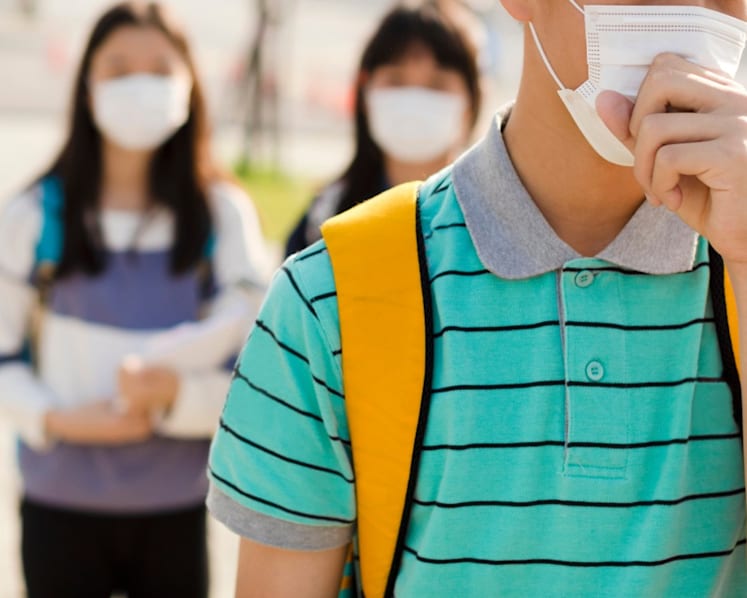
Health experts say that super spreaders are a feature in every disease outbreak and there are many factors for why they are highly infectious. One is that they are sociable people who are always going places, and the other is as simple as them not observing good hygiene.


SINGAPORE — Someone who is infected with the Covid-19 coronavirus can spread it to two to three other people on average.
Then, there may be carriers who do not pass on the virus to anyone and there may be those who are “super spreaders” — patients who tend to spread the virus more rapidly and to more people than the average person.
One example is that of a British man who infected 11 others after picking up the virus during a business meeting held at the Grand Hyatt Singapore.
Are such patients a cause for concern in the race to contain the ongoing public health crisis?





WHAT EXACTLY ARE ‘SUPER SPREADERS’?
Professor Tikki Pangestu, who is a visiting fellow at the Lee Kuan Yew School of Public Policy, said that a “super spreader” refers to an infected person who moves around a lot and therefore spreads the virus to many other people in many different locations.
There will usually be such people during most infectious disease outbreaks and studies have shown that they existed during epidemics caused by other coronaviruses such as the severe acute respiratory syndrome (Sars) and the Middle East respiratory syndrome (Mers), he added.
Dr Leong Hoe Nam, an infectious diseases specialist at Mount Elizabeth Novena Specialist Centre, said that a patient needs to infect at least five to 10 others to be considered a “super spreader”.
However, the experts interviewed by TODAY said that there is still insufficient information available at the moment to determine the reasons why some patients are “super spreaders” and why others are not.
In a recent interview with CNA, Prof Pangestu, who is a former director of the World Health Organization’s research policy and co-operation department in Geneva, Switzerland, also emphasised that the estimated figure of two to three people is an average that is based on the available data on the virus.
“It’s very difficult to measure (the average number that a patient can infect) especially in a situation that is changing every day.
“You could have one person infecting 100 people… and you could have 10 others that infect nobody. So take that with a pinch of salt,” he said.
WHY DO SUPER SPREADERS INFECT MORE PEOPLE?
There is no concrete answer on whether “super spreaders” are more effective at spreading the virus than others, but infectious disease experts told TODAY that there are several possible reasons why the transmission rate is high for such patients.
Prof Ooi Eng Eong, deputy director of the Emerging Infectious Disease Programme at the Duke-NUS Medical School, said that it could be as simple as whether the infected patient is sociable or not.
“If, for instance, they have inadvertently coughed into their hands and then, without washing them, shaken other people’s hands or shared food or (cutlery)... that is how it will cross,” he said.
Another possibility is that the “super spreader” could be someone who has a high viral load because they have a poor immune system, Dr Leong explained. They could then release large amounts of the virus from their bodies.
He added that these individuals could also just be patients who do not observe good manners when coughing or sneezing and so end up infecting many other people.
While there may be biological factors at play, Prof Ooi said it is unlikely that researchers will be able to confirm this in the near future.
“We do not yet fully understand (and) I don’t think that the science will be able to work it out because the number of such people is still very small.
“When the numbers are very small, (scientists) will not be able to tell if what they find is by chance or if it’s real,” he said.
On whether a super-spreading event is likelier to happen when a virus jumps borders to another country and enters a new environment to establish itself, Prof Pangestu said that there is no evidence to support that.
Super-spreading events could be more likely if the people around super spreaders are already vulnerable to disease such as the elderly, young or those with serious illness.
Associate Professor Hsu Li Yang, who heads the infectious diseases programme at the National University of Singapore’s Saw Swee Hock School of Public Health, said: “The presence of a super spreader is worrying, but it is also important to appreciate that this phenomenon is normal in any epidemic.
“Generally, such persons should also not be vilified — in many cases, it is not through any fault of the individual that he or she spreads the disease to many others than the average.”
ARE THERE ‘SUPER SPREADERS’ IN SINGAPORE?
In Singapore, 18 people from the Tanglin and Bukit Batok churches of the Grace Assembly of God have taken ill and tested positive for Covid-19, prompting some people to ask if there is a super spreader there.
The Ministry of Health (MOH) said on Friday (Feb 14) though, that there is not enough evidence to suspect that this is the case.
Professor Kenneth Mak, who is the director of medical services at MOH, said: "At this time, we do not have enough information to identify a particular individual as being a super spreader or to suspect that this is indeed the case."
If it becomes clear that the Covid-19 coronavirus is highly infectious, then the concept of a super spreader might need to be adjusted, Health Minister Gan Kim Yong said.
Mr Gan added: "If one person has the flu, you can expect quite a number of people around him to also be exposed to flu symptoms — similar to H1N1, (in that) it is quite easy to transmit. Therefore we have to recognise that you will tend to have larger clusters — and that doesn’t necessarily mean that you will encounter a super spreader."
HOW DO ‘SUPER SPREADERS’ CHANGE THE WAY DISEASE IS MANAGED?
The most effective way to stop “super spreaders” is still to ensure that infected cases are isolated quickly, Prof Pangestu said.
Prof Ooi said that the precautionary measures to protect oneself from the virus remains the same regardless of whether the infected patient is a “super spreader” or otherwise.
Members of the public should still exercise good hygiene by washing hands regularly and not touching the parts of the face where the virus enter such as the eyes, nose and mouth, and to continue to act in a socially responsible manner, such as choosing to stay at home if they feel unwell or have flu-like symptoms such as sore throat, runny nose, fever or cough, he said
Dr Leong said that the best way to identify “super spreaders” and control the outbreak is to be as accurate as possible when contract tracing.
“The higher the accuracy of contract tracing, the better your ability to control the outbreak. If you can hit 80 to 90 per cent of contact tracing, then the more successful we are at (preventing the virus from spreading)."




