







Fewer A&E patients at KTPH, TTSH and CGH, 10 months after Sengkang General Hospital opened
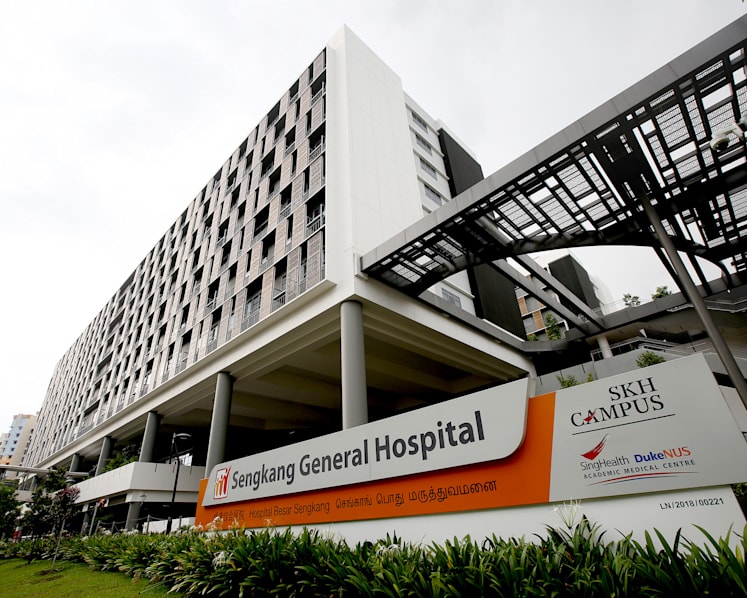
Sengkang General Hospital was officially opened by Prime Minister Lee Hsien Loong in March this year, but had started taking patients in August last year.


SINGAPORE — Emergency departments at public hospitals in Singapore’s north, east and central areas are generally less busy about 10 months after Sengkang General Hospital (SKH), in the north-east, welcomed its first patients.
The number of cases at Khoo Teck Puat Hospital (KTPH) in Yishun and Tan Tock Seng Hospital (TTSH) in Novena dropped slightly after SKH opened in August last year, a Ministry of Health (MOH) spokesperson told TODAY in reply to queries.
These drops in average patient numbers come despite an overall rise in daily attendances at emergency departments across the public healthcare system, the ministry said.
While Changi General Hospital (CGH) in Simei recorded an initial 4 per cent dip after the new hospital opened, attendances at its emergency department in April and May returned to levels seen before that, but were still down slightly on average, MOH and CGH said.





TTSH recorded the biggest fall. Its emergency department saw 396 daily cases on average after SKH opened, compared with 439 previously, said MOH.
At KTPH, the figure fell from 388 to 371. CGH’s numbers slid from 399 to 389.
The 1,000-bed SKH, Singapore’s newest public hospital, was officially opened by Prime Minister Lee Hsien Loong in March this year, but service began in August last year.
MOH’s spokesperson said that SKH has been ramping up its operations since last August.
On average, its emergency department received about 180 patients daily between August and December last year. This figure rose to 270 or so from January to March.
MAJOR EMERGENCIES
Since SKH opened, MOH said that median wait times for major emergencies — known as Priority Level 2 in health terminology — have also improved by four minutes at TTSH and three minutes at KTPH.
The figure for CGH has stayed “relatively stable”, said MOH’s spokesperson.
Emergency departments prioritise patients using a system of several levels, based on how serious their conditions are. Major emergencies include limb fractures and persistent vomiting.
TODAY has asked MOH to provide the actual median wait times for major emergencies at these hospitals.
SHORTER WAITS
Some patients told TODAY that they had noticed shorter waits at CGH’s emergency unit in recent months.
Madam Lim Boon Yau, 62, a bookkeeper, went there in November last year with chest pains.
There were fewer than 10 patients, she said, and she spent about four hours there.
By contrast, she waited through the night in March or April last year, when she accompanied her 84-year-old mother to the department after the elderly woman vomited.
Ms Gemma Daluz, 41, expected a much longer wait when she sought treatment there in February this year, but she left the department in three hours.
“Before that, a few years back, I came with family, and the wait was a bit longer,” the nurse told TODAY.
Adjunct Associate Professor Steven Lim, CGH’s chief of accident and emergency (A&E), said that waits at his department depend on factors such as the number of patients and the complexity of cases.
Staff members attend to potentially life-threatening or medically urgent cases first. “Life-threatening cases are attended to immediately. Patients with less urgent conditions may have to wait longer,” he said.
Over the past few years, the department has also adjusted its capabilities to cater to the growing needs of elderly patients.
These include clinical protocols established with Saint Andrew’s Community Hospital, where CGH’s A&E department identifies suitable patients to be admitted direct to the community hospital.
“From the patient’s perspective, this reduces handovers between different departments before admission to Saint Andrew’s Community Hospital, while enabling sicker patients to get beds earlier in the acute hospital (CGH),” said Adjunct Assoc Prof Lim.
The MOH advised the public to seek medical treatment at emergency departments only for serious, urgent and life-threatening emergencies.
“For common and minor medical problems, the first place for medical help remains the family physicians in the neighbourhood,” the ministry’s spokesperson said.




