







Frustrating motorists not the way to achieve car-lite society: Khaw
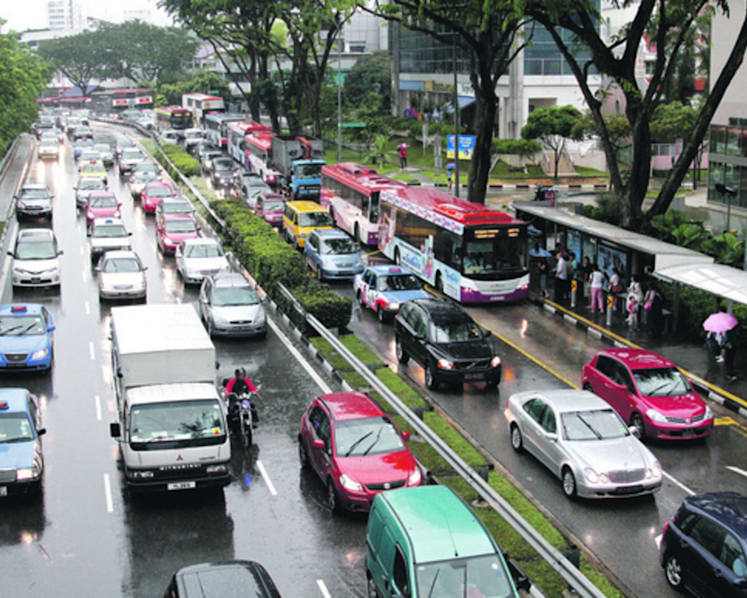
TODAY file photo
Outlining Singapore’s efforts to go “car-lite”, Transport Minister Khaw Boon Wan said that this was an important goal given the limited land resources, but achieving this is not by “frustrating motorists by whatever means”. The aim, he said, is to make car ownership and private-car usage unnecessary.
City planners have concluded that the traditional car-centric city model is not sustainable, he said, and while the majority of cities still “rely” on heavy congestion to discourage driving, this and other measures that frustrate motorists affect quality of life and would create friction in society.
A car-centric transport system uses space inefficiently. One example is how private cars are typically used for a short while daily and left in parking lots the rest of the time.
“If we can free up all this space (car parks and more road lanes), we would then have much more room for the things that really matter in improving our quality of life, such as greenery, parks, schools, community spaces and, of course, our homes,” he said, pointing out that car-lite cities tend to be more liveable than car-centric ones, because cars are noisy and polluting and affect a city’s physical layout.
Mr Khaw reiterated that going car-lite depended on three factors: To have reliable public transport with the train system as the backbone, hassle-free connecting journeys (first- and last-mile connectivity) to nearby train stations and bus interchanges, and a strong shared system comprising taxis, private-hire cars and car-sharing. This is all “doable” by 2030, he said.
By then, Singapore would have 360km of train lines and 80 per cent of homes would be within a 10-minute walk of a train station, with dedicated cycling networks and air-conditioned pods shuttling within neighbourhoods providing first- and last-mile connectivity. ILIYAS JUANDA




