







Lions must play stronger teams in Asian Cup preparation, even if it means losing: Coach Gavin Lee
Gavin Lee is the first coach to lead the Lions to Asian Cup qualification on merit.
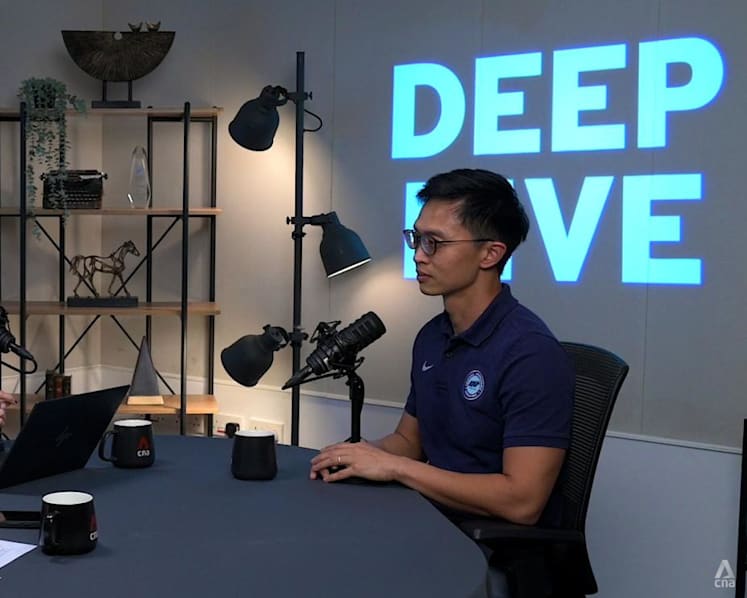
Newly appointed Singapore football team head coach Gavin Lee speaking to CNA's Steven Chia and Tiffany Ang. (Photo: CNA/Deep Dive podcast)

This audio is generated by an AI tool.


SINGAPORE: To prepare for the Asian Cup, the Singapore national football team may lose against stronger opponents but it is “all part of a plan” to test the Lions, said newly minted head coach Gavin Lee.
“If you're playing stronger teams, then we must be prepared for certain potential, undesired results, because that’s all part of a plan,” said Lee, 35.
“If there's no plan, and we go like, okay, let's play weaker teams just to get the wins, will you be satisfied if we are winning those games compared to pushing ourselves, testing ourselves to a bigger purpose?”
Lee was speaking on CNA’s Deep Dive Podcast, which aired on Thursday (Dec 4).





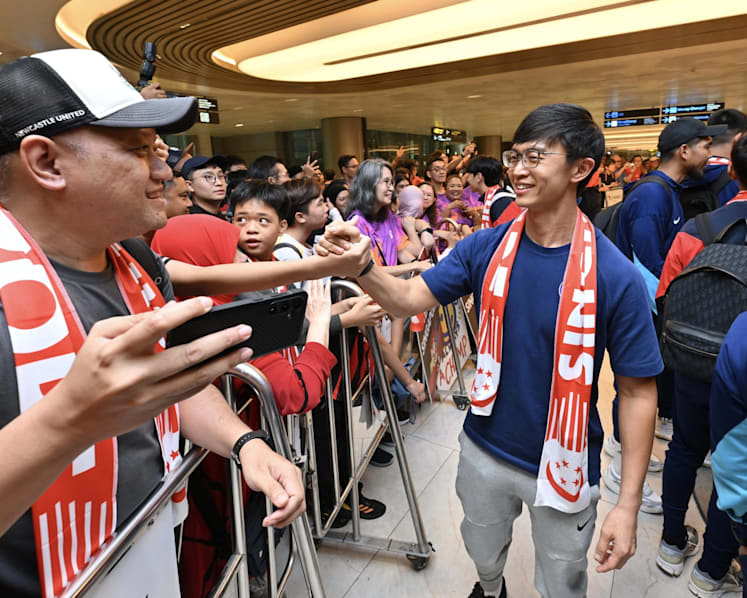
His appointment as national head coach came days after he led the Lions to a rousing 2-1 away victory over Hong Kong on Nov 18. It was the first time the Lions qualified for the Asian Cup on merit.
The process of playing higher-ranked opponents during the lead-up to the tournament and potentially falling short is an idea Lee hopes the nation can get behind.
“It's important that the rest of the ecosystem, the fans and the supporters, also appreciate what we're trying to do, because if they're not clear with what we're trying to do, then they might misinterpret what's happening,” he said.
“The danger is we allow one result in Hong Kong to kind of define everything.”
He added that earlier in the year, fans had questioned why Singapore played against Malaysia and Thailand, who were widely regarded as stronger opponents.
“Even though we didn't get the wins, but in those games, you could see performance,” he said. “We must assess our journey with the performance first, and we trust that if you get enough right than wrong, then the results will follow.”
WHAT SUCCESS AT THE ASIAN CUP LOOKS LIKE
Asked what a good performance at the Asian Cup would look like, Lee said that given this is the first time Singapore have qualified on merit, the target should be to qualify again.
“Once qualification is a norm, then we can talk about bigger things,” he said. These next goals could include getting more points during the group stage, for example.
“Can we make this first step a stable platform, and then we go to the next step? And that's how you build sustainable progress.”
As to when Singapore can be competitive with the biggest teams in Asia, Lee said: “We will definitely give it a very good push, very good try with the team, with the staff, but football is very unpredictable.
“We might get there very, very quickly. We might take a little bit of time, but there are no guarantees.”
Asked whether World Cup qualification dreams are on the cards, Lee said: “You never know.”
“We might reach there sooner than everybody expects, or we might not, or we might take a little bit longer time. I don't think anybody can give you a very certain answer.”

"MY JOB IS TO REDUCE THE QUESTION MARKS"
There is still some time before the Asian Cup kicks off in Saudi Arabia in January 2027.
When asked how he would manage the team in the lead-up to the tournament so they can work well together, understand one another’s play and trust him as a coach, Lee said that it’s “impossible” to achieve all of the above.
“Because we see the tip of the iceberg, which is the national team, but the national team is out there as a consequence of everybody's efforts in Singapore,” he said.
For instance, the players spend more time with their football clubs than with the national team.
“So it's everybody coming together, then we will have a better national team,” he said.
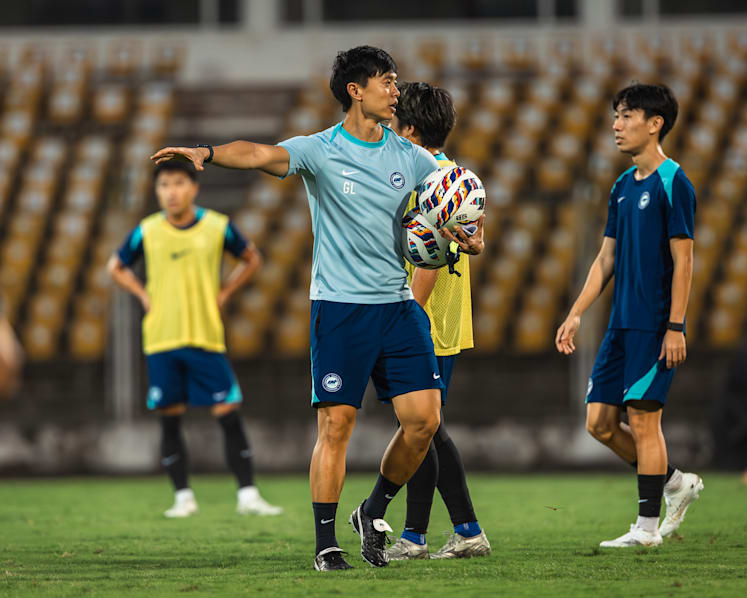
“But when they do come on board, spend time with us, then my job is to reduce as many question marks as possible, so that we're on the same page.”
Lee was also asked about the youth development pipeline in Singapore football.
Lee said that he has seen enough evidence at youth level to believe that there will be “more players coming through”.
“But it's not going to be instant. It will take time, right? It will always take time. I know that's what everybody doesn't want to hear, because everybody wants something yesterday,” he said.
“Like it or not, but this is a developmental process, and if we get more things right in this process, then hopefully more will come through.”
He added that Singapore is further challenged by its relatively small size and population.
“How can we maximise it? How can we get even more through? Those are the questions that we're trying to answer every single day,” he said.
His advice for young players? To understand why they want to pursue the sport.
“If you truly understand your why and you know what you want to get to, then you will go through (anything) to get there. You will overcome everything that's thrown at you,” he said.




